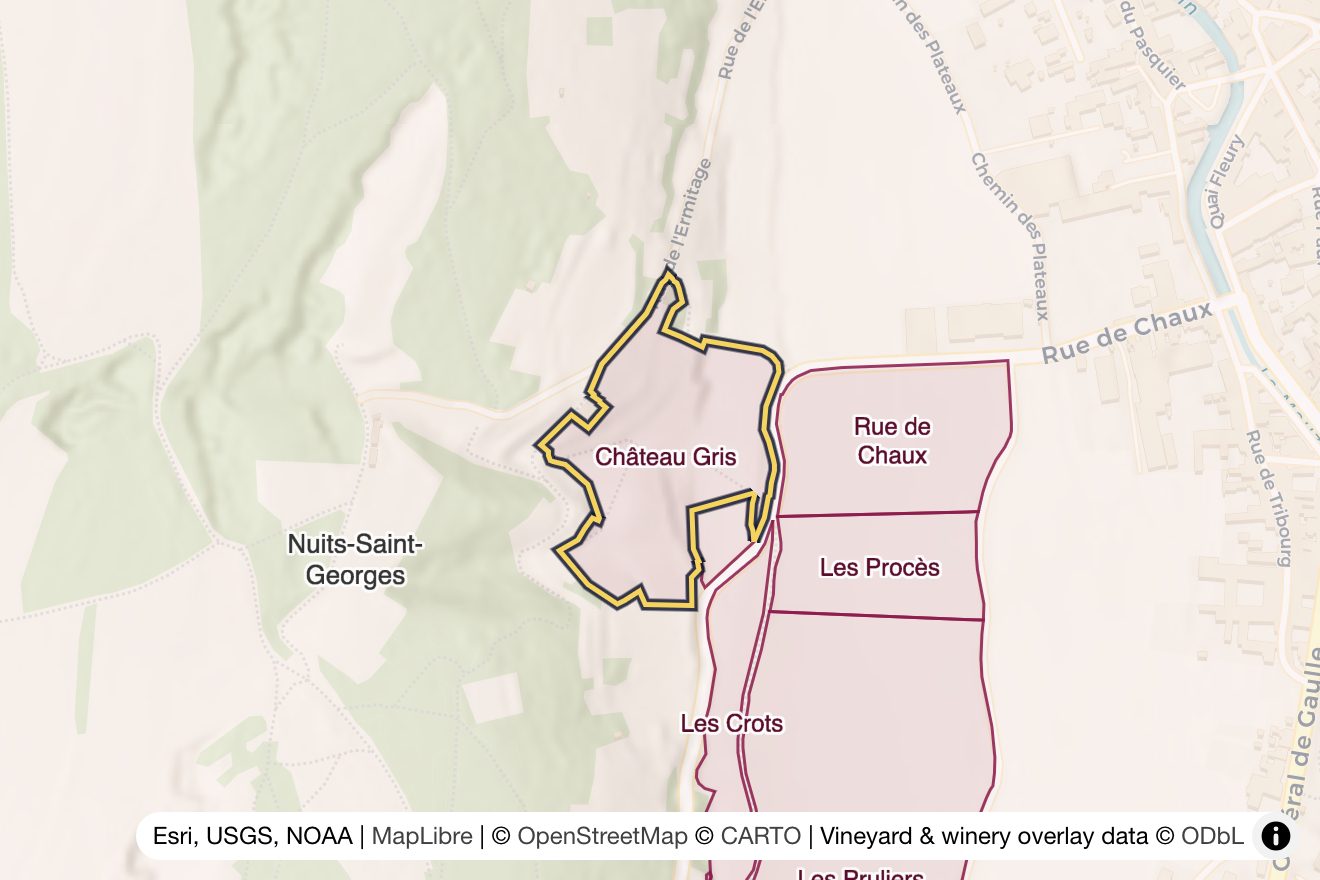
Overview & Location
The climat extends along the mid-slope of the Côte de Nuits escarpment, benefiting from the optimal exposition and geological conditions that have made this stretch of Burgundian hillside legendary among wine enthusiasts.
Within the broader context of the Côte de Nuits, Château Gris represents the sophisticated terroir expression typical of Nuits-Saint-Georges' premier cru sites, more structured and mineral-driven than many Côte de Beaune counterparts, yet displaying the elegance and complexity that distinguishes premier cru sites from village-level vineyards. The climat's position places it squarely within the zone where Burgundy's greatest red wines achieve their characteristic balance of power and finesse.
Size
Château Gris encompasses roughly 2.5 to 2.8 hectares (about 6 to 7 acres), making it a small premier cru climat within the Nuits-Saint-Georges hierarchy. This acreage makes it a small premier cru site, much smaller than the expansive Les Saint-Georges or Les Vaucrains.
The vineyard's size allows for meaningful production volumes while maintaining the focused terroir expression that characterizes Burgundy's most respected sites. The entire climat is a monopole, owned by Albert Bichot.
Terroir & Geology
The geological foundation of Château Gris exemplifies the complex sedimentary structure that underlies the Côte de Nuits' greatest sites. The climat sits primarily on Bathonian limestone formations dating from the Middle Jurassic period, characterized by hard limestone bedrock overlain by varying depths of clay-limestone topsoil enriched with fossilized marine debris.
The soil composition displays the classic Burgundian profile of relatively shallow topsoil over limestone bedrock, with soil depths ranging from 30 to 60 centimeters in most sectors. The surface layer consists of brown clay-limestone earth with significant proportions of limestone scree and fossil fragments, creating excellent drainage while maintaining sufficient moisture retention for vine health during dry periods.
The clay content varies across the climat, generally ranging from 15 to 25 percent, with higher clay concentrations in the lower elevations and more limestone-dominated soils toward the upper reaches. This variation contributes to the complexity and layered character found in wines from different parcels within Château Gris, as the clay provides structure and aging potential while the limestone contributes minerality and elegance.
Château Gris faces east, capturing the morning sun. The slope is steep and the vineyard is planted on terraces, which provides excellent drainage.
The elevation ranges from approximately 260 to 330 meters above sea level, positioning the vineyard within the optimal altitude zone for Pinot Noir cultivation in Burgundy. This elevation provides protection from frost while ensuring adequate temperature variation between day and night, crucial for maintaining acidity and developing complex aromatics in the grapes.
Climate & Microclimate
Château Gris experiences the continental climate characteristic of the Côte de Nuits, modulated by its specific topographical position and exposure. The climat benefits from a particularly favorable mesoclimate created by its mid-slope position and eastern exposure, which provides protection from the prevailing westerly winds while capturing optimal solar radiation throughout the growing season.
The vineyard's position creates a natural amphitheater effect, with the limestone escarpment above providing wind protection and heat reflection that extends the daily warming period. This microclimate contributes to more consistent ripening than sites at higher or lower elevations, reducing vintage variation and enhancing the reliability of quality.
Morning mists from the Saône Valley frequently reach the lower portions of Château Gris, providing humidity that helps moderate temperatures during hot periods while typically dissipating by mid-morning to allow full sun exposure. This natural air conditioning effect proves particularly beneficial during warm vintages, helping preserve the acidity and freshness that characterize the finest Nuits-Saint-Georges wines.
The climat's drainage characteristics, enhanced by the underlying limestone and slope gradient, provide excellent protection against excessive moisture while the clay component ensures adequate water retention during dry spells. This natural water regulation system reduces vintage variation and contributes to the consistent quality expression that has established Château Gris' reputation.
Viticulture
The premier cru red of Château Gris is made from Pinot Noir on the plots around the château, following the traditional practice of the Côte de Nuits' red wine climats; Chardonnay is planted on the higher terraces. The vineyard hosts a diverse population of Pinot Noir clones and selections, with many parcels containing old vine material that contributes concentration and complexity to the final wines.
Vine ages across Château Gris vary among parcels, with some sections containing vines planted in the 1940s and 1950s, while other areas feature more recent plantings from the 1980s and 1990s. The average vine age across the climat approximates 35-40 years, providing an optimal balance between youthful vigor and mature concentration.
Planting density typically ranges from 9,000 to 10,500 vines per hectare, following traditional Burgundian practices designed to encourage competition among vines and concentrate flavor development. The higher planting densities, combined with the natural vigor control provided by the limestone-clay soils, result in naturally lower yields that enhance concentration and terroir expression.
Viticultural practices in Château Gris generally follow traditional Burgundian methods, with the vineyard farmed organically (certified, with the organic label from the 2018 vintage). Canopy management focuses on controlling vigor and ensuring optimal sun exposure and air circulation, particularly important given the clay content in some sectors that can promote excessive vegetative growth in wet years.
The primary viticultural challenges in Château Gris include managing the varying soil conditions across different parcels, controlling yields in the clay-rich sectors that can produce excessive vigor, and timing harvest to achieve optimal ripeness while preserving the natural acidity that characterizes the climat. The exposed position requires careful attention to wind protection for young vines and frost management in vulnerable years.
Wine Character & Style
Wines from Château Gris display the sophisticated complexity and structural elegance that exemplify Nuits-Saint-Georges premier cru at its finest. The climat produces wines of notable depth and concentration while maintaining the finesse and mineral precision that distinguish premier cru sites from village-level vineyards.
The aromatic profile typically features a complex bouquet combining red and black fruit elements (cherry, raspberry, and blackcurrant) with distinctive earth and mineral notes reflecting the limestone-clay terroir. Floral elements, particularly violet and rose, frequently appear in wines from Château Gris, along with subtle spice notes including cinnamon, clove, and white pepper that develop with bottle age.
On the palate, Château Gris wines demonstrate excellent structure with firm but refined tannins that provide aging potential while remaining approachable in their youth. The mineral backbone, derived from the limestone substrate, runs through the wine's structure, providing tension and length that carries the fruit and earth flavors through an extended finish.
The texture typically shows medium to full body with a silky, refined mouthfeel that distinguishes premier cru sites from more rustic village wines. The integration of oak (when used judiciously) complements rather than dominates the terroir expression, adding subtle vanilla and toast notes without masking the wine's essential character.
Château Gris wines characteristically display excellent balance between power and elegance, avoiding the sometimes overwhelming structure found in some Nuits-Saint-Georges premiers crus while maintaining sufficient concentration and complexity to reward extended cellaring. The natural acidity provides freshness and food compatibility while supporting long-term development.
Comparison to Surrounding Crus
Within the Nuits-Saint-Georges premier cru hierarchy, Château Gris occupies a distinctive position that sets it apart from neighboring climats through its particular combination of elegance and depth. Compared to the powerful, tannic structure typical of Les Vaucrains or Les Saint-Georges, Château Gris offers a more refined and approachable style while maintaining comparable complexity and aging potential.
The wines show greater finesse than those from Les Pruliers or Aux Boudots, climats that can produce more robust and earthy expressions. Château Gris shares certain characteristics with Les Cailles, another premier cru known for elegance, but typically displays greater mineral precision and length due to its superior exposure and limestone content.
The climat produces wines with more immediate appeal than some of the more austere Nuits-Saint-Georges premiers crus, making them accessible earlier while retaining the structure necessary for long-term cellaring.
When compared to premier cru sites in neighboring Vosne-Romanée, Château Gris wines typically show more structure and earth-driven character while sharing similar elegance and aromatic complexity. The wines lack the ethereal perfume of sites like Aux Malconsorts but offer greater power and aging potential than some of the more delicate Vosne premiers crus.
Notable Producers
Château Gris is a monopole of Albert Bichot, which has owned it since 1978.
Among the most respected producers working parcels in Château Gris, traditional domaines tend to emphasize the terroir's natural elegance through minimal intervention winemaking, allowing the limestone minerality and natural fruit concentration to express themselves without excessive manipulation. These producers typically employ longer fermentations with indigenous yeasts and judicious use of new oak to preserve the climat's essential character.
More modern-styled producers may emphasize extraction and new oak integration, creating wines that showcase the terroir's power and concentration while potentially masking some of the subtle mineral nuances that distinguish the site. However, the best producers regardless of style maintain respect for the terroir's natural expression while applying their individual winemaking philosophies.
Historical Background & Classification
Château Gris has maintained its reputation as one of Nuits-Saint-Georges' distinguished vineyard sites for centuries, . The site's name, translating to "Gray Castle," comes from the grey slate roof of the château, unusual in Burgundy; the plot was originally registered as Les Crots, and a court ruling in the 1920s confirmed the Château-Gris name.
The climat received its Premier Cru classification in 1936 as part of the original Burgundy appellation system establishment, recognition of its long-standing reputation for producing wines of superior quality and distinctive character. This classification acknowledged both the site's geological advantages and the historical track record of excellence demonstrated by wines from the climat.
The climat's reputation survived the phylloxera crisis and subsequent replanting, maintaining its status among Nuits-Saint-Georges' elite sites.
The modern era has seen continued recognition of Château Gris' exceptional terroir, with wine critics and collectors acknowledging the climat's ability to produce wines that exemplify the sophistication and complexity possible in Burgundy premier cru sites. This recognition has maintained strong demand for wines from the climat while supporting the investments in viticulture and winemaking necessary to express the terroir's full potential.
Aging Potential & Quality Level
Château Gris produces wines with exceptional aging potential, typically reaching optimal drinking condition between 8 and 15 years after harvest, depending on vintage conditions and winemaking style. The combination of natural acidity, refined tannin structure, and mineral backbone provides the foundation necessary for extended cellaring while allowing the wines to show well in their youth.
During the first 3-5 years after release, Château Gris wines typically display primary fruit characteristics with developing complexity, showing their terroir character while the tannins integrate and secondary aromas begin to emerge. This period showcases the climat's natural elegance and balance, making the wines approachable for those who prefer younger Burgundies.
The optimal drinking window generally opens around year 6-8, when the wines achieve full integration of fruit, earth, and oak elements while developing the complex tertiary aromatics that distinguish mature Burgundy. During this phase, the mineral character becomes more prominent while the fruit evolves toward more complex, dried fruit and earth-driven profiles.
Well-stored bottles from favorable vintages can continue developing for 20-25 years or more, with the finest examples gaining additional layers of complexity while maintaining their essential freshness and structure. The limestone terroir provides natural preservation qualities that support extended aging while preventing the wines from becoming overly delicate or losing their distinctive character.
Quality consistency in Château Gris remains high across different vintages and producers, though the climat responds particularly well to vintages that provide optimal balance between concentration and freshness. Warm years tend to emphasize the terroir's power and depth, while cooler vintages highlight the mineral precision and aromatic complexity that distinguish this exceptional premier cru site.
The climat's natural drainage and favorable exposure provide protection against many vintage challenges, resulting in reliable quality even in difficult years. This consistency, combined with the terroir's distinctive character and aging potential, establishes Château Gris among the most dependable and rewarding premier cru investments in Nuits-Saint-Georges.