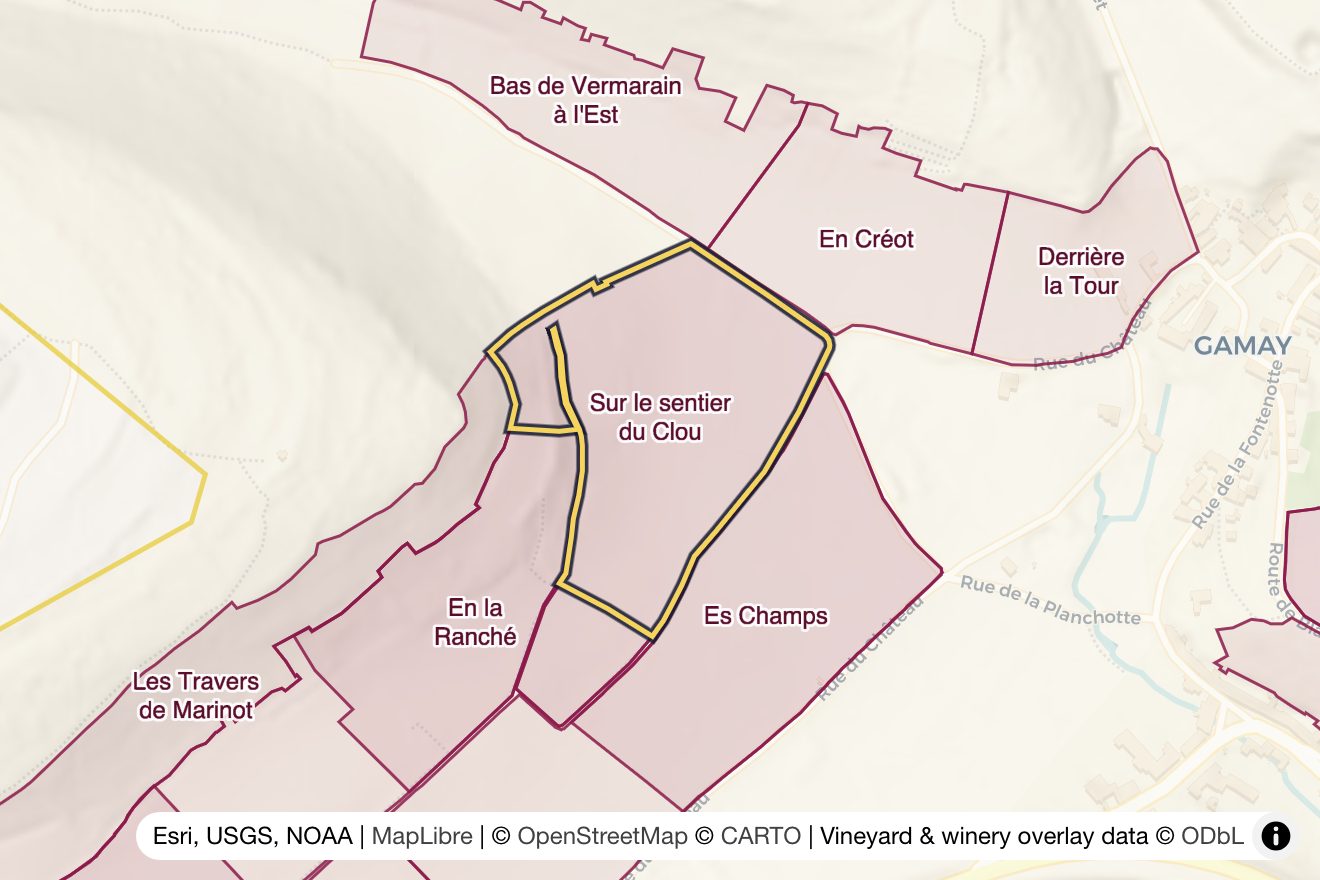
Overview & Location
The climat of Vignes Moingeon sits strategically within Saint-Aubin's amphitheater of hills, positioned to capture optimal sun exposure while benefiting from the protective shelter of the surrounding topography. This Premier Cru vineyard exemplifies the geological continuity that makes Saint-Aubin such a compelling proposition for quality-conscious vignerons seeking terroir-driven expressions at more accessible price points than their famous neighbors to the north.
Saint-Aubin itself occupies a unique position within the Côte de Beaune hierarchy, often described as a "satellite" commune that shares many geological and climatic characteristics with the grand cru villages while maintaining its own distinct personality. The commune's vineyards are scattered across a complex network of valleys and hillsides, creating numerous microclimates and terroir variations. Vignes Moingeon represents one of the finest expressions of this diversity, showcasing the potential for both Pinot Noir and Chardonnay to achieve Premier Cru quality in this often-overlooked corner of Burgundy.
Size
Vignes Moingeon encompasses approximately 4.2 hectares (10.4 acres), making it a moderately sized Premier Cru within Saint-Aubin's portfolio of classified vineyards. This surface area places it among the mid-range Premier Crus in terms of size, neither among the smallest parcels that can produce wines of extreme concentration and rarity, nor among the larger climats that might sacrifice intensity for volume.
The vineyard's parcellation follows typical Burgundian patterns, with ownership divided among several vignerons and négociant houses. This fragmentation, while sometimes complicating marketing efforts, actually serves to demonstrate the climat's versatility, as different winemaking approaches applied to the same terroir reveal various facets of its character. The relatively intimate scale of Vignes Moingeon ensures that vineyard management can be conducted with the meticulous attention to detail that Premier Cru status demands.
Terroir & Geology
The geological foundation of Vignes Moingeon reveals the complex interplay of limestone, marl, and clay that characterizes the finest Côte de Beaune terroirs. The vineyard sits on Jurassic white marl and limestone. This limestone base provides crucial drainage while maintaining sufficient water retention during dry periods, creating the stress conditions that encourage deep root penetration and concentrated fruit flavors.
The topsoil composition varies across different sections of the climat, with a matrix of decomposed limestone mixed with varying proportions of clay and iron-rich elements. The clay content, typically ranging from 20-35%, provides sufficient water retention and nutrient availability while avoiding the excessive fertility that would encourage vigorous vegetative growth at the expense of fruit concentration. This balance proves particularly beneficial for Chardonnay cultivation, allowing the variety to develop its characteristic mineral intensity while maintaining the richness and texture that distinguishes Premier Cru whites.
The slope characteristics of Vignes Moingeon contribute significantly to its terroir personality. The vineyard rises along a gentle to moderate incline, with gradients typically ranging from 8-15%, sufficient to ensure excellent drainage while avoiding the erosion issues that plague steeper sites. This gradient creates natural variation in soil depth and composition from top to bottom, with thinner, more limestone-dominated soils at higher elevations gradually transitioning to deeper, more clay-influenced profiles lower on the slope.
The vineyard's eastern to southeastern exposure captures morning sun while avoiding excessive afternoon heat, particularly important during Burgundy's increasingly warm growing seasons. This orientation promotes steady ripening while preserving the natural acidity that defines quality Burgundy wines. The elevation, ranging from approximately 280-320 meters above sea level, positions the vineyard within the optimal altitude band for both Pinot Noir and Chardonnay cultivation in this region.
The soils are described as white marl and clay over limestone bedrock. This hard limestone provides excellent drainage while contributing mineral complexity to wines through gradual weathering and ion exchange processes. The presence of fossilized marine organisms within this limestone adds additional mineral complexity, contributing to the distinctive terroir signature that characterizes wines from Vignes Moingeon.
Climate & Microclimate
Vignes Moingeon benefits from the semi-continental climate that defines the Côte de Beaune, characterized by cold winters, relatively warm summers, and sufficient rainfall distributed throughout the growing season. However, the specific topographical position of this climat creates several microclimate effects that distinguish it from surrounding vineyards.
The vineyard's position within Saint-Aubin's natural amphitheater provides protection from harsh western winds while allowing beneficial air circulation that reduces humidity and disease pressure. This air movement proves particularly valuable during the critical periods of flowering and harvest, when excessive moisture can compromise fruit quality. The surrounding hills create a moderate rain shadow effect, reducing precipitation totals slightly compared to more exposed sites while maintaining sufficient water availability.
Temperature moderation represents another crucial microclimate factor. The vineyard's eastern exposure ensures rapid warming after sunrise, promoting photosynthesis and healthy vine metabolism, while the limestone soils provide thermal mass that moderates temperature extremes. Nighttime cooling, enhanced by the vineyard's elevation and air drainage patterns, helps preserve acidity and aromatic compounds in the developing fruit.
The specific mesoclimate of Vignes Moingeon demonstrates measurable differences from neighboring sites, with temperature variations of 1-2 degrees Celsius common during critical growing periods. These seemingly small differences translate into meaningful impacts on phenolic development, acid retention, and harvest timing, contributing to the distinct personality of wines from this climat.
Growing season length typically extends 10-15 days longer than vineyards at higher elevations or with less favorable exposures, allowing for more complete flavor development while maintaining freshness. This extended hang time proves particularly beneficial for Pinot Noir, which requires sufficient time to develop complex aromatics and supple tannins.
Viticulture
Vignes Moingeon supports cultivation of both traditional Burgundian varieties, though Chardonnay predominates, occupying approximately 65% of the planted surface. The remaining 35% is devoted to Pinot Noir, reflecting the climat's ability to ripen both varieties successfully while expressing distinct terroir characteristics in each.
Vine age across the climat varies considerably, with some parcels containing vines planted in the 1960s and 1970s, while others feature more recent plantings from the 1990s and 2000s. The older vines, particularly those approaching 40-50 years of age, produce wines of exceptional concentration and complexity, their deep root systems accessing mineral resources and water reserves unavailable to younger plants.
Planting density follows traditional Burgundian practices, typically ranging from 9,000-12,000 vines per hectare. This high density encourages competition among vines, limiting individual vine vigor while promoting deeper root development and concentrated fruit production. The specific density chosen often reflects individual producer philosophy and the particular characteristics of different parcels within the climat.
Viticultural practices in Vignes Moingeon emphasize sustainable and increasingly organic approaches, reflecting broader trends throughout quality-focused Burgundy. Many producers have eliminated or significantly reduced herbicide use, instead employing mechanical cultivation and cover crops to maintain soil health and biodiversity. This approach proves particularly important given the climat's limestone-rich soils, which respond well to organic matter incorporation and biological activity enhancement.
Canopy management requires careful attention to the site's specific characteristics. The favorable exposure and good air circulation allow for relatively open canopy structures that promote light penetration and air movement while avoiding excessive fruit exposure. Leaf removal timing and extent must be calibrated precisely, as the limestone soils and good drainage can lead to water stress during dry periods, making fruit protection crucial.
Harvest timing represents a critical decision point, with the climat's extended growing season allowing producers flexibility in determining optimal picking dates. Chardonnay typically reaches ideal ripeness 5-10 days after neighboring villages, while Pinot Noir may require an additional week to achieve full phenolic maturity. This timing differential allows producers to capture the desired balance between richness and freshness that characterizes quality Burgundy.
Site-specific challenges include managing water stress during increasingly common summer drought periods, as the excellent drainage that contributes to wine quality can become problematic during extended dry spells. Producers have responded by adjusting canopy management practices and, in some cases, implementing targeted irrigation systems approved under current regulations.
Wine Character & Style
Wines from Vignes Moingeon display distinctive characteristics that reflect both the specific terroir and the climate's position within Saint-Aubin's hierarchy of Premier Cru sites. Chardonnay from this climat typically exhibits exceptional mineral precision balanced with sufficient richness to merit Premier Cru classification.
The white wines demonstrate classic Côte de Beaune structure with a distinctive limestone-driven minerality that manifests as subtle chalky textures and precise acidity. Aromatic profiles emphasize white flowers, citrus fruits, and stone fruits, with underlying mineral notes that become more pronounced with bottle aging. The best examples achieve remarkable complexity, layering primary fruit flavors with secondary characteristics derived from lees contact and judicious oak integration.
Textural qualities distinguish Vignes Moingeon Chardonnays from both village-level Saint-Aubin and wines from neighboring communes. The limestone influence creates wines with exceptional length and a characteristic tension between richness and minerality. Mouthfeel typically combines creamy mid-palate weight with a precise, almost crystalline finish that encourages extended contemplation.
Pinot Noir from Vignes Moingeon exhibits the elegant, refined style characteristic of quality Côte de Beaune reds, with emphasis on finesse rather than power. Typical aromatic profiles feature red cherry and strawberry fruits complemented by floral notes, earth tones, and subtle spice elements. The limestone terroir contributes to refined tannin structure and exceptional length, while the favorable microclimate ensures sufficient ripeness for complexity development.
The red wines display medium body with silky textures and integrated tannins that provide structure without overwhelming the delicate fruit expression. Color intensity typically ranges from medium ruby to deeper garnet, depending on vine age and vintage characteristics. The best examples demonstrate remarkable aging potential, developing secondary aromas of forest floor, game, and exotic spices while maintaining core fruit integrity.
What distinguishes Vignes Moingeon wines from other Saint-Aubin Premier Crus is their particular combination of mineral precision and textural richness. The climat's specific terroir characteristics create wines that bridge the gap between the more austere, mineral-driven styles of some Saint-Aubin sites and the richer, more opulent expressions found in neighboring communes.
Both varieties from Vignes Moingeon demonstrate exceptional terroir transparency, clearly expressing their limestone origins while maintaining sufficient complexity to merit extended cellaring. The wines achieve an ideal balance between accessibility and profundity, offering immediate pleasure while rewarding patient aging with increased complexity and integration.
Comparison to Surrounding Crus
Within Saint-Aubin's portfolio of Premier Cru vineyards, Vignes Moingeon occupies a distinctive position that reflects both its specific terroir characteristics and microclimate advantages. Compared to Les Murgers des Dents de Chien, perhaps Saint-Aubin's most famous Premier Cru, Vignes Moingeon produces wines with greater elegance and mineral precision, though potentially less concentration and aging potential.
The contrast with En Remilly, another significant Saint-Aubin Premier Cru, reveals interesting stylistic differences. While En Remilly tends toward more robust, structured wines with pronounced earthiness, Vignes Moingeon emphasizes finesse and aromatics, producing wines that drink well earlier while maintaining good aging potential. This difference largely reflects variations in soil composition and microclimate, with Vignes Moingeon's limestone-dominated terroir favoring elegance over power.
Comparing Vignes Moingeon to Les Frionnes demonstrates how subtle terroir differences translate into meaningful wine style variations. Les Frionnes, with its steeper slopes and more exposed position, typically produces wines with greater concentration and mineral intensity, while Vignes Moingeon offers more immediate charm and accessible fruit expression without sacrificing complexity.
When evaluated against Premier Cru sites in neighboring communes, Vignes Moingeon reveals both similarities and distinctions that reflect Saint-Aubin's unique terroir personality. Compared to Chassagne-Montrachet Premier Crus like Morgeot or Caillerets, Vignes Moingeon wines typically display less richness and weight but greater mineral precision and aromatic complexity. The Saint-Aubin site's cooler microclimate and specific limestone composition create wines with distinctive freshness and tension.
Puligny-Montrachet Premier Crus like Les Combettes or Clavoillon generally produce wines with greater concentration and aging potential than Vignes Moingeon, reflecting both terroir advantages and the prestige that attracts more intensive viticultural investment. However, Vignes Moingeon wines often demonstrate superior elegance and mineral expression, making them compelling alternatives for consumers seeking Premier Cru quality at more accessible price points.
The absence of Grand Cru vineyards within Saint-Aubin itself necessitates broader comparisons to understand Vignes Moingeon's position within Burgundy's hierarchy. While lacking the exceptional concentration and aging potential of sites like Montrachet or Bâtard-Montrachet, the best Vignes Moingeon wines achieve remarkable complexity and terroir expression that places them among Burgundy's most compelling Premier Cru values.
Notable Producers
Several distinguished producers cultivate parcels within Vignes Moingeon, each bringing different approaches that reveal various facets of the climat's potential. Lamy's approach emphasizes minimal intervention winemaking that allows terroir characteristics to shine through clearly.
Their Chardonnay from this site typically undergoes partial barrel fermentation with judicious use of new oak, creating wines that balance fruit purity with subtle wood integration. Extended lees aging adds textural complexity while preserving the characteristic limestone-driven minerality.
The Colin family's winemaking philosophy emphasizes traditional techniques combined with modern precision, resulting in wines that express terroir characteristics while achieving reliable quality across different vintages.
Their approach to oak integration tends toward restraint, using older barrels and extended aging to achieve integration without overwhelming the delicate terroir expression characteristic of this climat.
Leflaive's approach emphasizes consistency and accessibility while respecting terroir characteristics, resulting in wines that serve as excellent introductions to Saint-Aubin Premier Cru quality.
Several smaller producers and emerging domaines also work parcels within Vignes Moingeon, often producing limited quantities that showcase distinctive interpretations of the terroir. These producers frequently employ more experimental approaches, including extended lees aging, alternative fermentation vessels, and varying levels of oak integration, creating stylistic diversity that demonstrates the climat's versatility.
The variation among producers reveals Vignes Moingeon's ability to support different winemaking philosophies while maintaining recognizable terroir characteristics. Whether vinified in a traditional style emphasizing minerality and restraint or with more modern techniques that highlight fruit richness and texture, wines from this climat consistently display the limestone-driven precision and aromatic complexity that justify Premier Cru classification.
Historical Background & Classification
The vineyard site now known as Vignes Moingeon has been cultivated continuously since at least the medieval period, with documentation suggesting monastic involvement in early development. The name itself likely derives from local dialect terms referring to vineyard characteristics or historical ownership patterns, though precise etymological origins remain somewhat unclear.
Saint-Aubin's viticultural history extends back to Roman times, with evidence of wine production throughout the medieval period under various ecclesiastical and noble ownerships. The specific parcels comprising modern Vignes Moingeon appear in historical records by the 16th century, suggesting established recognition of the site's quality potential well before formal classification systems emerged.
The climat is one of Saint-Aubin's thirty premier cru climats; the commune's first premier cru list was drawn up in 1943. This classification recognized the site's distinctive terroir characteristics and consistent ability to produce wines meriting elevation above village-level status. The decision reflected both geological analysis and historical quality assessment, acknowledging Vignes Moingeon's position among Saint-Aubin's finest vineyard sites.
Prior to formal classification, wines from this climat were typically sold as Saint-Aubin or incorporated into broader regional blends, despite quality levels that suggested Premier Cru potential. The premier cru classification allowed producers to market these wines appropriately while encouraging the viticultural investment necessary to realize the terroir's full potential.
Historical reputation among local vignerons consistently placed Vignes Moingeon among Saint-Aubin's top sites, with anecdotal evidence suggesting that wines from this climat commanded premium prices even before formal recognition. This reputation reflected both terroir advantages and the consistent quality achieved by careful vineyard management adapted to the site's specific characteristics.
The classification process included detailed soil analysis and microclimate assessment that confirmed the site's geological continuity with recognized Premier Cru vineyards in neighboring communes. This scientific validation supported historical quality assessments while providing the technical foundation necessary for official recognition.
Aging Potential & Quality Level
Vignes Moingeon wines demonstrate impressive aging potential that places them among the longer-lived Saint-Aubin Premier Crus, though with evolution patterns that differ from more powerful neighboring appellations. Chardonnay from this climat typically reaches optimal drinking maturity between 5-8 years after vintage, with the finest examples continuing to develop complexity for 12-15 years under proper storage conditions.
Young Vignes Moingeon Chardonnays often display reserved aromatics that require time to fully express their complexity. Primary fruit flavors gradually integrate with secondary characteristics derived from lees aging and oak treatment, while the limestone-driven minerality becomes more pronounced and sophisticated. Peak drinking periods typically occur when primary freshness remains balanced with developed complexity, creating wines of exceptional harmony and length.
The aging trajectory follows predictable patterns, with initial fruit-forward characteristics gradually yielding to more complex expressions of terroir and winemaking technique. Wines from older vines or exceptional vintages may continue developing for two decades or more, achieving the kind of complexity and integration associated with much more expensive Burgundian whites.
Pinot Noir from Vignes Moingeon typically matures more quickly than the Chardonnay, reaching optimal drinking condition between 3-6 years after vintage. However, wines from low-yielding old vines can age gracefully for 10-12 years, developing the complex secondary aromatics and integrated tannin structure that characterize mature Burgundian reds.
Quality consistency across different vintages and producers remains remarkably high, reflecting both terroir advantages and the careful vineyard management that Premier Cru status demands. While individual wine styles may vary according to producer philosophy and vintage characteristics, the underlying terroir signature remains recognizable and distinctive.
The climat's favorable microclimate and well-drained soils contribute to consistent ripening even in challenging vintages, allowing producers to achieve acceptable quality levels when other sites struggle. This reliability, combined with aging potential that justifies Premier Cru pricing, establishes Vignes Moingeon as one of Saint-Aubin's most dependable quality sources.
Investment potential remains strong, with wines from top producers showing steady appreciation that reflects growing recognition of Saint-Aubin's quality potential. While unlikely to match the dramatic price increases associated with more famous appellations, Vignes Moingeon wines offer compelling value propositions for consumers seeking authentic Premier Cru Burgundy character at accessible price points.
The combination of immediate drinking pleasure and extended aging potential makes Vignes Moingeon wines particularly appealing to diverse consumer preferences, supporting both casual consumption and serious cellaring programs. This versatility, combined with consistent quality and distinctive terroir expression, positions the climat as one of Burgundy's most compelling Premier Cru discoveries.