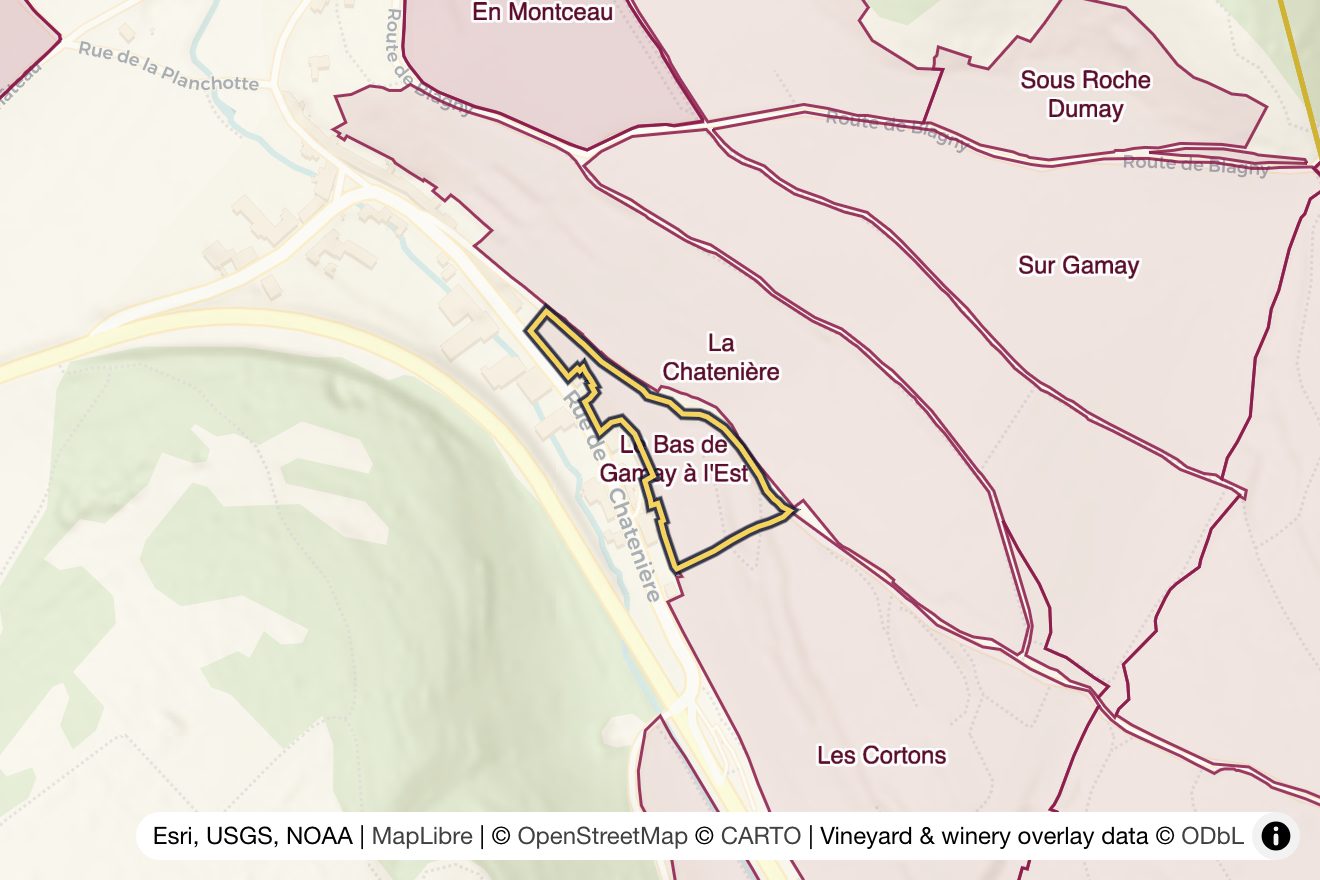
Overview & Location
The climat sits on the eastern-facing slopes of Saint-Aubin, positioned advantageously to capture the morning sun while benefiting from the protective influence of the higher elevations behind it. This location places Le Bas de Gamay à l'Est within the geological and climatic sweet spot that characterizes the finest vineyard sites of the Côte de Beaune, sharing fundamental terroir characteristics with its more famous neighboring appellations while maintaining its own distinct identity.
Saint-Aubin itself occupies a unique position in the Côte de Beaune hierarchy, situated in a natural amphitheater that opens eastward toward the Saône Valley. The commune's Premier Cru vineyards, including Le Bas de Gamay à l'Est, benefit from this geographic configuration, which creates favorable mesoclimatic conditions while providing diverse soil exposures across different elevations and aspects. The proximity to Chassagne-Montrachet and Puligny-Montrachet means that Le Bas de Gamay à l'Est shares certain geological foundations with these prestigious appellations, yet expresses them through its own specific terroir characteristics.
Size and Vineyard Configuration
Le Bas de Gamay à l'Est encompasses approximately 1.29 hectares (3.2 acres), making it one of the smaller climats in Saint-Aubin's Premier Cru portfolio. This size allows for sufficient diversity in microclimatic conditions and soil variations within the vineyard while maintaining the coherent terroir expression that defines great Burgundy climats.
The vineyard's configuration follows the natural contours of the hillside, with parcels distributed across different elevations within the climat boundaries. This variation in elevation and precise positioning creates subtle but meaningful differences in exposure, drainage, and soil depth that contribute to the complexity found in wines from Le Bas de Gamay à l'Est.
The relatively compact size of the climat means that most producers working within it hold small parcels. This fragmentation is characteristic of Burgundy's ownership patterns and contributes to the stylistic diversity found among different producers' interpretations of the terroir.
Terroir & Geology
The geological foundation of Le Bas de Gamay à l'Est reflects the complex sedimentary history of the Côte de Beaune, with soils primarily composed of Jurassic limestone formations overlaid with varying depths of clay and silt deposits. The vineyard sits on the Bathonian and Bajocian limestone bedrock that characterizes much of the Côte de Beaune's finest vineyard sites, providing the mineral foundation that contributes to the wine's distinctive character.
The soil profile typically consists of brown limestone soils with moderate clay content. The topsoil depth varies from 30-60 centimeters, with shallower soils on the upper slopes providing more direct contact with the limestone bedrock, while lower sections feature slightly deeper profiles with increased silt content from centuries of erosion and deposition.
The vineyard faces primarily east-southeast, with slopes ranging from 8-15% gradient. This orientation ensures optimal morning sun exposure while providing some protection from the intense afternoon heat during summer months. The slope angle promotes natural drainage, preventing water stagnation while allowing controlled water stress during the growing season – a crucial factor in concentrating flavors and achieving physiological ripeness.
Elevation within Le Bas de Gamay à l'Est ranges from approximately 280-320 meters above sea level, positioning it within the optimal elevation band for both Chardonnay and Pinot Noir cultivation in this region. The elevation differential creates subtle but important variations in temperature, wind exposure, and ripening patterns across different sections of the vineyard.
The limestone bedrock provides excellent drainage while maintaining sufficient water retention during dry periods. The presence of fossilized marine organisms in the limestone contributes to the complex mineral profile that emerges in the wines, while the moderate clay content ensures adequate nutrient availability and water retention for sustained vine growth throughout the growing season.
Climate & Microclimate
Le Bas de Gamay à l'Est benefits from the semi-continental climate characteristic of the Côte d'Or, with distinct seasonal variations that create ideal conditions for both Chardonnay and Pinot Noir. The vineyard's eastern exposure and moderate elevation create a favorable microclimate that balances warmth and freshness, crucial for achieving the complexity and finesse expected from Premier Cru Burgundy.
The morning sun exposure provided by the eastern aspect ensures rapid dew evaporation, reducing disease pressure while providing gentle warming during the critical ripening period. The vineyard's position within Saint-Aubin's natural amphitheater creates a slight funneling effect for air currents, promoting air circulation that helps prevent frost and reduces humidity-related vineyard problems.
Temperature variations within the climat are influenced by elevation and exposure differences. Higher elevation parcels experience cooler nighttime temperatures, promoting longer ripening periods and enhanced retention of natural acidity. Lower sections benefit from slightly warmer conditions that can advance ripening in challenging vintages while maintaining freshness due to the vineyard's overall favorable exposure.
The vineyard receives adequate but not excessive rainfall, typically 650-750mm annually, with distribution patterns that generally align well with vine growth cycles. The limestone-based soils provide natural drainage that prevents waterlogging during wet periods while maintaining sufficient moisture reserves during dry summers.
Wind patterns in the vineyard are generally favorable, with sufficient air movement to prevent stagnant conditions while avoiding the excessive wind exposure that can stress vines and affect ripening. The protective influence of higher elevations to the west helps moderate the impact of potentially damaging weather systems.
Viticulture
Le Bas de Gamay à l'Est is planted predominantly with Chardonnay, though some parcels may contain Pinot Noir depending on specific terroir characteristics and producer preferences. The vineyard's terroir characteristics make it particularly well-suited for Chardonnay production, yielding wines that showcase both the variety's inherent elegance and the site's distinctive mineral character.
Vine ages across the climat vary considerably, with many parcels containing vines ranging from 30-60 years old. Some sections feature younger plantings from the 1990s and 2000s, while certain parcels contain very old vines that contribute to the complexity and depth of the wines produced.
Planting density typically ranges from 8,000-10,000 vines per hectare, following traditional Burgundian practices that promote competition among vines while ensuring adequate canopy development. The specific density varies based on soil conditions and producer philosophy, with higher densities generally employed in areas with deeper, more fertile soils.
Viticultural practices in Le Bas de Gamay à l'Est emphasize sustainable approaches, reflecting the growing commitment among Burgundy producers to preserve terroir expression while maintaining vineyard health for future generations.
Canopy management requires careful attention due to the vineyard's exposure and climate conditions. Leaf removal is typically performed selectively to balance sun exposure with protection from potential heat stress, while shoot positioning and crop thinning help optimize ripening and flavor concentration.
Harvest timing is critical in Le Bas de Gamay à l'Est, with producers carefully monitoring sugar development, acidity retention, and phenolic ripeness to determine optimal picking dates. The vineyard's terroir characteristics generally promote steady ripening, but vintage variations require flexible approaches to achieve the best results.
Site-specific challenges include managing the balance between achieving ripeness and maintaining freshness, particularly in warmer vintages. The limestone soils can occasionally lead to chlorosis in certain vine sections, requiring careful nutrient management and rootstock selection.
Wine Character & Style
Wines from Le Bas de Gamay à l'Est exhibit the refined elegance and mineral complexity that characterize the finest Saint-Aubin Premier Crus. Chardonnay from this climat typically displays a distinctive combination of fruit purity, mineral precision, and textural sophistication that sets it apart from both village-level Saint-Aubin and neighboring appellations.
The aromatic profile of Le Bas de Gamay à l'Est Chardonnay often features precise citrus notes, particularly lemon and lime zest, combined with subtle stone fruit characteristics including white peach and apricot. Floral elements frequently appear, with acacia and white flowers providing delicate perfume that speaks to the vineyard's terroir refinement. Oak treatment, when employed, typically integrates seamlessly, contributing spice and vanilla nuances without overwhelming the wine's inherent terroir expression.
Mineral characteristics are particularly pronounced, reflecting the limestone bedrock and the vineyard's excellent drainage. These mineral notes manifest as wet stone, chalk, and sometimes flint-like qualities that provide backbone and complexity throughout the wine's development. The combination of fruit, floral, and mineral elements creates a distinctive signature that experienced tasters can identify as representative of this specific climat.
Structurally, wines from Le Bas de Gamay à l'Est demonstrate excellent balance between richness and freshness. The natural acidity retained through the vineyard's favorable exposure and elevation provides a vibrant framework that supports both immediate enjoyment and extended aging. Alcohol levels typically range from 12.5-13.5%, contributing to the wine's elegance without compromising complexity.
Textural qualities include a characteristic mineral tension that creates both richness and precision on the palate. The wines often display what might be described as "liquid stone" qualities – substantial enough to provide satisfying weight while maintaining the crystalline clarity that defines great white Burgundy. The finish typically extends well, with mineral notes persisting long after the fruit characteristics fade.
When Pinot Noir is produced from Le Bas de Gamay à l'Est, it tends to exhibit refined red fruit characteristics with notable spice and earth components. The limestone influence provides structure and aging potential, while the vineyard's exposure promotes color development and flavor concentration without excessive extraction.
Comparison to Surrounding Crus
Le Bas de Gamay à l'Est occupies a distinctive position within Saint-Aubin's Premier Cru hierarchy, offering characteristics that bridge the styles of different sections within the appellation while maintaining its own personality. Compared to other Saint-Aubin Premier Crus such as Les Murgers des Dents de Chien or Sur le Sentier du Clou, Le Bas de Gamay à l'Est typically shows greater mineral precision and structural definition, likely due to its specific soil composition and exposure.
The wines from Le Bas de Gamay à l'Est often demonstrate more immediate accessibility than some of Saint-Aubin's more austere Premier Crus while maintaining the depth and complexity expected from serious vineyard sites. This balance makes them particularly appealing to consumers seeking authentic Premier Cru character without excessive tannicity or overwhelming power.
When compared to neighboring Chassagne-Montrachet Premier Crus, Le Bas de Gamay à l'Est wines typically show similar mineral intensity but with a more refined, elegant profile. The wines generally lack the power and concentration of the most prestigious Chassagne sites but offer greater finesse and subtlety, making them excellent representations of terroir-driven winemaking.
Relative to Puligny-Montrachet Premier Crus, Le Bas de Gamay à l'Est produces wines with comparable elegance but typically at a different price point, offering exceptional value for consumers seeking authentic Côte de Beaune character. The mineral profile shares some similarities with certain Puligny sites, though Le Bas de Gamay à l'Est wines often show more immediate fruit expression and accessibility.
Within the broader context of Côte de Beaune white wines, Le Bas de Gamay à l'Est represents an excellent example of how lesser-known appellations can produce wines of genuine Premier Cru quality. The wines offer complexity and aging potential that rival more famous sites while providing better availability and value.
Notable Producers
Several distinguished producers work parcels within Le Bas de Gamay à l'Est, each bringing their own interpretive approach to expressing the climat's terroir potential.
Other producers working within the climat include several smaller domaines that may not have international distribution but contribute to the overall reputation and stylistic diversity of Le Bas de Gamay à l'Est wines. These producers often employ traditional techniques passed down through generations, maintaining the authentic character that defines great Burgundy.
The variation in winemaking approaches among different producers working Le Bas de Gamay à l'Est creates an interesting range of interpretations while maintaining recognizable terroir characteristics. Some emphasize mineral precision through minimal intervention techniques, while others focus on textural complexity through extended lees contact or careful oak integration.
Historical Background & Classification
Le Bas de Gamay à l'Est received Premier Cru classification as part of the comprehensive appellation system established in the mid-20th century, though the vineyard's quality potential was recognized much earlier by local growers and merchants. The climat name reflects the traditional Burgundian practice of identifying vineyard sites through geographic references and local landmarks, with "Bas" indicating the lower portion of a slope and "Gamay" being the name of the neighboring hamlet of Gamay.
The classification process that established Le Bas de Gamay à l'Est as Premier Cru involved careful evaluation of soil conditions, historical performance, and wine quality over extended periods. The recognition reflected both the inherent terroir quality and the consistent results achieved by growers working within the climat boundaries.
Historical records suggest that vines have been cultivated in this location for several centuries, though detailed documentation becomes more comprehensive from the 18th and 19th centuries onward. The vineyard survived the phylloxera crisis that devastated Burgundy in the late 19th century, with replanting efforts helping establish some of the older vine parcels that contribute to current wine quality.
The reputation of Le Bas de Gamay à l'Est has grown significantly in recent decades as Saint-Aubin has gained recognition among serious Burgundy consumers. This increased attention reflects both improved winemaking techniques and greater appreciation for the authentic terroir expression found in well-situated but previously undervalued appellations.
The climat's inclusion in the Premier Cru classification system helped establish quality standards and provided legal protection for the name and boundaries, ensuring that wines labeled as Le Bas de Gamay à l'Est meet specific production requirements and originate from the designated vineyard area.
Aging Potential & Quality Level
Wines from Le Bas de Gamay à l'Est demonstrate excellent aging potential, typically reaching optimal drinking windows 3-5 years after vintage while maintaining quality and interest for 10-15 years or more in favorable vintages. The combination of natural acidity, mineral structure, and terroir complexity provides the foundation necessary for graceful evolution over extended periods.
Young wines from the climat often display primary fruit and floral characteristics supported by mineral backbone, making them approachable in youth while possessing the structure necessary for extended cellaring. As the wines mature, fruit characteristics integrate with mineral and secondary elements, developing the complex bouquet and palate depth that defines mature white Burgundy.
The aging trajectory typically sees gradual softening of acidity accompanied by development of honeyed and nutty characteristics, while the fundamental mineral character provides continuity throughout the wine's evolution. Well-stored examples can maintain freshness and complexity well beyond their predicted peak drinking windows, particularly in exceptional vintages.
Quality consistency across different vintages is generally high, though the wines naturally reflect annual climatic variations. Warmer vintages tend to produce wines with more immediate appeal and slightly faster development, while cooler years often result in more structured wines requiring additional cellaring time to reach optimal expression.
The investment potential and collectibility of Le Bas de Gamay à l'Est wines continues to grow as Saint-Aubin gains recognition among serious collectors and consumers. While prices remain significantly below those of comparable Premier Crus from more prestigious appellations, the quality-to-price ratio makes these wines particularly attractive for both current consumption and cellaring.
Storage requirements follow standard recommendations for fine white Burgundy, with consistent cool temperatures and proper humidity levels essential for optimal development. The wines' aging potential makes them excellent candidates for building cellar collections focused on authentic terroir expression and long-term drinking pleasure.