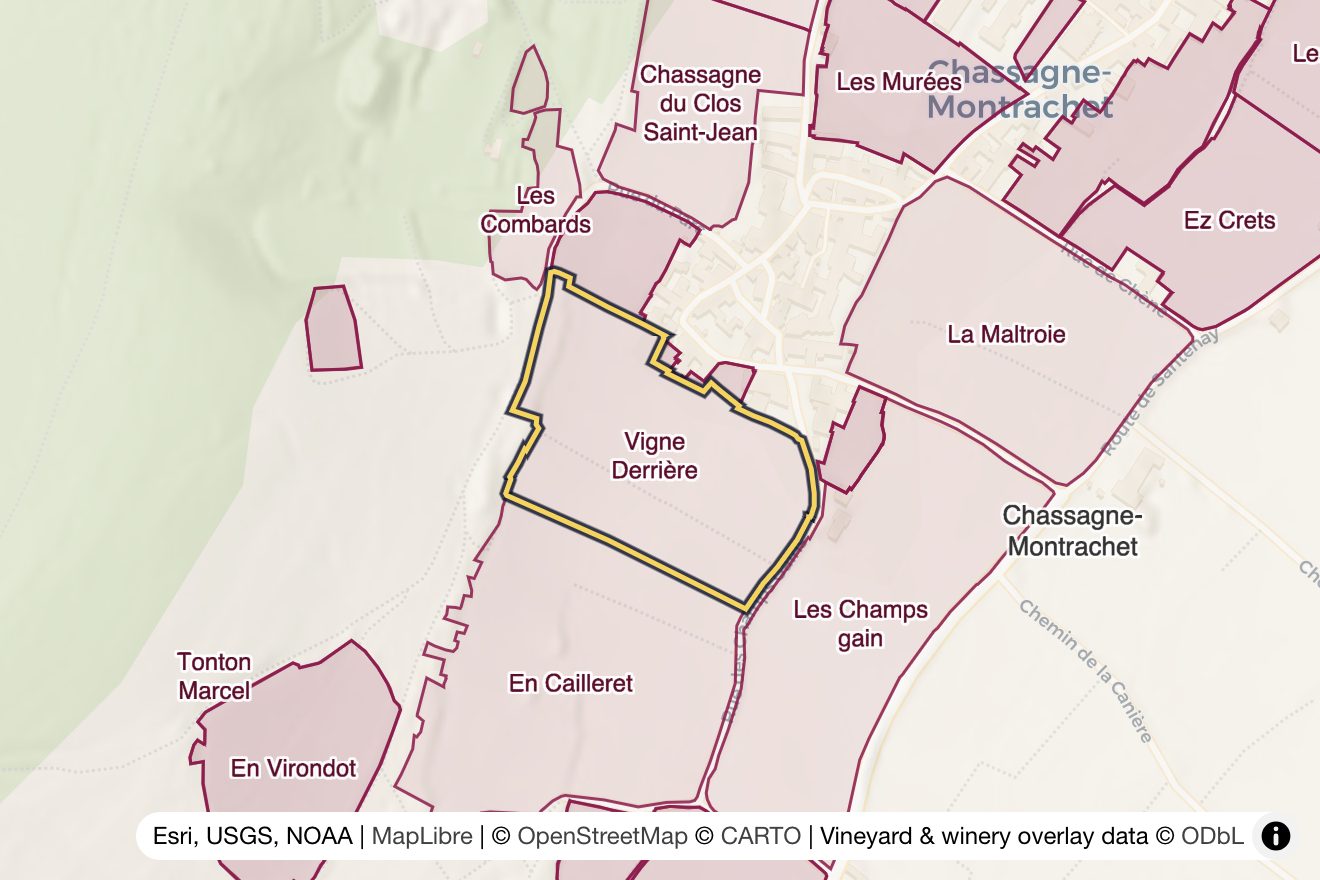
Overview & Location
The vineyard forms part of the Cailleret premier cru and lies close to the village of Chassagne-Montrachet, rising from just behind the first houses of the commune. This placement provides Vigne Derrière with optimal exposure while maintaining the protective influence of the Côte's distinctive escarpment. The climat benefits from its proximity to some of Chassagne-Montrachet's most celebrated premier crus, sharing similar geological foundations while expressing its own unique terroir characteristics.
Chassagne-Montrachet itself represents the southern anchor of the Côte de Beaune's most prestigious white wine-producing communes, following the renowned sequence of Meursault and Puligny-Montrachet. The commune's reputation rests on its ability to produce both exceptional Chardonnay and distinguished Pinot Noir, with the red wines often overshadowed by their white counterparts despite their considerable merit. Vigne Derrière embodies this duality, capable of producing wines from both varieties that reflect the site's particular terroir expression.
Size
Vigne Derrière encompasses approximately 3.8 hectares (9.4 acres) of vineyard land, making it a moderately-sized premier cru within Chassagne-Montrachet's classification hierarchy. This size places it among the mid-range premier crus in the commune, neither among the largest like Morgeot nor among the smallest parcels that dot the hillside. The vineyard's dimensions allow for sufficient diversity in exposure and soil composition while maintaining the coherent terroir identity that defines a true climat.
The relatively compact size of Vigne Derrière means that ownership is distributed among a limited number of producers, each working parcels that can range from a few rows to more substantial holdings. This concentration tends to enhance the climat's reputation, as fewer producers means greater potential for quality focus and terroir expression consistency across the vineyard's production.
Terroir & Geology
The geological foundation of Vigne Derrière reflects the complex sedimentary history that characterizes the Côte de Beaune's premier cru sites. The vineyard sits on Jurassic limestone formations, specifically on Bathonian limestone with white marl that provide the mineral backbone essential for both Chardonnay and Pinot Noir cultivation. These limestone layers, formed approximately 160-170 million years ago, create the well-draining yet water-retentive conditions that allow vines to develop deep root systems while maintaining consistent moisture access during critical growing periods.
The soil profile in Vigne Derrière displays the characteristic brown limestone-clay mixture known locally as "terre brune," with clay content ranging from 20-35% depending on the specific location within the climat. This clay proportion provides crucial water retention during dry periods while the limestone ensures proper drainage during wet seasons. The soil depth varies across the vineyard, generally measuring 60-80 centimeters before reaching the limestone bedrock, though some sections feature deeper pockets that can exceed one meter.
Slope characteristics play a crucial role in Vigne Derrière's terroir expression. The vineyard faces primarily southeast to east-southeast, providing optimal morning sun exposure while avoiding the most intense afternoon heat. The gradient ranges from 8-15% slope, steep enough to ensure excellent drainage and sun exposure while remaining manageable for viticultural operations. This orientation and slope combination creates ideal conditions for slow, even ripening of both Chardonnay and Pinot Noir.
The elevation of Vigne Derrière ranges from approximately 250-280 meters above sea level, positioning it in the sweet spot of the Côte de Beaune's elevation band where premier cru vineyards typically achieve their finest expression. This elevation provides sufficient cooling influence to maintain acidity while ensuring adequate warmth for complete phenolic ripening.
Climate & Microclimate
Vigne Derrière benefits from the continental climate that characterizes the Côte de Beaune, moderated by the protective influence of the Côte's escarpment and the vineyard's specific topographical position. The climat experiences the typical Burgundian pattern of cold winters, mild springs with frost risk, warm summers, and generally dry autumns that favor extended hanging time for optimal ripeness development.
The vineyard's southeast-facing exposure creates a distinctive microclimate that captures maximum benefit from morning sunlight, crucial for dew evaporation and disease prevention. This orientation allows the vines to accumulate heat energy early in the day while avoiding the potentially excessive afternoon sun that can lead to sunburn or premature shut-down of photosynthesis during hot periods. The slope gradient enhances air circulation, reducing humidity levels and creating conditions unfavorable for fungal diseases.
Wind patterns play an important role in Vigne Derrière's microclimate. The vineyard benefits from gentle air movement that flows down from the wooded hills above, providing natural cooling during warm periods and helping to maintain the temperature differential between day and night that is crucial for aromatic development and acidity retention in both grape varieties.
The vineyard's position relative to surrounding premier crus creates subtle but important microclimatic variations. Sites higher up the slope tend to be slightly cooler and experience greater diurnal temperature variation, while lower sections may retain slightly more warmth and experience less extreme temperature swings. These variations contribute to the complexity that can be achieved within this single climat.
Viticulture
Vigne Derrière is planted to both Chardonnay and Pinot Noir, with the distribution varying among individual producers based on their assessment of optimal varietal suitability for their specific parcels. Chardonnay typically occupies the majority of the vineyard area, reflecting both market demand and the general suitability of the terroir for white wine production, though the Pinot Noir sections produce wines of considerable distinction.
Vine age across the climat varies significantly, with some parcels containing vines planted in the 1960s and 1970s, while others feature more recent plantings from the 1990s and 2000s. The older vines, particularly those over 30 years of age, tend to produce the most complex and terroir-expressive wines, having developed deep root systems that access the limestone bedrock and provide more consistent fruit quality across varying vintage conditions.
Planting density in Vigne Derrière typically ranges from 10,000 to 12,000 vines per hectare, following traditional Burgundian practices that promote competition among vines and encourage deep rooting. This density requires careful canopy management to ensure adequate light penetration and air circulation, particularly important given the clay content in the soils that can promote vigorous vegetative growth.
Viticultural practices in the climat generally follow sustainable or organic principles, with many producers having adopted certified organic viticulture or biodynamic practices. The southeast-facing exposure and good air circulation reduce disease pressure compared to more sheltered sites, allowing for reduced chemical inputs. Cover crops are commonly employed in the inter-rows to promote soil health and manage vine vigor.
Site-specific challenges in Vigne Derrière include managing the varying soil depths across the vineyard, which can lead to uneven vine vigor and ripening patterns. The clay content, while beneficial for water retention, can create compaction issues if worked when wet, requiring careful timing of soil operations. The slope gradient, while advantageous for drainage and exposure, can create erosion concerns that must be managed through appropriate soil conservation practices.
Wine Character & Style
Wines from Vigne Derrière display the refined elegance and mineral complexity that characterize the finest expressions of Chassagne-Montrachet terroir. The Chardonnay wines exhibit a distinctive profile that balances the richness associated with the commune's white wines with a pronounced mineral backbone derived from the limestone-dominated soils.
Chardonnay from Vigne Derrière typically presents a pale gold color with subtle green highlights in youth, developing deeper golden tones with age. The aromatic profile combines citrus notes of lemon and grapefruit with stone fruit characteristics including white peach and apricot. Mineral expressions are prominent, featuring wet stone, chalk, and subtle saline notes that reflect the limestone terroir. With age, these wines develop complex secondary aromas including honey, hazelnut, and subtle spice notes.
On the palate, Chardonnay from this climat demonstrates excellent structure and balance. The attack is typically precise and focused, with citrus-driven acidity providing backbone and energy. Mid-palate weight varies depending on the producer's style and vintage conditions, but generally shows good concentration without excessive richness. The limestone influence contributes a distinctive chalky minerality that runs through the wine's structure, providing both texture and flavor complexity. The finish tends to be long and persistent, with mineral notes dominating and citrus characteristics providing freshness.
Pinot Noir from Vigne Derrière exhibits the elegant, perfumed style that represents Chassagne-Montrachet red wines at their finest. These wines typically display medium ruby color with good transparency, indicating the refined tannin structure that characterizes the site. Aromatic expressions center on red fruit characteristics including cherry, raspberry, and strawberry, often accompanied by floral notes of violet and rose. Earth and mineral components add complexity, with wet limestone and forest floor notes providing tertiary depth.
The palate structure of Vigne Derrière Pinot Noir emphasizes elegance over power, with silky tannins and bright acidity creating wines of considerable finesse. The limestone terroir contributes a mineral tension that elevates the fruit expression and provides aging potential. These wines rarely display the dense, powerful character of Côte de Nuits expressions, instead offering refined complexity and terroir transparency that reveals the site's distinctive characteristics.
Comparison to Surrounding Crus
Vigne Derrière's wines display characteristics that distinguish them from other premier crus within Chassagne-Montrachet while sharing the commune's overall terroir signature. Compared to Morgeot, perhaps the most famous premier cru in the commune, Vigne Derrière wines tend to show more immediate mineral precision with slightly less opulent fruit character. The limestone influence appears more pronounced, creating wines with greater vertical structure and perhaps more aging potential.
Vigne Derrière is a lieu-dit within the Cailleret premier cru and can be sold under that name; compared with the rest of Cailleret, Vigne Derrière typically produces wines with comparable elegance but often displays more pronounced earth and stone characteristics.
When compared to La Boudriotte, another well-regarded premier cru, Vigne Derrière wines generally show more restrained power with greater emphasis on mineral expression. La Boudriotte's slightly lower elevation and different soil composition tend to produce wines with more immediate fruit appeal, while Vigne Derrière requires more patience to reveal its complexity.
The relationship to Chassagne-Montrachet's Grand Cru holdings, specifically the portions of Montrachet and Bâtard-Montrachet that fall within the commune, reveals the quality level that Vigne Derrière can achieve. While lacking the extraordinary concentration and aging potential of the Grand Cru sites, the finest examples from Vigne Derrière share similar mineral precision and terroir transparency, representing exceptional value within the Burgundy hierarchy.
Notable Producers
Several distinguished producers work parcels within Vigne Derrière, each bringing their individual approach to terroir expression while respecting the site's inherent characteristics. Domaine Blain-Gagnard bottles a Caillerets from Vigne Derrière.
Domaine Marc Morey bottles a Caillerets that includes vines in Vigne Derrière.
Several smaller producers also work sections of Vigne Derrière, often producing limited quantities that command attention from knowledgeable collectors. These smaller-scale operations frequently employ traditional techniques that emphasize terroir expression over technological intervention, resulting in wines that clearly reflect the site's distinctive characteristics.
Historical Background & Classification
Vigne Derrière's recognition as a premier cru reflects centuries of viticultural evaluation that identified the site's superior potential for wine production. The climat name, which translates roughly as "vineyard behind," likely references its position relative to the village or other landmark features that were important when the vineyard boundaries were established.
The formal classification of Vigne Derrière as premier cru occurred with the establishment of the Appellation d'Origine Contrôlée system in the 1930s, building on the classification work begun in the medieval period and refined through centuries of observation by vignerons and négociants. The inclusion of this climat among Chassagne-Montrachet's premier cru sites recognized its consistent ability to produce wines of superior quality and distinctive terroir character.
Historical records indicate that Vigne Derrière has been under vine cultivation for several centuries, with vineyard boundaries that have remained relatively stable over time. The climate's reputation grew gradually through the 19th and early 20th centuries as Burgundy's classification system became more formalized and market recognition of premier cru sites increased.
The vineyard survived the phylloxera crisis of the late 19th century through replanting on American rootstock, a transition that maintained the site's viticultural continuity while potentially altering some aspects of terroir expression. Post-phylloxera replanting allowed for some optimization of variety selection and vine spacing that enhanced the climat's potential.
Aging Potential & Quality Level
Wines from Vigne Derrière demonstrate excellent aging potential that justifies their premier cru classification and commands respect among serious Burgundy enthusiasts. Chardonnay from the climat typically benefits from 3-5 years of cellaring to integrate the oak influence and allow the mineral characteristics to emerge fully. Properly stored examples can continue developing complexity for 10-15 years, with the finest examples showing remarkable longevity.
The evolution trajectory of Vigne Derrière Chardonnay follows a classic pattern of primary fruit integration, secondary complexity development, and eventual tertiary character emergence. Young wines often display prominent citrus and stone fruit characteristics with noticeable oak influence. After 3-5 years, the wines achieve better balance as the fruit and oak integrate, while mineral characteristics become more prominent. Mature wines develop honey, nut, and spice characteristics while maintaining the limestone-driven minerality that provides structure and distinction.
Pinot Noir from Vigne Derrière generally requires 5-7 years to reach optimal drinking, though the wines can be approached earlier with careful decanting. The aging potential extends 12-18 years for well-made examples, with the limestone terroir contributing to structural longevity. The evolution pattern emphasizes the development of earthy, mineral complexity while maintaining fruit freshness and elegant tannin structure.
Quality consistency across vintages reflects both the inherent terroir advantages of the site and the skill of the producers working within the climat. Challenging vintages may produce lighter, more austere wines, but the limestone foundation typically ensures adequate acidity and mineral character even in difficult years. Outstanding vintages can produce wines that rival more famous premier cru sites, demonstrating the exceptional potential contained within this climat.
The quality level achieved in Vigne Derrière places these wines firmly in the upper tier of Chassagne-Montrachet premier cru production, offering exceptional value relative to more famous sites while delivering authentic premier cru complexity and aging potential. For collectors and enthusiasts seeking access to genuine premier cru Burgundy character without the premium pricing of the most celebrated climats, Vigne Derrière represents an outstanding opportunity to experience the terroir complexity that defines this remarkable wine region.