Overview & Location
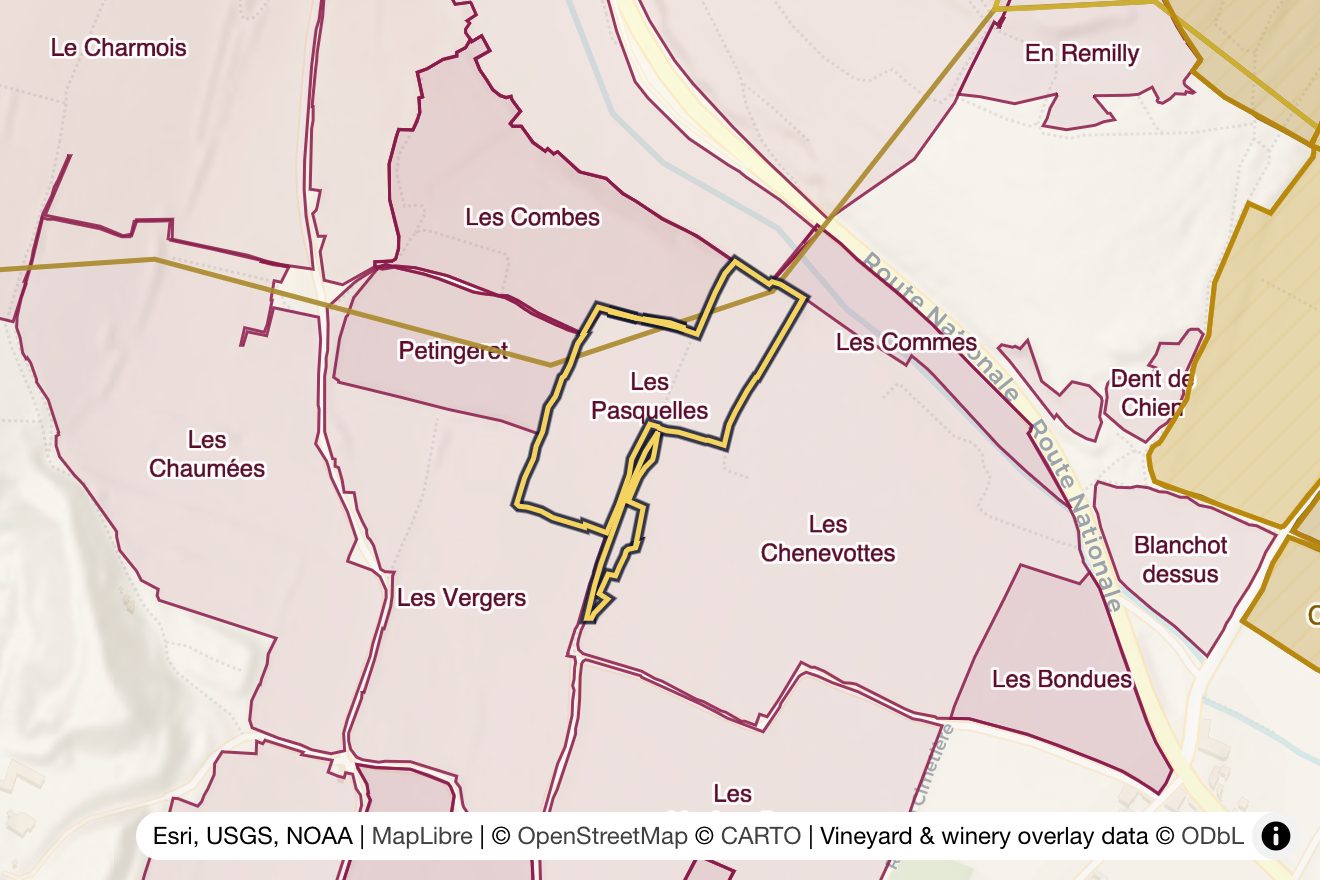
Geographically, Les Pasquelles sits within the broader context of the Côte d'Or, the golden slope that forms the heart of Burgundy's greatest wine-producing territory. The vineyard is positioned south of Dijon and approximately 12 to 15 kilometers southwest of Beaune, nestled in the rolling limestone hills that define this region's character. Within Chassagne-Montrachet itself, Les Pasquelles occupies mid-slope terrain that benefits from both the commune's favorable exposition and its distinctive geological inheritance.
The climat's location places it in close proximity to several other notable Premier Cru sites, including Les Vergers, creating a continuum of exceptional terroir that exemplifies the complexity of Chassagne-Montrachet's vineyard hierarchy. This positioning allows Les Pasquelles to capture many of the environmental advantages that have made Chassagne-Montrachet synonymous with high-quality Burgundian winemaking, particularly for Chardonnay-based whites that express both power and finesse.
Size
Les Pasquelles encompasses a small area of Premier Cru vineyard land, making it one of the smaller climats within Chassagne-Montrachet's collection of classified sites. This acreage is divided among multiple proprietors, following the traditional Burgundian pattern of parcelization that has evolved over centuries of inheritance practices and land transactions.
The vineyard's size allows for meaningful production volumes while maintaining the focused terroir expression that characterizes truly exceptional Premier Cru sites. The relatively compact nature of Les Pasquelles means that variations in soil composition, drainage, and microclimate remain subtle across the climat, contributing to a consistent stylistic signature that distinguishes wines from this site.
Terroir & Geology
The geological foundation of Les Pasquelles reflects the complex limestone-based soils that define the Côte de Beaune's character. The vineyard sits upon Jurassic limestone and marl formations that provide both the mineral complexity and drainage characteristics essential for premium viticulture. These ancient marine sediments, formed approximately 150-170 million years ago, create a soil matrix rich in calcium carbonate and marine fossils.
The topsoil composition varies subtly across the climat, with brown limestone soils (sols bruns calcaires) predominating in the upper portions of the vineyard, transitioning to slightly deeper, clay-enriched limestone soils in the lower sections. Clay content typically ranges from 15-25%, providing sufficient water retention during dry periods while maintaining the drainage necessary to prevent waterlogging. The presence of iron oxides contributes a characteristic reddish-brown coloration to certain soil patches, indicating good aeration and mineral availability.
Soil depth varies from 30-60 centimeters over the limestone bedrock, with the thinner soils generally found on steeper slopes where erosion has been more pronounced. This shallow soil profile forces vine roots to penetrate deeply into the fractured limestone substrate, accessing mineral nutrients and maintaining consistent water supply even during drought conditions.
The vineyard's aspect is primarily southeastern, providing optimal sun exposure throughout the growing season while protecting the vines from harsh western winds. Slopes range from 5-12%, creating natural drainage while remaining gentle enough to prevent excessive erosion. The elevation varies from approximately 250-280 meters above sea level, positioning the vineyard in the ideal altitude band for Burgundian viticulture.
The underlying geological structure includes bands of hard limestone interspersed with softer marl layers, creating natural drainage channels and varying soil chemistry across different parcels. This geological complexity contributes to the nuanced character that distinguishes Les Pasquelles wines from those produced on more homogeneous sites.
Climate & Microclimate
Les Pasquelles benefits from a continental climate moderated by the vineyard's specific topographical position and the thermal influence of nearby valleys. The climat experiences the classic Burgundian pattern of cold winters, variable springs, warm summers, and generally favorable autumn conditions that allow for extended ripening periods.
The southeastern exposure ensures optimal morning sun exposure, crucial for early warming and dew evaporation, while providing protection from potentially damaging afternoon heat during exceptionally warm vintages. This orientation also offers natural shelter from prevailing western winds, reducing desiccation stress and physical damage to developing grape clusters.
Mesoclimate effects within Les Pasquelles create subtle but important variations across different parcels. The upper slopes experience slightly cooler nighttime temperatures due to elevation and air drainage, promoting flavor retention and acidity preservation in the grapes. Lower parcels benefit from accumulated warmth and protection, often achieving full phenolic ripeness earlier in the harvest season.
Frost risk is generally moderate, with the vineyard's elevation and slope providing natural cold air drainage that reduces the likelihood of damaging spring frost events. However, the southeast aspect can occasionally create vulnerability during rapid spring warm-ups followed by cold snaps.
Annual rainfall averages 700-800 millimeters, distributed relatively evenly throughout the year with a slight spring peak. The limestone soils' drainage characteristics mean that excess moisture is rarely problematic, while the soil's water-retention capacity provides insurance against summer drought stress.
This intermediate position contributes to balanced ripening and consistent vintage-to-vintage performance.
Viticulture
Les Pasquelles is known for Chardonnay; the documented bottlings from the site are white. This varietal distribution reflects both the terroir's particular suitability for white wine production and market demand for Chassagne-Montrachet blanc.
Vine age across the climat varies significantly among different proprietors and parcels, ranging from recently planted sections less than 10 years old to centenarian vines that predate phylloxera replanting. The majority of vines fall within the 25-40 year age range, considered optimal for balancing vine vigor with fruit concentration and complexity.
Planting density typically ranges from 9,000-11,000 vines per hectare, following traditional Burgundian practices that maximize root competition and concentrate flavors while allowing sufficient space for mechanization where appropriate. Most producers employ the Guyot training system, either simple or double depending on vine vigor and parcel characteristics.
Rootstock selection focuses primarily on SO4, 5BB, and 161-49, chosen for their compatibility with limestone soils and resistance to phylloxera while maintaining appropriate vigor control. Clonal selection for Chardonnay emphasizes traditional Burgundian clones including 95, 96, and 76, valued for their ability to express terroir characteristics while providing reliable yields.
Viticultural practices vary among proprietors but generally emphasize sustainable or organic approaches, with many producers implementing biodynamic principles. Pruning typically occurs in late winter, with careful attention to bud load management to balance yield and quality. Canopy management involves selective leaf removal around grape clusters to improve air circulation and light penetration while avoiding excessive sun exposure that could compromise acidity.
Site-specific challenges include managing water stress on the thinner soils of upper slopes, controlling vigor in deeper soil areas, and timing harvest to achieve optimal phenolic ripeness while preserving acidity. The limestone soils can become compacted in wet conditions, requiring careful timing of vineyard operations to avoid soil damage.
Many producers implement cover crop programs using indigenous grasses and legumes to improve soil structure and biology while providing natural yield control through root competition. Integrated pest management practices address threats from grape moths, mites, and fungal diseases while minimizing chemical inputs.
Wine Character & Style
Wines from Les Pasquelles exhibit the characteristic minerality and complexity associated with Chassagne-Montrachet's limestone terroir while displaying distinctive stylistic elements that reflect the specific terroir characteristics of this climat. Chardonnay from Les Pasquelles typically demonstrates exceptional aromatic intensity, combining citrus and stone fruit elements with distinctive mineral undertones.
The aromatic profile commonly features lime zest, white peach, and pear notes in younger wines, evolving toward honey, hazelnut, and brioche complexity with age. Floral elements, particularly white flowers and acacia, provide additional aromatic dimension, while the limestone influence contributes chalky, wet stone minerality that serves as a constant thread throughout the wine's evolution.
Structurally, Les Pasquelles wines display impressive concentration and length, with natural acidity levels that provide both freshness and aging potential. The texture is characteristically rich yet refined, with sufficient glycerol content to provide mouthfeel weight without overwhelming the wine's inherent elegance. Alcohol levels typically range from 13-13.5%, providing adequate body while maintaining balance.
The limestone terroir contributes a distinctive saline quality that enhances the wine's complexity and food compatibility. This mineral signature becomes more pronounced with age, often developing into the classic "pierre à fusil" (gunflint) character prized in mature white Burgundy.
Oak integration varies among producers but generally emphasizes restraint, with new barrel usage ranging from 20-40% to provide subtle spice and vanilla notes without overwhelming the terroir expression. The best examples achieve seamless integration between fruit, mineral, and oak elements.
Comparison to Surrounding Crus
Les Pasquelles occupies a distinctive position within Chassagne-Montrachet's Premier Cru hierarchy, producing white wines from the north side of the commune. Compared to Morgeot, Les Pasquelles wines typically display greater mineral precision and elegance, with less overt power but more complex aromatic development.
The proximity to Caillerets creates interesting stylistic parallels, though Les Pasquelles generally produces slightly fuller-bodied wines with more pronounced fruit character, while Caillerets tends toward greater mineral austerity and aging requirements. Both sites share exceptional aging potential, but Les Pasquelles wines often become approachable earlier while maintaining long-term development capacity.
Relative to Chenevottes, located on lower slopes, Les Pasquelles demonstrates superior concentration and complexity, with more pronounced mineral character and better natural acidity due to its higher elevation and optimal exposition. Chenevottes wines, while excellent, typically lack the depth and aging potential of Les Pasquelles.
Comparisons with La Romanée reveal Les Pasquelles' more immediate appeal and accessibility, while La Romanée requires extended aging to reveal its full potential. Les Pasquelles achieves better balance between power and finesse, making it more versatile across different vintage conditions.
Although Chassagne-Montrachet shares Montrachet and Bâtard-Montrachet with Puligny-Montrachet and contains Criots-Bâtard-Montrachet, Les Pasquelles is a Premier Cru and lacks the concentration and prestige of those Grand Crus.
Notable Producers
A few producers, including Bruno Colin and Fernand et Laurent Pillot (both of whom label it Les Vergers), make wine from Les Pasquelles.
Domaine Philippe Bouzereau bottles a Chassagne-Montrachet Premier Cru Les Pasquelles.
Several négociant houses also source grapes from Les Pasquelles, including established firms that have long-standing relationships with local growers. These wines often provide more accessible expressions of the terroir while maintaining quality standards appropriate to the Premier Cru designation.
Historical Background & Classification
The vineyard name "Les Pasquelles" derives from local dialect referring to grazing lands, suggesting the site's agricultural history prior to vine cultivation. Historical records indicate viticulture in this area dating to medieval times, when monastic communities established many of Burgundy's foundational vineyard practices.
The formal recognition of Les Pasquelles as a Premier Cru occurred with the official INAO classification of Burgundy vineyards in 1937, though local recognition of the site's quality preceded official designation by several centuries. Historical documents from the 18th and 19th centuries reference wines from this climat commanding premium prices in regional markets.
The phylloxera crisis of the late 19th century severely impacted Les Pasquelles, as it did throughout Burgundy, leading to extensive replanting on American rootstocks in the early 20th century. This replanting period allowed for improvements in vineyard layout and drainage systems that enhanced the site's viticultural potential.
Throughout the 20th century, Les Pasquelles maintained its reputation among knowledgeable Burgundy enthusiasts, though it remained somewhat overshadowed by more famous Premier Cru sites within Chassagne-Montrachet. Recent decades have seen increased recognition of the climat's exceptional terroir and aging potential, leading to greater market appreciation and investment in vineyard improvements.
The establishment of appellation contrôlée regulations solidified Les Pasquelles' position within the Premier Cru hierarchy and established quality standards that continue to govern production today. These regulations specify permitted grape varieties, maximum yields, minimum alcohol levels, and other parameters that preserve the site's traditional character while allowing for evolution in viticultural and winemaking practices.
Aging Potential & Quality Level
Wines from Les Pasquelles demonstrate exceptional aging potential, with the limestone terroir providing the mineral foundation necessary for long-term development and complexity. Chardonnay from this climat typically requires 5-7 years of cellaring to reach initial maturity, with premium vintages continuing to evolve positively for 15-20 years or more under proper storage conditions.
The evolution trajectory follows classical white Burgundy patterns, with initial citrus and stone fruit character gradually incorporating secondary aromas of honey, nuts, and spice, while developing the distinctive mineral complexity that marks fully mature wines from limestone terroir. The natural acidity preservation characteristic of this site ensures that aged wines maintain freshness and vitality even as they develop tertiary complexity.
Quality consistency across vintages is generally excellent, with the terroir's characteristics providing stability even in challenging weather conditions. Cool vintages tend to produce wines with exceptional aging potential and mineral precision, while warmer years yield more immediate appeal while maintaining long-term development capacity.
Investment in vineyard improvements and winemaking refinements among various producers has contributed to steadily improving quality levels over recent decades. Modern understanding of terroir expression, combined with traditional Burgundian practices, has allowed Les Pasquelles to achieve its full potential as a distinguished Premier Cru site capable of producing wines that rival more famous climats in complexity and longevity.
The increasing recognition of Les Pasquelles' exceptional terroir and aging capacity has led to greater market appreciation, though prices remain more accessible than those commanded by the most prestigious Premier Cru sites. This accessibility, combined with exceptional quality potential, positions Les Pasquelles as an outstanding value within the Burgundy hierarchy for collectors seeking authentic terroir expression and long-term cellaring rewards.