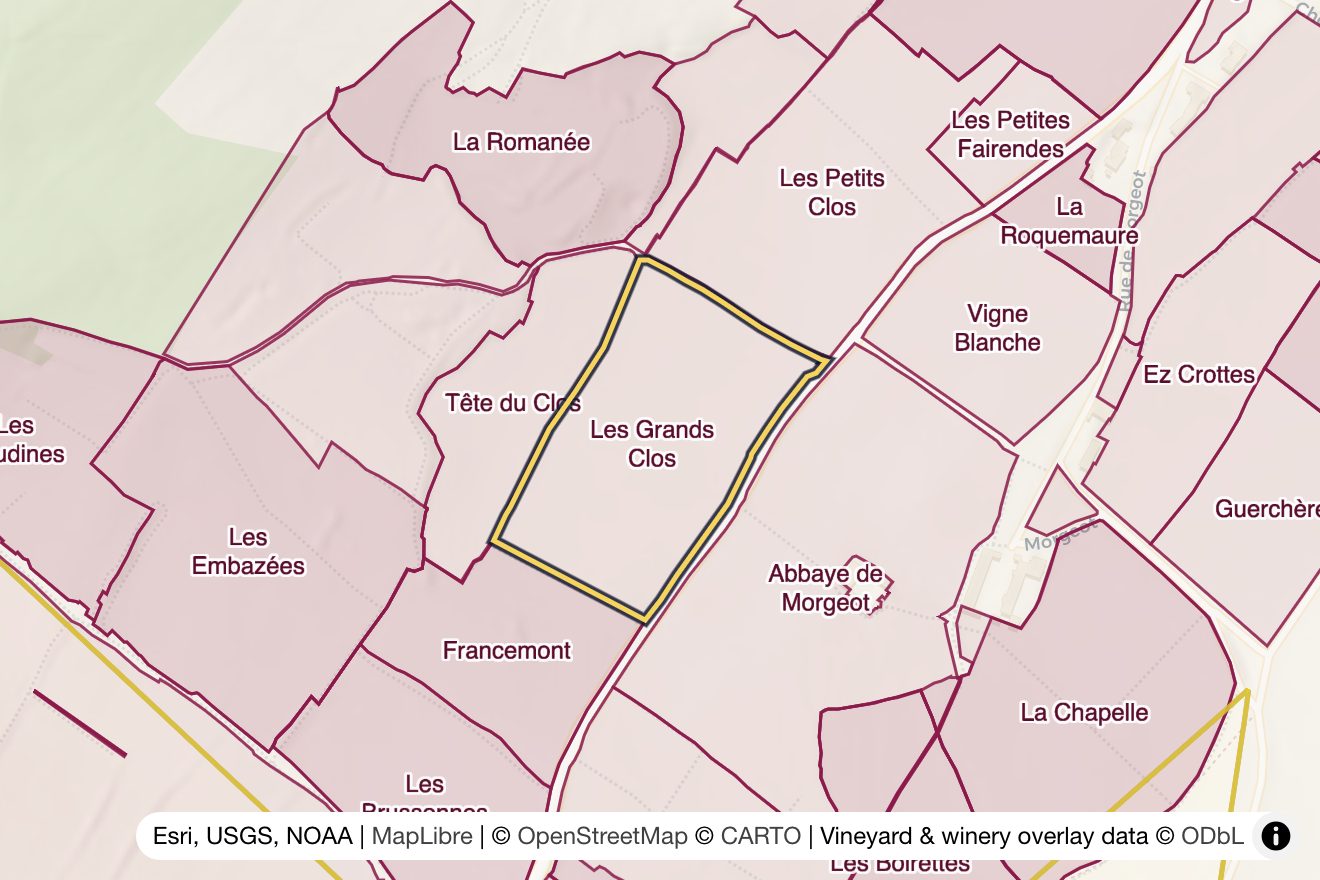
Overview & Location
The vineyard sits in the mid-slope position of Chassagne-Montrachet's hillside, positioned between the village appellation vineyards below and the steeper upper slopes. This placement within the Côte de Beaune's geological amphitheater provides Les Grands Clos with the optimal combination of drainage, sun exposure, and soil composition that defines Premier Cru quality in Burgundy. The climat benefits from the protected valley position that characterizes much of Chassagne-Montrachet, sheltered from harsh winds while maintaining excellent air circulation.
Within the broader context of the Côte de Beaune, Les Grands Clos occupies the transitional zone where the limestone-rich soils begin to show increased clay content, creating the complex soil matrix that produces wines of both power and elegance. The vineyard's position relative to the Saône River valley to the east provides morning sun exposure while the western hills offer protection from excessive afternoon heat.
Size
Les Grands Clos is a small Premier Cru climat within the Morgeot group of Chassagne-Montrachet's classified vineyards. This size allows for meaningful production while maintaining the intimate scale that enables meticulous viticulture.
This orientation maximizes the consistent terroir expression across the climat while allowing for subtle variations that different producers can emphasize through their viticultural and winemaking approaches.
Terroir & Geology
The geological foundation of Les Grands Clos exemplifies the complex limestone-based soils that define great Burgundy terroir. Domaine Coffinet-Duvernay describes three soil layers in its parcel: marl in the lower part, a white calcareous vein in the middle and complex rocky mineral soil at the top. This limestone base is overlaid with varying depths of clay-limestone mixture, creating the soil complexity that allows both Pinot Noir and Chardonnay to express their full potential.
This clay component provides water retention capabilities crucial during dry summers while the limestone ensures proper drainage and contributes to the wine's mineral character. Topsoil depth varies across the site, providing sufficient depth for root development while maintaining the stress necessary for quality grape production.
The vineyard lies on the hillside, steep enough to ensure excellent drainage while remaining manageable for sustainable viticulture. The vineyard faces primarily southeast to south.
Elevation ranges from 260 to 290 meters above sea level, positioning Les Grands Clos in the sweet spot for Burgundian viticulture. This elevation provides the thermal amplitude necessary for complex flavor development while remaining low enough to achieve full ripeness in most vintages. The slight elevation gradient across the vineyard creates microsite variations that contribute to the wine's complexity.
The underlying geological structure includes bands of hard limestone interspersed with softer marl layers, creating natural drainage channels while maintaining soil cohesion. Fossil inclusions, particularly oyster shells and marine organisms, indicate the ancient sea bed origins and contribute to the soil's mineral complexity. Iron oxide deposits create the reddish tinge visible in certain soil sections, contributing to the terroir's unique fingerprint.
Climate & Microclimate
Les Grands Clos benefits from a semi-continental climate moderated by its position within the Côte d'Or's protected valley system. The vineyard experiences the classic Burgundian pattern of warm, relatively dry summers and cold winters, with spring and autumn providing the crucial transition periods that define vintage character. Annual rainfall averages 750-800mm, distributed throughout the year with peak precipitation typically occurring in late spring and early autumn.
The microclimate within Les Grands Clos shows distinct characteristics shaped by its mid-slope position and southeastern exposure. Morning fog frequently settles in the lower sections of the vineyard during late summer and autumn, creating humidity that can influence harvest timing decisions. This fog typically burns off by mid-morning, providing the gradual temperature increase that promotes even ripening.
Air circulation patterns within the climat are generally excellent, with thermal currents moving up the slope during the day and cool air drainage at night. This diurnal temperature variation, often reaching 10-15°C difference between day and night temperatures during the ripening period, contributes significantly to the wines' aromatic complexity and natural acidity retention.
The vineyard's position provides protection from the prevailing westerly winds while remaining exposed enough to benefit from air movement that prevents excessive humidity buildup. During the critical ripening period from August through October, Les Grands Clos benefits from its southeasterly aspect.
Frost risk is moderate, with the slope providing natural protection from the most severe spring frosts that can affect lower-lying areas. However, the increasing unpredictability of climate patterns has made frost protection an important consideration for producers working in this climat.
Viticulture
Les Grands Clos is planted to both Chardonnay and Pinot Noir. This proportion has remained relatively stable over recent decades, though individual producers may emphasize one variety over another based on their house style and market focus.
Vine age varies between holdings. Mature vines are valued here, providing the maturity necessary for complex flavor development while maintaining adequate vigor for consistent production. Older vine sections, particularly those exceeding 50 years, are highly prized for their deep root systems and naturally reduced yields.
Planting density typically ranges from 10,000 to 12,000 vines per hectare, following traditional Burgundian practices that promote competition among vines while ensuring adequate sunlight penetration. The higher density plantings generally produce more complex wines, though they require more intensive canopy management and selective harvesting practices.
Viticultural practices in Les Grands Clos emphasize sustainable and increasingly organic approaches, with many producers implementing biodynamic principles. Soil cultivation typically involves shallow plowing to maintain soil structure while avoiding damage to the vine root systems. Cover crop management varies among producers, with some maintaining permanent grass coverage in the inter-rows while others practice seasonal cultivation.
Canopy management is crucial given the climat's relatively fertile soils and potential for excessive vigor. Careful shoot positioning, leaf removal, and green harvesting are standard practices to ensure proper sun exposure and air circulation around the grape clusters. The timing of these interventions is critical, as the climat's microclimate can create rapid vegetation growth during favorable conditions.
Harvest timing in Les Grands Clos typically occurs 1-3 days later than the surrounding village-level vineyards, reflecting the slightly cooler microclimate and the producers' emphasis on achieving full phenolic ripeness. Hand harvesting remains the standard, with most producers employing experienced picking teams who can make selection decisions in the vineyard.
Wine Character & Style
Wines from Les Grands Clos display the sophisticated balance and complexity that define great Chassagne-Montrachet Premier Cru, with distinct characteristics that reflect the climat's unique terroir expression. The Pinot Noir wines typically show a deep ruby color with garnet highlights, developing brick tones with age. The aromatic profile combines red fruit elements (particularly cherry, raspberry, and strawberry) with earthy undertones of forest floor, mushrooms, and subtle spice notes.
On the palate, Les Grands Clos Pinot Noir demonstrates the classic Chassagne-Montrachet structure of firm tannins balanced by vibrant acidity and concentrated fruit flavors. The wine's texture shows more body and richness than many Côte de Beaune Premier Crus, reflecting the climat's clay-rich soils and favorable sun exposure. Mineral elements, particularly limestone-derived notes, provide backbone and contribute to the wine's aging potential.
The Chardonnay from Les Grands Clos expresses the site's terroir through a combination of citrus fruit, white flowers, and distinctive mineral characteristics. The wine typically shows excellent concentration while maintaining the elegance expected from Premier Cru Chassagne-Montrachet. Oak integration is generally seamless, with the best examples showing how judicious barrel use can enhance rather than mask the terroir expression.
Structural elements in both varietals include firm acidity levels that provide aging potential while maintaining approachability in youth. The alcohol levels typically range from 12.5-13.5% for Pinot Noir and 13-14% for Chardonnay, reflecting complete ripeness without excessive concentration. Tannin structure in the red wines shows sufficient grip for medium to long-term aging while avoiding excessive astringency.
The overall style profile of Les Grands Clos wines emphasizes power balanced by finesse, with the terroir providing enough richness to support extended aging while maintaining the elegance that distinguishes Premier Cru quality. The wines typically require 3-5 years of bottle age to fully integrate their components and show their true character.
Comparison to Surrounding Crus
Les Grands Clos occupies a distinctive position within Chassagne-Montrachet's Premier Cru hierarchy, showing characteristics that distinguish it from neighboring climats while sharing the overall commune style.
Les Grands Clos is one of the climats whose wine may be sold as Morgeot, the largest Premier Cru in Chassagne-Montrachet, and its wines show the power typical of Morgeot, while maintaining comparable elegance and mineral expression. This difference primarily stems from Les Grands Clos's more favorable sun exposure and better-draining soils, which promote more concentrated grape production.
When compared to the highly regarded Clos Saint-Jean Premier Cru, Les Grands Clos wines typically display more immediate accessibility while offering similar aging potential. The soil differences between the two sites (with Les Grands Clos showing more clay content) result in wines with greater body and richness, though potentially less finesse in youth.
In relation to the village-level wines from Chassagne-Montrachet, Les Grands Clos demonstrates the clear step up in complexity, concentration, and aging potential that justifies its Premier Cru classification. The wines show greater mineral depth, more complex aromatic profiles, and superior structural balance compared to even the best village-level parcels.
Chassagne-Montrachet has Grand Cru vineyards of its own: Criots-Bâtard-Montrachet lies wholly within the commune, and it shares Bâtard-Montrachet and Montrachet with Puligny-Montrachet.
Notable Producers
Several distinguished producers own parcels within Les Grands Clos, each contributing their unique interpretation of this terroir's potential. Niellon's approach emphasizes minimal intervention winemaking that allows the terroir characteristics to express themselves fully.
Domaine Jean-Noël Gagnard's Morgeot red draws on the lieux-dits Grands Clos and Clos Chareau. Gagnard's wines from this climat are known for their traditional style and excellent aging potential, reflecting old-vine fruit and careful vineyard management practices passed down through generations.
Domaine Coffinet-Duvernay bottles a Chassagne-Montrachet 1er Cru Morgeot Les Grands Clos. These producers often create wines that represent excellent value within the Premier Cru category while maintaining high quality standards. Their smaller production volumes allow for extremely careful vineyard management and selective winemaking practices.
The stylistic variations among producers primarily reflect different approaches to oak usage, extraction techniques, and harvest timing rather than fundamental terroir differences. However, parcel location within the climat can influence wine character, with higher-elevation sections typically producing wines with more mineral expression and lower sections showing greater richness and body.
Historical Background & Classification
The history of Les Grands Clos as a recognized quality vineyard site extends back several centuries, with documented wine production from this area dating to the medieval period. The name refers to a clos, an enclosed vineyard.
Les Grands Clos is a classified Premier Cru climat of Chassagne-Montrachet, and its wine may also be sold under the Morgeot name. This classification formalized centuries of market recognition and quality assessment, establishing legal protection for the climat name and production standards.
Throughout the 20th century, Les Grands Clos maintained its reputation for producing age-worthy wines that represented excellent value within the Premier Cru category. The vineyard survived the phylloxera crisis of the late 19th century through replanting with grafted vines, and recovered from the disruptions of both World Wars to emerge as a consistently high-quality source.
Recent decades have seen increased recognition of Les Grands Clos wines in international markets, with wine critics and collectors appreciating the climat's combination of immediate appeal and long-term aging potential. This recognition has led to increased demand and pricing that reflects the vineyard's true quality level.
Aging Potential & Quality Level
Les Grands Clos wines demonstrate excellent aging potential that justifies their Premier Cru classification and supports their reputation among collectors and enthusiasts. The Pinot Noir wines typically reach their optimal drinking window 5-8 years after vintage, though exceptional examples can continue improving for 15-20 years under proper storage conditions. The combination of natural acidity, firm tannin structure, and concentrated fruit provides the foundation necessary for extended aging.
Chardonnay wines from Les Grands Clos show a different but equally impressive aging trajectory, typically reaching peak expression 4-7 years post-vintage while maintaining quality for 10-15 years in strong vintages. The wines develop complex secondary aromas of honey, nuts, and mineral notes while retaining their fresh fruit characteristics and vibrant acidity.
Quality consistency across vintages is notably high, reflecting both the terroir's favorable characteristics and the skilled management by the various producers working in this climat. Even in challenging vintages, Les Grands Clos typically produces wines that surpass regional quality averages, demonstrating the site's inherent advantages in terms of drainage, sun exposure, and soil composition.
The evolution pattern for both red and white wines shows gradual integration of primary fruit flavors with tertiary complexity, developing the earthy, mineral, and aged fruit characteristics that define mature Burgundy. Properly cellared examples show remarkable longevity, with wines from exceptional vintages maintaining their structure and appeal for decades.
Investment potential for Les Grands Clos wines remains strong, particularly from established producers with consistent quality records. The combination of limited production, increasing international recognition, and proven aging ability supports continued appreciation in value over time. However, the primary appeal lies in the wines' drinking pleasure rather than purely financial considerations, reflecting the ultimate goal of great terroir expression through careful viticulture and winemaking.
The overall quality level positions Les Grands Clos firmly within the upper tier of Chassagne-Montrachet Premier Crus, offering wines that compete favorably with more famous appellations while often providing superior value. This combination of quality, aging potential, and relative accessibility makes Les Grands Clos an essential reference point for understanding the excellence possible within Burgundy's complex terroir hierarchy.