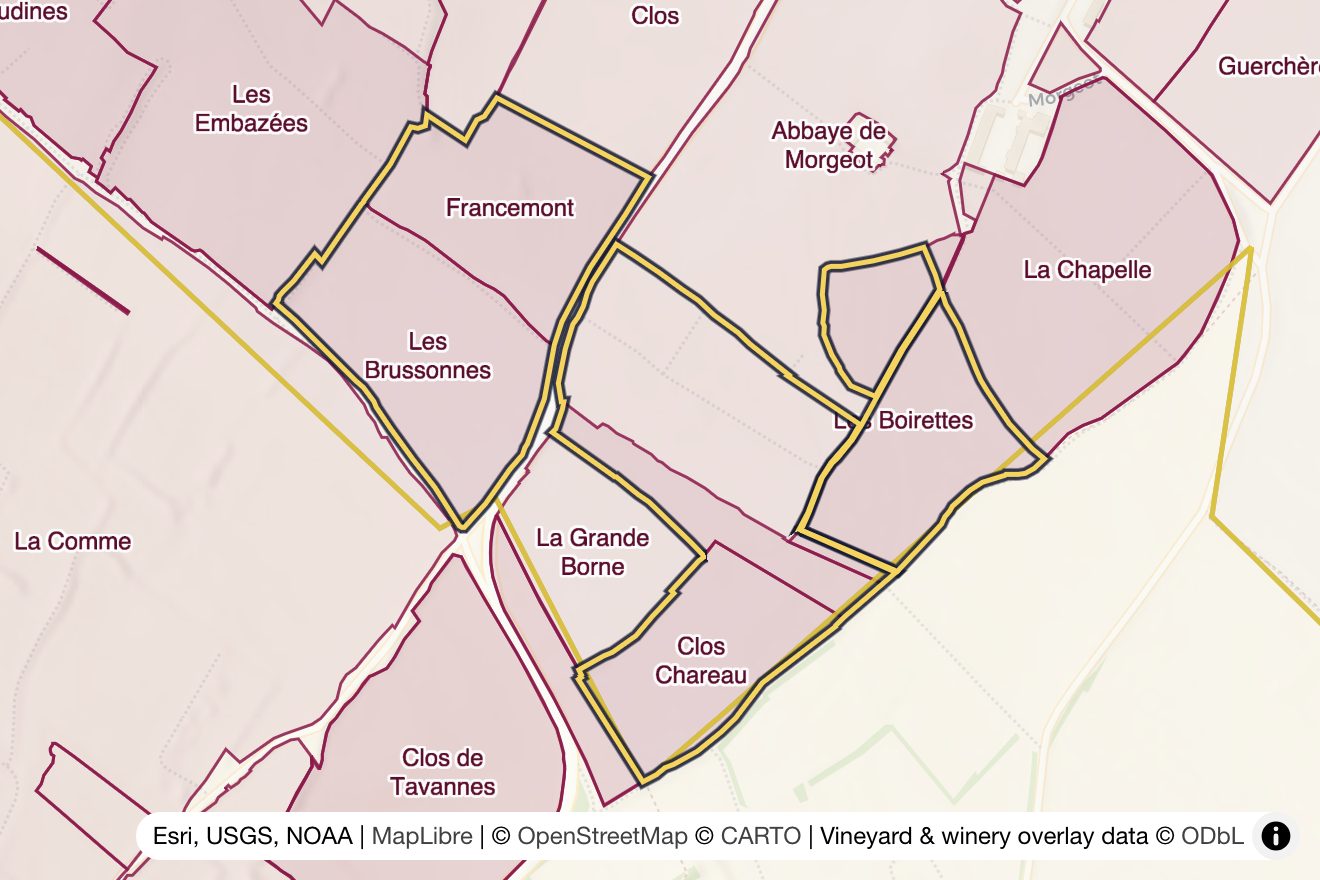
Overview & Location
Positioned low on the slope in the southern part of Chassagne-Montrachet, Les Brussonnes benefits from an ideal exposition that captures both morning and afternoon sun while maintaining protection from harsh westerly winds. The vineyard's location places it among the commune's most favored sites, sharing the same geological foundation and climatic advantages that have made Chassagne-Montrachet synonymous with exceptional white Burgundy production for over a millennium.
The climat's position within the broader Côte de Beaune context is particularly significant, as it represents the southern continuation of the limestone escarpment that defines this sub-region's viticultural identity. Les Brussonnes lies well to the south of the Montrachet Grand Cru, at the southern end of the commune toward Santenay.
Size
Les Brussonnes is one of the Premier Cru climats grouped within Morgeot. This relatively intimate scale allows for detailed terroir expression while providing sufficient production volume to establish a recognizable market presence. The vineyard's compact dimensions facilitate consistent viticulture practices across the entire climat, ensuring uniform quality standards and terroir expression that larger sites often struggle to maintain.
The parcellation within Les Brussonnes reflects centuries of Burgundian inheritance traditions, with ownership divided among several domaines and négociant houses. This fragmentation, while characteristic of Burgundy's complex ownership patterns, means that the total annual production from Les Brussonnes remains limited, contributing to the wines' exclusivity and market positioning among serious Burgundy collectors and enthusiasts.
Terroir & Geology
The geological foundation of Les Brussonnes reveals the complex interplay of limestone, clay, and marl that defines exceptional white Burgundy terroir. The vineyard's soils are clay-limestone over limestone bedrock. This underlying geological structure provides excellent drainage while maintaining sufficient water retention capacity for vine health during dry periods.
The soil profile in Les Brussonnes typically extends 60-80 centimeters in depth before reaching the limestone bedrock, with the topsoil composition varying subtly across different sections of the vineyard. The upper portions contain approximately 35-40% clay content mixed with limestone debris and fossil fragments, creating a well-structured growing medium that provides both nutrients and excellent drainage characteristics. Lower on the slope, clay content increases to 45-50%, offering greater water retention and a slightly different mineral profile that influences vine growth patterns and grape development.
The slope gradient in Les Brussonnes ranges from 8-12 degrees, providing natural drainage while preventing excessive erosion. This gentle but consistent incline ensures that excess rainfall flows naturally downslope while allowing the soil to retain adequate moisture during critical growing periods. The vineyard's southeast-facing aspect captures optimal solar exposure throughout the growing season, with morning sun providing gentle warming while afternoon exposure ensures complete photosynthetic development without excessive heat stress.
Elevation within Les Brussonnes ranges from 240-260 meters above sea level, positioning the vineyard within the optimal altitude band for Chardonnay cultivation in Burgundy. This elevation provides the necessary diurnal temperature variation for acid retention while ensuring sufficient warmth accumulation for complete phenolic ripening. The specific elevation profile also influences wind patterns and frost protection, with cold air drainage following natural contour lines that sweep potentially damaging spring frost away from the vine canopy.
The presence of iron oxide deposits throughout the soil profile contributes distinctive mineral characteristics to Les Brussonnes wines, while calcium carbonate content averaging 25-30% provides the alkaline soil chemistry that Chardonnay requires for optimal flavor development. Trace elements including magnesium, potassium, and phosphorus create a complete nutritional profile that supports healthy vine growth without encouraging excessive vigor that could compromise fruit quality.
Climate & Microclimate
Les Brussonnes benefits from a continental climate moderated by maritime influences that occasionally penetrate inland from the Atlantic Ocean, approximately 400 kilometers to the west. The vineyard's specific microclimate results from its position within Chassagne-Montrachet's natural amphitheater, which creates distinct temperature patterns and wind flows that differentiate it from surrounding climats.
Average annual rainfall in Les Brussonnes measures approximately 750-800 millimeters, with precipitation distributed relatively evenly throughout the year but concentrated during autumn and winter months. Spring rainfall typically provides adequate soil moisture for bud break and early season growth, while summer precipitation remains moderate, reducing disease pressure while ensuring consistent vine hydration. The vineyard's excellent drainage characteristics prevent waterlogging during wet periods while the clay component in the soil profile maintains moisture reserves during dry spells.
Temperature patterns in Les Brussonnes reflect classic continental characteristics with warm summers averaging 25-28°C during peak growing season and cold winters that rarely drop below -10°C. The crucial diurnal temperature variation during harvest season typically ranges 12-15°C between day and night temperatures, allowing for continued acid retention while achieving full phenolic ripeness. This temperature differential proves essential for developing the complex aromatics and balanced structure that characterize Premier Cru quality.
Frost protection in Les Brussonnes benefits from natural air drainage patterns that channel cold air away from vine canopy levels during critical spring periods. Late spring frost events occur approximately once every four years, requiring vigilant monitoring and occasional protection measures during vulnerable periods.
Wind patterns in Les Brussonnes generally follow prevailing west-northwest directions, providing beneficial air circulation that reduces humidity levels and disease pressure while avoiding excessive desiccation. The surrounding topography creates natural wind breaks that moderate extreme weather events while maintaining sufficient airflow for healthy vine development.
Viticulture
Chardonnay represents the predominant grape variety in Les Brussonnes, occupying approximately 95% of the planted area, with limited Pinot Noir cultivation in specific parcels where soil composition and exposure favor red wine production. The Chardonnay clones planted in Les Brussonnes include traditional selections 95, 96, and 548, chosen for their ability to express terroir characteristics while maintaining consistent production levels and disease resistance.
Vine age in Les Brussonnes varies significantly among different parcels, with some sections containing vines planted in the 1960s and 1970s, while other areas feature more recent plantings from the 1990s and early 2000s. The average vine age across the entire climat approximates 35-40 years, providing the optimal balance between established root systems that access deep mineral reserves and sufficient vigor for consistent production. Older vine parcels typically produce the most concentrated and complex fruit, while younger sections contribute freshness and aromatic intensity to final blends.
Planting density in Les Brussonnes follows traditional Burgundian practices, with approximately 10,000-12,000 vines per hectare depending on specific parcel characteristics and individual domaine preferences. Higher density plantings encourage root competition and limit individual vine yields, promoting greater concentration and terroir expression. The traditional spacing of 1.2 meters between rows and 0.8 meters between individual vines facilitates mechanical cultivation while maintaining the vine stress levels necessary for premium quality fruit production.
Viticulture practices in Les Brussonnes emphasize sustainable and increasingly organic approaches, with most producers implementing integrated pest management systems that minimize chemical interventions while maintaining vine health and productivity. Soil cultivation typically involves shallow plowing to control weeds and improve soil structure without disturbing root systems, while cover crop management varies among producers based on specific terroir conditions and vintage requirements.
Pruning follows the Guyot system predominantly, with some parcels utilizing cordon training depending on vine age and growth characteristics. Winter pruning aims for 8-10 buds per vine to optimize fruit concentration while maintaining adequate production levels. Summer canopy management includes selective shoot thinning, leaf removal around fruit zones to improve air circulation and sun exposure, and green harvesting when necessary to achieve optimal crop levels.
Harvest timing in Les Brussonnes typically occurs during the second and third weeks of September, with specific dates varying according to vintage conditions and individual producer preferences. Hand harvesting remains standard practice, ensuring careful fruit selection and minimal oxidation during transport. Yield levels generally range from 45-55 hectoliters per hectare for Chardonnay, with variations based on vine age, vintage conditions, and producer quality standards.
Wine Character & Style
Chardonnay from Les Brussonnes expresses a distinctive aromatic profile that immediately identifies its Premier Cru status while revealing the specific terroir characteristics that differentiate it from other Chassagne-Montrachet climats. The wines typically display intense mineral-driven aromatics featuring wet stone, limestone dust, and subtle flint notes that reflect the vineyard's geological foundation. These primary mineral characteristics integrate with complex fruit expressions including white peach, pear, and citrus elements, particularly lemon zest and grapefruit pith.
Secondary aromatic development in Les Brussonnes Chardonnay reveals layers of complexity that emerge with proper cellaring. Hazelnut and almond characteristics develop within 3-5 years, while extended aging produces honey, beeswax, and subtle spice notes including white pepper and ginger. The wines maintain remarkable freshness throughout their development, with the inherent acidity providing structure for decades of positive evolution.
Palate characteristics in Les Brussonnes demonstrate the classical weight and texture associated with Premier Cru Chassagne-Montrachet while expressing unique personality traits specific to this climat. The wines exhibit medium to full body with a silky, almost creamy texture that coats the palate without excessive richness. Acidity remains vibrant and well-integrated, providing structural backbone while enhancing the wine's food compatibility and aging potential.
Flavor development follows the aromatic progression, beginning with precise mineral and citrus notes on the attack, developing through stone fruit and orchard fruit characteristics in the mid-palate, and finishing with persistent mineral and subtle oak influences. The integration of oak varies among producers, with most employing 25-35% new French oak to enhance complexity without overwhelming the terroir expression.
The finish in Les Brussonnes Chardonnay extends 45-60 seconds in top vintages, displaying remarkable persistence and complexity. Mineral notes dominate the conclusion, with limestone and chalk characteristics providing a signature that immediately identifies the wine's origin. Subtle salinity often appears in the final moments, reflecting the ancient marine origins of the vineyard's geological foundation.
Structural elements in Les Brussonnes include alcohol levels typically ranging from 13.0-13.5% in balanced vintages, providing sufficient richness without excessive weight. Total acidity generally measures 6-7 grams per liter, ensuring long-term aging potential while maintaining immediate approachability. pH levels averaging 3.2-3.4 contribute to the wines' fresh character and microbiological stability.
Comparison to Surrounding Crus
Les Brussonnes occupies a distinctive position within Chassagne-Montrachet's Premier Cru hierarchy, expressing characteristics that differentiate it from neighboring climats while sharing fundamental similarities with the commune's finest sites. Les Brussonnes is one of the climats that may be sold under the Morgeot name, and several producers bottle it as Morgeot.
The relationship between Les Brussonnes and Caillerets, another respected Premier Cru in the commune, reveals interesting textural differences, with Les Brussonnes generally producing wines with more evident limestone influence and tighter structural integration, while Caillerets tends toward greater immediate charm and accessible fruit expression. Both sites produce wines of comparable quality levels, but Les Brussonnes requires additional cellaring time to reveal its full potential.
When compared to Chassagne-Montrachet's portion of the Montrachet Grand Cru vineyard, Les Brussonnes shares similar mineral foundations but lacks the extraordinary concentration and complexity that defines Grand Cru quality. However, Les Brussonnes wines often display superior value propositions and can rival Grand Cru quality in exceptional vintages, particularly after extended cellaring periods that allow full terroir expression to emerge.
Les Ruchottes, another Premier Cru in Chassagne-Montrachet, produces wines with more obvious power and richness compared to Les Brussonnes' more elegant and refined approach. Les Brussonnes emphasizes finesse over force, developing complexity through subtlety rather than impressive concentration, making it particularly appealing to enthusiasts who appreciate nuanced terroir expression.
The comparison with Bâtard-Montrachet Grand Cru reveals both similarities and differences, with Les Brussonnes sharing some of the Grand Cru's mineral precision while lacking its extraordinary depth and aging potential. Les Brussonnes represents an excellent introduction to the style and character that makes Chassagne-Montrachet's finest sites among Burgundy's most treasured terroirs.
Notable Producers
Several distinguished domaines produce exceptional wines from Les Brussonnes, each interpreting the climat's terroir through individual winemaking philosophies and techniques. Domaine Simon Colin bottles a Morgeot Les Brussonnes, while Domaine Thomas Morey and Domaine Fontaine-Gagnard farm parcels here for their Morgeot cuvées.
Historical Background & Classification
Les Brussonnes traces its viticultural history to the medieval period when Cistercian monks of the Abbaye de Maizières, which held land at nearby Morgeot, began clearing and planting vines in the area.
Historical records from the 14th and 15th centuries describe Les Brussonnes as producing wines of superior quality that commanded premium prices in regional markets, establishing the foundation for its eventual Premier Cru classification.
During the 17th and 18th centuries, Les Brussonnes gained recognition among Burgundy merchants and exporters as a source of consistently excellent white wines that represented the distinctive character of Chassagne-Montrachet terroir. The vineyard's reputation survived the phylloxera crisis of the late 19th century through careful replanting with grafted vines selected specifically for compatibility with the site's terroir characteristics.
The Chassagne-Montrachet appellation was established in 1937, and Les Brussonnes was subsequently listed as one of its Premier Cru climats. The classification committee recognized the climat's consistent quality production, distinctive terroir characteristics, and historical reputation as justification for Premier Cru status within the Chassagne-Montrachet appellation hierarchy.
Subsequent decades have confirmed the wisdom of the original classification, with Les Brussonnes continuing to produce wines that exemplify Premier Cru quality standards while developing an increasingly sophisticated reputation among serious Burgundy enthusiasts and collectors worldwide.
Aging Potential & Quality Level
Chardonnay from Les Brussonnes demonstrates exceptional aging potential that rivals many Grand Cru sites, with properly cellared bottles showing positive development for 15-25 years in superior vintages. The wines' inherent acidity and mineral structure provide the foundation for extended cellaring, while the terroir's natural balance ensures graceful evolution without premature decline.
Young Les Brussonnes typically requires 3-5 years of cellaring to integrate oak influences and develop secondary aromatic complexity. During this initial development period, the wines often appear closed and austere, revealing their true character only after sufficient time allows proper integration of all components. Patience proves essential for experiencing the climat's full potential.
The optimal drinking window for Les Brussonnes generally occurs between 8-18 years after vintage in exceptional years, when the wines achieve perfect balance between youthful freshness and mature complexity. During this period, the integration of primary fruit characteristics with developed mineral notes creates the harmonious complexity that defines Premier Cru quality.
Quality consistency in Les Brussonnes remains remarkably high across different vintages, with even challenging years producing wines that express clear terroir characteristics and maintain aging potential. This consistency reflects both the inherent quality of the terroir and the expertise of producers who understand how to maximize the site's potential regardless of vintage conditions.
The long-term evolution of Les Brussonnes reveals the true nobility of this climat, with aged examples displaying extraordinary mineral complexity, subtle oxidative notes, and persistent finish lengths that continue for minutes rather than seconds. These mature expressions represent some of Burgundy's finest examples of how exceptional terroir combined with patient cellaring can produce wines of transcendent quality and profound emotional impact.
Investment potential for Les Brussonnes continues to strengthen as wine enthusiasts increasingly recognize the climat's exceptional quality-to-price ratio compared to more famous Premier Cru and Grand Cru sites. The combination of limited production, consistent quality, and reasonable pricing positions Les Brussonnes as an outstanding value within the prestigious Chassagne-Montrachet appellation.