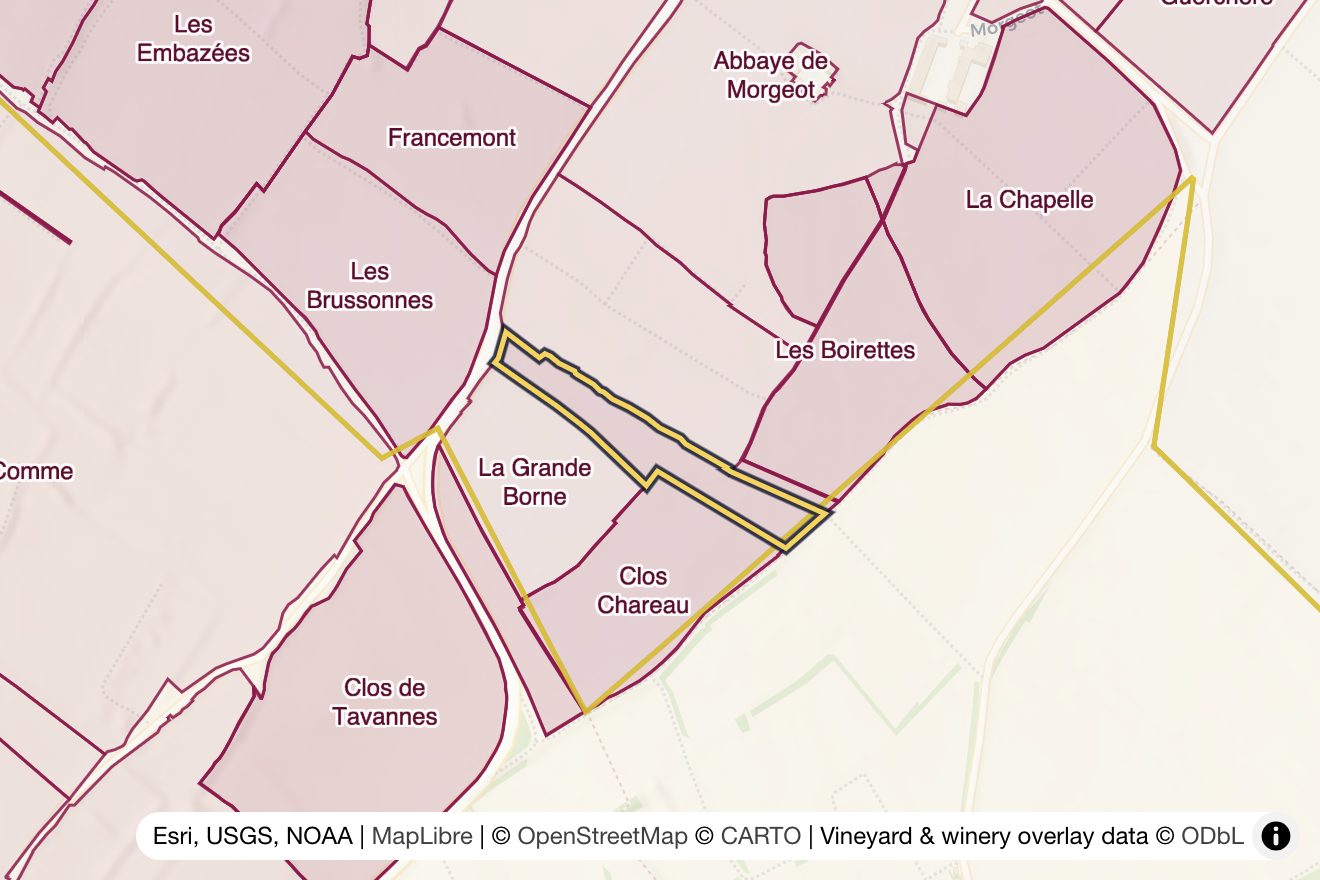
Overview & Location
The climat is positioned in the upper mid-slope section of Chassagne-Montrachet's hillside, benefiting from the optimal elevation zone that characterizes many of Burgundy's most celebrated vineyard sites. La Cardeuse borders several other notable Premier Crus, creating a mosaic of terroir variations that demonstrate the remarkable geological and climatic diversity within this relatively compact commune.
Within the broader context of the Côte de Beaune, La Cardeuse represents the continuation of the limestone-rich geological formation that extends southward from Puligny-Montrachet, carrying with it the potential for both exceptional white and red wine production. The vineyard's position places it within the influence of both the cooling winds that flow down from the Hautes-Côtes and the warming effects of the broader Saône valley, creating a unique mesoclimate that contributes significantly to its distinctive wine character.
Size
La Cardeuse is a small clos entirely enclosed by high stone walls, making it one of the smaller climats within Chassagne-Montrachet's Premier Cru hierarchy. This size allows for meaningful production volumes while maintaining the intimate scale that enables careful vineyard management and terroir expression. The vineyard's compact nature means that soil variations, while present, occur between the deep clay soils of the upper and lower parcels and the very shallow clay and marl topsoil mid-slope, contributing to a recognizable house style across the climat.
The parcel structure within La Cardeuse reflects its history as a Moreau family monopole, now divided between the brothers Alex and Benoit Moreau. This division of ownership, while creating complexity in the marketplace, also provides valuable insight into how different viticultural approaches can influence the expression of a single terroir, offering wine enthusiasts the opportunity to compare stylistic interpretations of the same fundamental site characteristics.
Terroir & Geology
The geological foundation of La Cardeuse reveals the complex sedimentary history that defines much of the Côte de Beaune. The vineyard sits primarily on Bathonian limestone, dating from the Middle Jurassic period, which provides the fundamental structure for both drainage and mineral complexity. This limestone base is overlaid with varying depths of clay-limestone mixtures, with clay content typically ranging from 25% to 35%, depending on the specific location within the climat.
The soil profile in La Cardeuse demonstrates the classic Burgundian sequence of topsoil, subsoil, and bedrock that creates ideal conditions for vine cultivation. The topsoil layer, varying in depth across the clos, consists of brown calcareous earth mixed with limestone fragments and small stones that facilitate drainage while retaining sufficient moisture for vine nutrition. Below this, the subsoil transitions into more clay-rich compositions, providing the water retention capacity essential during drier growing seasons.
The vineyard's slope characteristics contribute significantly to its terroir expression. La Cardeuse sits on a gentle to moderate slope, typically ranging from 5% to 12% gradient, with an east-southeast exposure that maximizes morning sun exposure while providing some protection from the intense afternoon heat of summer. This orientation proves particularly beneficial for both Chardonnay and Pinot Noir cultivation, allowing for extended ripening periods while maintaining natural acidity.
The elevation of La Cardeuse ranges from approximately 250 to 290 meters above sea level, positioning it within the optimal elevation band for Premier Cru quality in Chassagne-Montrachet. This elevation provides sufficient drainage to prevent waterlogging while avoiding the excessive drainage that can occur at higher elevations, creating a balanced water regime that promotes healthy vine development and consistent fruit quality.
Geological surveys of the area reveal the presence of fossilized marine organisms within the limestone substrata, indicating the ancient oceanic origins of the site. These fossil inclusions contribute to the mineral complexity that characterizes wines from La Cardeuse, providing subtle textural elements and flavor nuances that distinguish the climat from surrounding sites with different geological compositions.
Climate & Microclimate
La Cardeuse benefits from a semi-continental climate typical of the Côte de Beaune, characterized by cold winters, warm summers, and the potential for significant diurnal temperature variations during the growing season. The vineyard's specific microclimate is influenced by its mid-slope position and east-southeast exposure, creating conditions that generally favor complete ripening while preserving the natural acidity essential for age-worthy wines.
The morning sun exposure provided by the vineyard's orientation proves crucial for dew evaporation and disease prevention, while the slight protection from intense afternoon sun helps maintain freshness in the developing grapes. This orientation also provides some shelter from the prevailing westerly winds, though sufficient air circulation is maintained to prevent humidity-related vine health issues.
Temperature patterns within La Cardeuse show favorable characteristics for both varietals cultivated on the site. Spring warming occurs at a moderate pace, reducing frost risk compared to lower-lying areas, while summer heat accumulation remains sufficient for phenolic ripening without excessive sugar concentration. The vineyard's elevation and slope contribute to nighttime cooling effects that help preserve aromatic compounds and maintain natural acidity levels.
Precipitation patterns affect La Cardeuse similarly to other mid-slope sites in Chassagne-Montrachet, with annual rainfall typically ranging from 700-800 millimeters. The vineyard's drainage characteristics, combined with the water-retention properties of its clay-limestone soils, create a balanced water regime that rarely suffers from extreme drought stress or excessive moisture retention.
The microclimate of La Cardeuse demonstrates notable differences from both higher and lower elevation sites within the commune. Compared to sites closer to the valley floor, La Cardeuse experiences better air drainage and reduced fog retention, while avoiding the harsh conditions that can affect the highest elevation Premier Crus during challenging vintages.
Viticulture
La Cardeuse supports cultivation of both Chardonnay and Pinot Noir, though the distribution between varieties varies among individual producers based on their stylistic preferences and market positioning. The climat's terroir characteristics prove well-suited to both varietals, though each expresses the site's personality in distinctly different ways.
Chardonnay plantings in La Cardeuse typically utilize various clones selected for their adaptation to limestone-rich soils and their ability to produce wines with both power and finesse. Common clones include selections that emphasize mineral expression and natural acidity retention, characteristics that complement the site's geological properties. Vine ages across the climat vary considerably, with some plots containing vines planted in the 1960s and 1970s, while others feature more recent plantings from the 1990s and 2000s.
Pinot Noir cultivation in La Cardeuse focuses on clones that perform well in limestone-dominant soils while maintaining the elegance and complexity expected from Premier Cru sites. The grape variety's affinity for calcareous soils finds excellent expression in this climat, producing wines that demonstrate both structure and aromatic complexity.
Planting density within La Cardeuse typically ranges from 10,000 to 12,000 vines per hectare, following traditional Burgundian practices that promote competition among vines while ensuring adequate sunlight penetration and air circulation. This density requires careful canopy management throughout the growing season to maintain optimal grape quality and vine health.
Viticultural practices vary among the different producers working in La Cardeuse, though most follow sustainable or organic farming principles that have become increasingly common throughout Burgundy. Common practices include careful pruning to limit yields, selective green harvesting to concentrate flavors, and minimal intervention approaches that allow terroir expression to dominate wine character.
Site-specific challenges in La Cardeuse include managing the varying clay content across different sections of the vineyard, which can affect drainage and vine vigor. Producers must adjust their viticultural practices accordingly, with some areas requiring more aggressive canopy management while others benefit from techniques that encourage vine vigor and root development.
The harvest timing in La Cardeuse typically falls within the broader Chassagne-Montrachet harvest window, though specific timing decisions depend on the producer's style preferences and vintage conditions. The climat's favorable exposure generally allows for patient harvest decisions that can wait for optimal phenolic ripeness while maintaining freshness.
Wine Character & Style
Wines from La Cardeuse demonstrate distinctive characteristics that reflect the climat's unique terroir while maintaining recognizable connections to the broader Chassagne-Montrachet style. The limestone-dominant geology imparts a mineral backbone that provides structure and aging potential, while the clay component contributes to the wines' textural complexity and aromatic depth.
Chardonnay from La Cardeuse typically exhibits a compelling balance between power and elegance, with aromatics that range from fresh citrus and white flowers in youth to more complex notes of honey, hazelnuts, and subtle spice with bottle age. The wine's mineral core provides a framework that supports both fruit expression and textural development, creating wines that evolve gracefully over extended periods.
The textural profile of La Cardeuse Chardonnay often shows a distinctive combination of richness and precision, with sufficient weight to support moderate oak treatment while maintaining the freshness that prevents the wines from becoming heavy or over-extracted. The limestone influence contributes to a characteristic tension in the wine's structure, creating a dynamic quality that engages the palate through multiple layers of flavor and texture.
Pinot Noir from La Cardeuse expresses the site's character through elegant fruit expression supported by firm mineral structure. These wines typically show red fruit aromatics in youth, developing more complex earthy and spice notes with age. The limestone subsoil contributes to a refined tannin structure that provides aging potential without overwhelming the wine's inherent elegance.
The aromatic development of La Cardeuse Pinot Noir often follows a trajectory from primary fruit expression through a phase emphasizing floral and spice notes, eventually developing the tertiary complexity that characterizes well-aged Burgundy. The wine's structure supports this evolution while maintaining varietal character and site expression throughout the aging process.
Both varietals from La Cardeuse demonstrate a characteristic precision in their flavor profiles, avoiding the broader, less-focused character that can affect wines from sites with less optimal drainage or exposure. This precision allows subtle terroir nuances to emerge clearly, creating wines that reward careful attention and analysis.
The finish length of wines from La Cardeuse typically reflects Premier Cru quality standards, with sufficient persistence to justify the classification while showing the mineral and structural components that ensure continued development with proper cellaring.
Comparison to Surrounding Crus
La Cardeuse occupies a distinctive position within Chassagne-Montrachet's Premier Cru hierarchy, demonstrating clear differences from neighboring climats while maintaining family resemblances that identify its origins within this prestigious commune. Compared to other Premier Crus of the commune such as Les Caillerets, La Cardeuse typically shows greater mineral precision and structural definition, reflecting its specific geological composition and microclimate characteristics.
The wines from La Cardeuse generally exhibit more pronounced limestone influence compared to Premier Crus located on sites with higher clay content or different geological formations. This creates wines with distinctive textural characteristics and aging trajectories that experienced tasters can often identify in blind tastings.
When compared to the Grand Cru sites of Bâtard-Montrachet and Criots-Bâtard-Montrachet, La Cardeuse wines show related but distinct characteristics. While lacking the ultimate concentration and complexity potential of the Grand Cru sites, La Cardeuse demonstrates many of the same fundamental qualities in a more approachable and earlier-maturing format.
The comparison with other Premier Crus in Chassagne-Montrachet reveals La Cardeuse's distinctive personality most clearly. The climat's east-southeast exposure creates different ripening patterns and aromatic development compared to sites with more direct southern exposure, generally resulting in wines with better natural acidity retention and more restrained alcohol levels.
La Cardeuse also demonstrates interesting contrasts with Premier Crus located at different elevations within the commune. Compared to higher elevation sites, La Cardeuse wines typically show more immediate accessibility and fuller body development, while maintaining the structural backbone necessary for extended aging.
Notable Producers
Several distinguished producers craft wines from La Cardeuse, each bringing their individual interpretation to the climat's terroir potential. These producers range from established domaines with multigenerational experience in the vineyard to more recent arrivals who have recognized the site's quality potential.
The diversity of winemaking approaches applied to La Cardeuse fruit provides valuable insight into the climat's flexibility and quality ceiling. Some producers emphasize minimal intervention techniques that highlight raw terroir expression, while others employ more structured approaches that seek to maximize the wine's complexity and aging potential.
Parcel sizes among La Cardeuse producers vary significantly, with some domaines holding substantial plots that allow for consistent production volumes, while others work with smaller parcels that yield limited quantities of highly sought-after wine. These production volume differences often influence winemaking approaches, with larger holdings sometimes permitting more experimental techniques or selection processes.
The stylistic variations among different producers working in La Cardeuse demonstrate the climat's ability to support multiple valid interpretations while maintaining recognizable site characteristics. These differences typically manifest in areas such as harvest timing decisions, fermentation techniques, oak usage levels, and aging protocols.
Many producers working in La Cardeuse have developed long-term relationships with the vineyard, allowing them to understand its specific requirements and potential through experience across multiple vintage conditions. This accumulated knowledge often results in increasingly refined winemaking approaches that better express the site's unique characteristics.
Historical Background & Classification
The history of La Cardeuse as a recognized vineyard site extends back several centuries. The climat's name likely derives from traditional viticultural or textile-related terminology, reflecting the agricultural heritage of the region before its specialization in wine production.
La Cardeuse received its Premier Cru classification as part of the systematic appellation control system established in Burgundy during the mid-20th century. This classification recognized the site's demonstrated ability to produce wines of superior quality and distinctive character compared to village-level sites within Chassagne-Montrachet.
The historical reputation of La Cardeuse developed gradually through the recognition of knowledgeable producers and négociants who identified the climat's potential for creating distinctive, age-worthy wines. This reputation building process, typical of many Burgundy Premier Crus, relied on consistent quality demonstration across multiple vintages and market conditions.
Documentation from the 19th and early 20th centuries indicates that La Cardeuse was already recognized by local producers and merchants as capable of producing wines worthy of separate identification and premium pricing. This early recognition provided the foundation for its eventual inclusion in the Premier Cru category.
The modern development of La Cardeuse has benefited from improved viticultural techniques and better understanding of its terroir characteristics, allowing contemporary producers to more fully realize the site's potential than was possible in earlier eras.
Aging Potential & Quality Level
Wines from La Cardeuse demonstrate aging potential that justifies their Premier Cru classification, with proper storage allowing development over periods ranging from 10-15 years for typical vintages to 20+ years for exceptional examples. The climat's limestone-rich terroir provides the structural foundation necessary for extended aging, while the clay component contributes to the textural development that occurs with proper cellaring.
The aging trajectory of La Cardeuse wines typically follows predictable patterns that reflect both the site's terroir characteristics and the specific vintage conditions. Young wines often show primary fruit and floral characteristics supported by mineral structure, evolving through intermediate phases that emphasize spice and earth notes before developing the complex tertiary aromatics that characterize fully mature examples.
Quality consistency in La Cardeuse has improved significantly in recent decades, reflecting both better viticultural practices and increased producer experience with the site's specific requirements. While vintage variation remains a factor, as with all Burgundy sites, the climat demonstrates reliable ability to produce wines of Premier Cru quality across diverse weather conditions.
The evolution patterns of La Cardeuse wines show favorable characteristics for collectors and enthusiasts who appreciate the gradual development process that defines fine Burgundy. The wines typically maintain their essential character throughout the aging process while gaining complexity and nuance that justify extended cellaring investments.
Peak drinking windows for La Cardeuse wines vary by vintage and producer style, though most examples benefit from at least 5-7 years of cellaring to allow integration of structural elements and development of secondary characteristics. The best examples can continue improving for considerably longer periods, making them attractive options for serious wine collectors focused on Burgundy's Premier Cru tier.