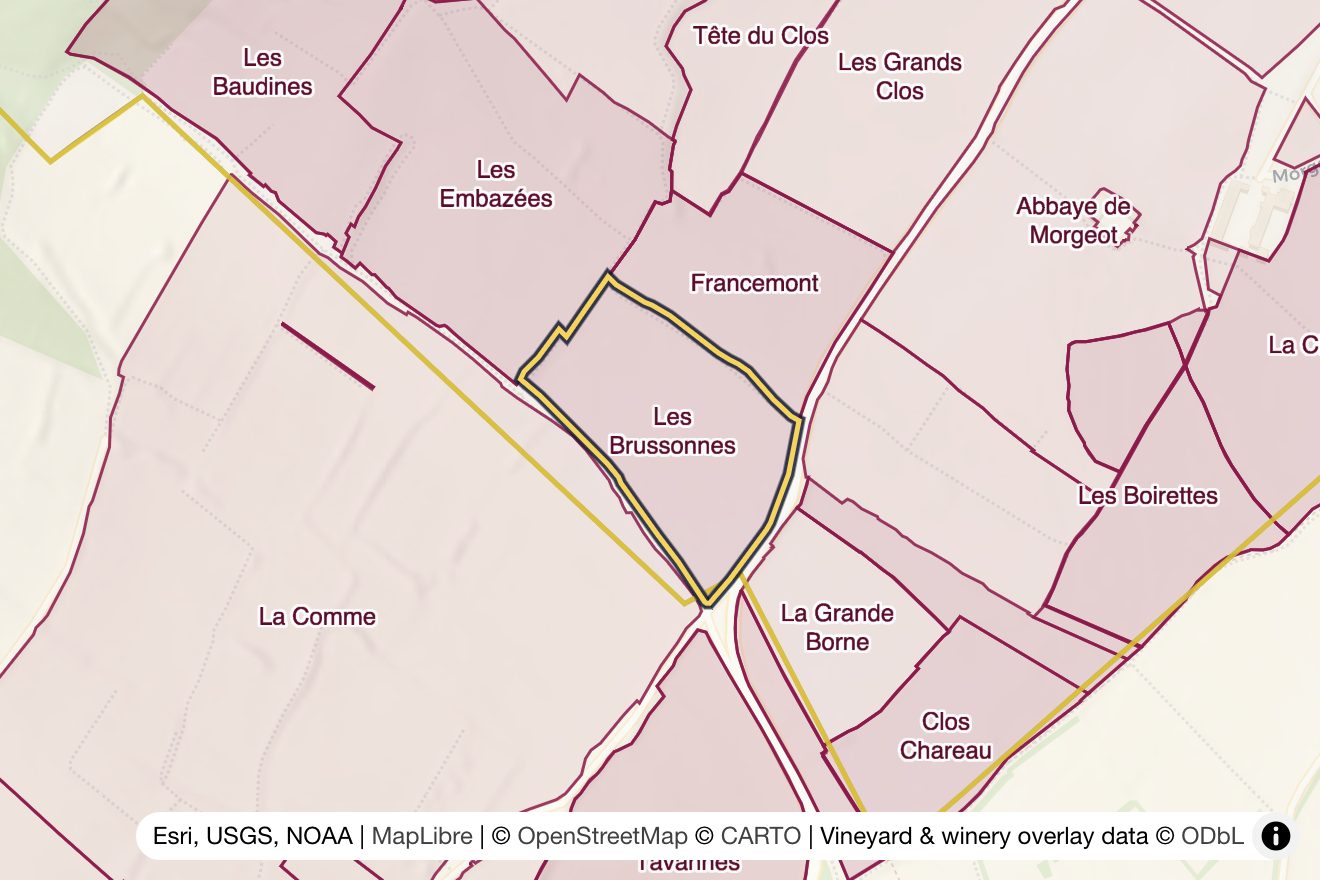
Overview & Location
Geographically, Clos Pitois is positioned on the eastern-facing slopes that characterize this section of the Côte de Beaune, benefiting from the optimal exposure that has made this region legendary for both Chardonnay and Pinot Noir production. The climat lies within the mid-slope zone that typically produces some of Chassagne-Montrachet's most balanced and expressive wines, positioned neither too high on the slope where soils become thin and harsh, nor too low where they become heavy and less well-drained.
The vineyard's location places it within easy proximity to some of Chassagne-Montrachet's most celebrated Premier Crus, including Morgeot, the sector in which Clos Pitois itself lies on the Santenay side of the commune, creating a constellation of exceptional terroirs that have established this commune's reputation as one of Burgundy's most reliable sources of both white and red wines of Premier Cru quality.
Size
Clos Pitois encompasses approximately 3 hectares (about 7.4 acres), making it a small climat within the Chassagne-Montrachet Premier Cru hierarchy. The manageable size of Clos Pitois allows for relatively consistent terroir expression across the vineyard while still permitting subtle variations that create complexity and interest in the wines produced from different sections of the climat.
The vineyard's boundaries are clearly delineated, as befits a "clos" designation, though unlike some Burgundian clos, Clos Pitois is not entirely enclosed by walls. The defined boundaries help maintain the integrity of the site's terroir characteristics and contribute to the consistency of expression that has made this Premier Cru a reliable source of quality wines over decades of production.
Terroir & Geology
The geological foundation of Clos Pitois reflects the complex sedimentary history of the Côte d'Or, built upon the Jurassic limestone formations that define this renowned wine region. The bedrock consists primarily of Bathonian limestone from the Middle Jurassic period, interlayered with harder limestone bands and softer marl deposits that create the drainage and mineral complexity essential for premium viticulture.
The soils of Clos Pitois are characterized by a relatively shallow layer of brown limestone-clay topsoil, typically ranging from 30 to 60 centimeters in depth, overlying the fractured limestone bedrock. The clay content varies across the vineyard but generally ranges from 25 to 35 percent, providing sufficient water retention for vine health while allowing adequate drainage during periods of heavy rainfall. This clay component is predominantly montmorillonite and illite, clay minerals that contribute to the wine's structure and aging potential.
The limestone component of the soil includes both active limestone (which reacts with acid) and significant amounts of limestone gravel and fragments throughout the profile. This limestone presence contributes to the mineral backbone that characterizes wines from Clos Pitois, while the fragmented nature of much of this limestone content aids in drainage and root penetration.
The vineyard's slope ranges from 8 to 15 percent gradient, steep enough to ensure excellent drainage and sun exposure while remaining manageable for viticulture operations. The primary aspect is east-southeast, providing optimal morning sun exposure while offering some protection from the harsh afternoon heat during summer months. This orientation allows for gradual, even ripening of both Chardonnay and Pinot Noir.
Elevation within Clos Pitois ranges from approximately 250 to 280 meters above sea level, placing it in the ideal mid-slope zone that balances the advantages of elevation (drainage, sun exposure, cooler temperatures) with soil depth and richness. The slight elevation variations across the vineyard create microclimatic differences that add complexity to wines produced from different sections of the climat.
Climate & Microclimate
Clos Pitois benefits from the semi-continental climate that characterizes the Côte d'Or, with cold winters, warm summers, and moderate rainfall distributed throughout the growing season. However, the specific positioning and topography of this Premier Cru create distinct microclimatic conditions that influence vine development and wine character.
The eastern-southeast exposure of Clos Pitois provides several climatic advantages. Morning sun exposure helps dry dew and reduces fungal disease pressure, while the slight southeastern cant ensures adequate afternoon warmth without excessive heat stress. The slope angle and elevation create natural air drainage, allowing cold air to flow downslope during cool nights, which helps preserve acidity and aromatic freshness in both white and red wines.
The climate of Clos Pitois is moderated by its position within the broader Chassagne-Montrachet basin, which tends to be slightly warmer and drier than communes further north in the Côte de Beaune. This warmer mesoclimate contributes to reliable ripening even in challenging vintages, while the elevation and eastern exposure prevent excessive heat accumulation that could compromise wine elegance.
Wind patterns play a significant role in the vineyard's microclimate. The prevailing westerly winds help moderate temperature extremes and contribute to air circulation that reduces disease pressure. However, the site's position provides some shelter from the strongest winds, preventing excessive water stress during dry periods.
Rainfall patterns in Clos Pitois generally follow regional trends, with annual precipitation averaging 700-750mm. The well-drained limestone soils effectively manage water availability, storing sufficient moisture for vine needs during dry spells while preventing waterlogging during wet periods. This natural water regulation contributes to consistent vine performance across varying vintage conditions.
Viticulture
Clos Pitois is planted to both Chardonnay and Pinot Noir, reflecting Chassagne-Montrachet's tradition as one of the few Burgundy communes equally renowned for both white and red wines. Today the vineyard is roughly half Chardonnay and half Pinot Noir, with some variation based on individual producer preferences and historical planting patterns.
Vine age within Clos Pitois varies across the vineyard, and many blocks contain vines ranging from 25 to 60 years old, with some sections featuring vines approaching or exceeding 70 years. This age diversity contributes to the complexity and depth characteristic of wines from this climat. Younger replanted sections are gradually integrated into production as they mature, maintaining the long-term viability of the vineyard.
Planting density typically ranges from 10,000 to 12,000 vines per hectare, following traditional Burgundian practices that emphasize vine competition and concentration. The specific density often depends on the slope angle and soil depth of individual parcels, with steeper, thinner-soiled areas sometimes planted at higher densities.
Viticultural practices in Clos Pitois generally follow sustainable principles, with many producers employing organic or biodynamic methods. The vineyard's natural disease resistance, aided by good air circulation and drainage, supports these approaches. Canopy management focuses on maintaining optimal leaf-to-fruit ratios while ensuring adequate sun exposure for ripening without excessive heat stress.
Pruning follows the traditional Burgundian Guyot system, with most producers employing single Guyot for both varieties. Yield management is crucial, with typical yields ranging from 40-50 hectoliters per hectare for Premier Cru quality, though this varies significantly by vintage conditions and producer philosophy.
The limestone-clay soils of Clos Pitois require careful soil management to maintain structure and prevent compaction. Many producers employ minimal tillage approaches, using cover crops or controlled grass growth to maintain soil health and manage water competition. The natural fertility of the soils requires careful nitrogen management to prevent excessive vigor that could compromise wine quality.
Wine Character & Style
Wines from Clos Pitois display the hallmark characteristics of high-quality Chassagne-Montrachet Premier Cru, combining power and elegance in expressions that clearly reflect their terroir origins. The limestone-clay soils and favorable exposure create wines with distinctive mineral backbones and excellent aging potential.
Chardonnay from Clos Pitois typically exhibits a beautiful golden-tinged pale yellow color, developing deeper golden hues with age. The aromatic profile combines citrus elements (particularly lemon zest and grapefruit) with stone fruit notes of white peach and apricot. Floral elements, including acacia and honeysuckle, often appear, especially in wines from the best-exposed parcels. With age, the wines develop complex secondary aromas including honey, hazelnut, and subtle spice notes.
The limestone influence is immediately apparent in the wine's mineral structure, providing a tension and energy that lifts the fruit elements and creates remarkable freshness even in riper vintages. The clay component contributes to the wine's textural richness and provides the structural foundation for extended aging. Typical alcohol levels range from 13 to 13.5%, maintaining elegance while providing sufficient body and warmth.
On the palate, Clos Pitois Chardonnay displays excellent balance between richness and acidity. The texture is characteristically full and rounded, with a creamy mid-palate that reflects both the terroir and careful vinification. The finish is long and mineral-driven, often displaying subtle chalky notes that are signature characteristics of limestone-based Burgundian terroirs.
Pinot Noir from Clos Pitois exhibits the elegant power that characterizes the best red wines of Chassagne-Montrachet. The color is typically a beautiful ruby-garnet, deepening with age to develop brick-orange highlights. Aromically, these wines combine red fruit elements (cherry, strawberry, and raspberry) with earthy undertones of forest floor, mushroom, and subtle spice notes including cinnamon and clove.
The limestone terroir contributes significant minerality to the red wines as well, creating a backbone that supports the fruit elements and provides excellent aging structure. Tannins are typically well-integrated and fine-grained, reflecting both the terroir characteristics and careful vinification. The wines display excellent balance between fruit concentration and structural elements, creating wines that are approachable in youth but capable of significant development.
Both the white and red wines from Clos Pitois share certain terroir-driven characteristics: exceptional mineral clarity, balanced acidity that provides freshness without harshness, and a distinctive sense of place that clearly identifies them as products of this specific climat within Chassagne-Montrachet.
Comparison to Surrounding Crus
Clos Pitois occupies a distinctive position within the hierarchy of Chassagne-Montrachet Premier Crus, displaying characteristics that differentiate it from neighboring sites while maintaining the essential qualities that define this commune's wines. Understanding these distinctions requires comparison with the other notable Premier Crus in the immediate vicinity.
Compared to Morgeot, perhaps Chassagne-Montrachet's most famous Premier Cru, wines from Clos Pitois tend to display greater minerality and precision, while Morgeot often shows more opulent fruit character and broader texture. This difference reflects the slightly different soil compositions and exposures between the sites, with Clos Pitois's more prominent limestone influence creating wines with greater tensile strength.
The Premier Cru Caillerets produces wines that share some similarities with Clos Pitois, particularly in mineral expression and aging potential. However, Caillerets wines often display more pronounced stone fruit characteristics in the Chardonnay and slightly more robust structure in the Pinot Noir, reflecting that site's marginally warmer microclimate and different soil depth profiles.
La Romanée, another nearby Premier Cru, creates wines that are typically more delicate and refined than those from Clos Pitois, particularly in the red wines. The smaller size of La Romanée and its slightly higher elevation contribute to wines with more ethereal character, while Clos Pitois produces wines with greater substance and aging power.
When compared to En Remilly, Clos Pitois wines show more immediate accessibility and broader appeal, while En Remilly tends to produce more austere wines requiring longer aging to show their best qualities. This reflects the slightly different limestone compositions and drainage patterns between the two sites.
Chassagne-Montrachet holds all of Criots-Batard-Montrachet and shares Batard-Montrachet and Le Montrachet with Puligny-Montrachet, and comparisons with these Grand Crus help establish the quality level of Clos Pitois. The wines from this Premier Cru display complexity and aging potential that approach the levels found in Bâtard-Montrachet or Criots-Bâtard-Montrachet, though typically with somewhat less power and concentration. The mineral precision and terroir expression of Clos Pitois wines can rival many Grand Cru expressions, particularly in favorable vintages.
Notable Producers
Clos Pitois is a monopole owned entirely by Domaine Roger Belland of Santenay.
Historical Background & Classification
The history of Clos Pitois reflects the broader development of Burgundian viticulture, with documented wine production in this area dating back to medieval times. The climat name itself suggests historical ownership patterns, with "Pitois" likely deriving from a family name or topographical feature that identified this specific site within the larger Chassagne-Montrachet territory.
Like most Burgundy Premier Crus, Clos Pitois achieved its current classification through the comprehensive appellation system established in the 1930s. The classification was based on centuries of empirical evidence demonstrating the site's consistent ability to produce wines of superior quality compared to village-level vineyards. The classification process recognized both the inherent terroir qualities of the site and its historical reputation among growers and négociants.
The modern boundaries of Clos Pitois were established through careful analysis of soil characteristics, microclimate factors, and historical performance, creating a cohesive climat that displays consistent terroir expression. The classification as Premier Cru was confirmed through the INAO (Institut National de l'Origine et de la Qualité) process that established the legal framework for Burgundy's hierarchical appellation system.
Throughout the 20th century, Clos Pitois maintained its reputation as a reliable source of high-quality wines, weathering various challenges including phylloxera reconstruction, world wars, and changing market conditions. The site's fundamental terroir qualities ensured consistent wine quality that supported its Premier Cru status through various ownership changes and evolving viticultural practices.
The historical reputation of Clos Pitois has been built on the consistent quality of both white and red wines, making it one of the more versatile Premier Crus within Chassagne-Montrachet. This versatility reflected the site's balanced terroir characteristics that could successfully support both Chardonnay and Pinot Noir production at Premier Cru quality levels.
Aging Potential & Quality Level
Wines from Clos Pitois display exceptional aging potential that ranks among the finest Premier Crus of Chassagne-Montrachet. The combination of limestone minerality, balanced acidity, and structural complexity provides the foundation for extended cellaring that allows these wines to develop remarkable depth and sophistication over time.
Chardonnay from Clos Pitois typically reaches an initial peak of accessibility between 5-8 years after vintage, at which point the wines display beautiful integration of fruit, mineral, and oak elements. However, the best examples can continue developing for 15-20 years or more, gradually evolving from primary fruit characteristics to complex secondary and tertiary aromas including honey, nuts, spices, and profound mineral expressions.
The aging trajectory of these wines follows a classic Burgundian pattern, with an initial period of integration followed by a plateau of optimal drinking, then gradual development of mature characteristics. The limestone terroir provides exceptional aging support, maintaining freshness and preventing premature oxidation that can affect wines from less favorable sites.
Pinot Noir from Clos Pitois demonstrates similar aging potential, typically showing well between 7-12 years after vintage while continuing to develop for two decades or more in favorable vintages. The aging process reveals increasing complexity in both aromatic and textural elements, with the wines developing the ethereal qualities that characterize mature Burgundian Pinot Noir.
Quality consistency in Clos Pitois is remarkably high, reflecting both the inherent terroir advantages and the skill of the producers working with this site. Even in challenging vintages, the limestone-clay soils and favorable exposure help maintain wine quality above typical village-level standards. In exceptional vintages, wines from Clos Pitois can rival Grand Cru expressions in complexity and aging potential.
The quality level of Clos Pitois wines is consistently recognized in both professional evaluations and market pricing, where they command premiums appropriate to their Premier Cru status while often providing excellent value compared to more famous sites. This combination of quality and relative accessibility has made Clos Pitois a favorite among Burgundy enthusiasts seeking authentic Premier Cru character without the premium pricing of the most celebrated climats.
The long-term aging potential and consistent quality make wines from Clos Pitois excellent choices for cellaring, providing the satisfaction of watching truly fine Burgundy develop its full potential over time while maintaining the distinctive characteristics that define this exceptional terroir.