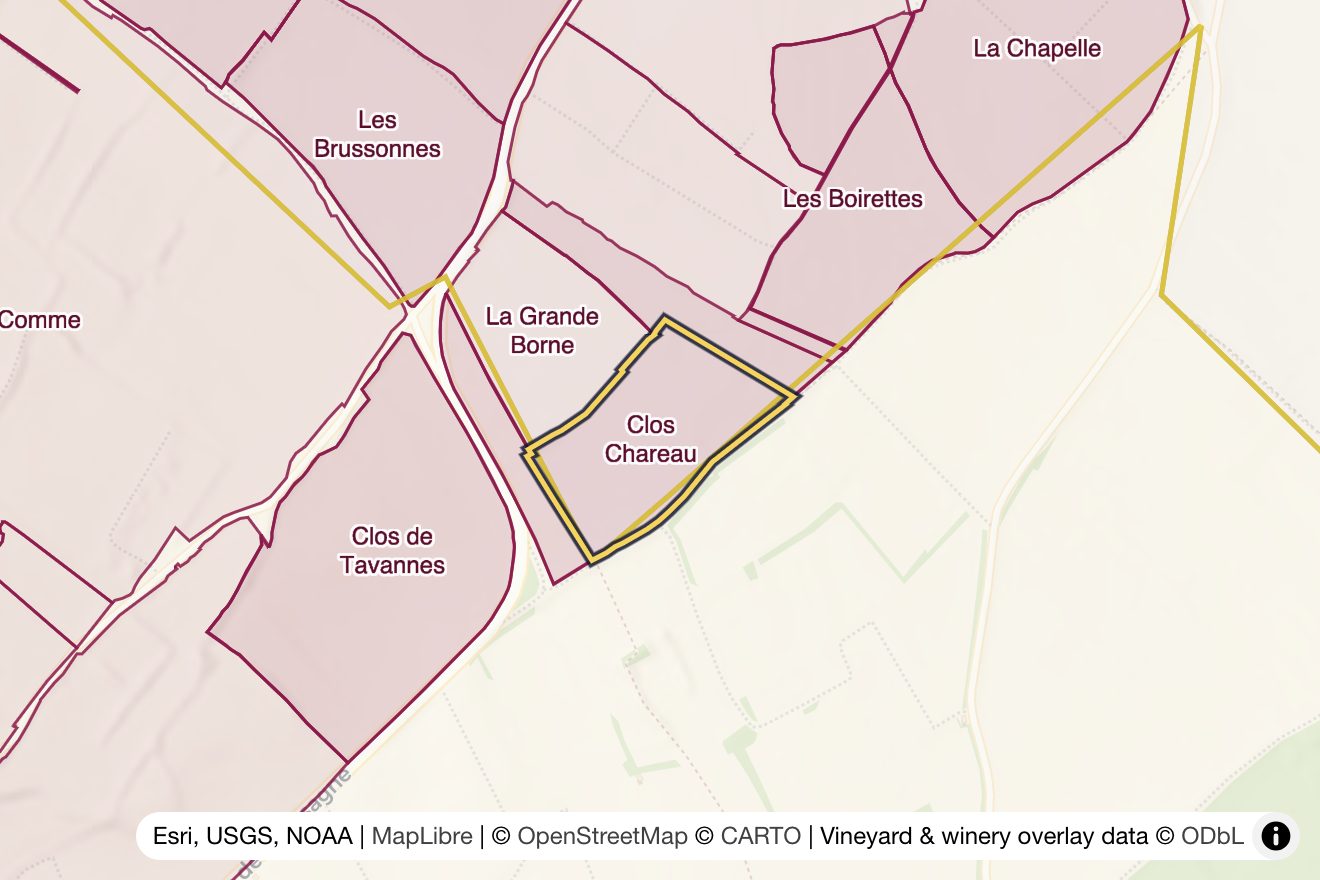
Overview & Location
The vineyard's strategic location within Chassagne-Montrachet places it among the commune's most prestigious sites, nestled between other renowned Premier Cru vineyards that form the backbone of this appellation's reputation. Chassagne-Montrachet itself occupies the southern portion of the Côte de Beaune's limestone escarpment, where the geological conditions create an ideal environment for both Chardonnay and Pinot Noir cultivation, though Chardonnay dominates production in Clos Chareau.
The climat sits within the broader context of the Côte de Beaune's amphitheater-like formation, where the vineyard benefits from the protective influence of the wooded hills to the west and the optimal sun exposure that characterizes the best sites in this region. This positioning within the greater Burgundian landscape provides Clos Chareau with the climatic stability and geological complexity that define Premier Cru quality in this appellation.
Size
Clos Chareau is a walled Premier Cru parcel within the much larger Morgeot climat, which covers more than 50 hectares. This relatively compact size is typical of Burgundy's most prestigious climats, where small parcels allow for intensive cultivation and meticulous attention to terroir expression.
The vineyard's modest dimensions contribute to its exclusivity and the concentrated character of its wines. Unlike some of the larger Premier Cru sites in Chassagne-Montrachet, Clos Chareau's limited size ensures that production remains constrained.
This scale allows for the kind of hands-on viticulture that Premier Cru sites demand, where every vine can receive individual attention and where the subtle variations in microterroir can be recognized and respected in both vineyard management and winemaking decisions.
Terroir & Geology
The geological foundation of Clos Chareau reflects the complex sedimentary history of the Côte de Beaune, built upon Jurassic limestone formations that provide the mineral backbone for exceptional white wine production. The vineyard sits on predominantly Bathonian limestone, characterized by its white to cream-colored appearance and fine-grained structure that offers excellent drainage while maintaining sufficient water retention for vine nutrition.
The soil composition varies subtly across the climat, with the upper portions containing higher concentrations of Comblanchien limestone mixed with iron-rich oolitic deposits. These ferruginous elements contribute to the wines' mineral complexity and aging potential. The middle section of the vineyard features deeper clay-limestone soils with approximately 20-25% clay content, providing the water retention necessary for sustained vine growth during dry periods while maintaining the drainage essential for quality wine production.
Lower in the vineyard, the soils transition to include more alluvial deposits and colluvium from erosion of the hillside above, creating slightly deeper, more fertile conditions. However, even in these areas, the underlying limestone bedrock remains relatively close to the surface, typically within 60-80 centimeters, ensuring that vine roots penetrate the mineral-rich geological substrata.
The vineyard's slope orientation faces primarily southeast to east, providing optimal sun exposure throughout the growing season while protecting the vines from the harsh northwestern winds that can affect vine health and grape ripening. The gradient ranges from 8% to 15%, creating natural drainage and ensuring that cold air doesn't settle around the vine canopy during critical ripening periods.
Elevation at Clos Chareau is roughly 220 to 230 meters above sea level, positioning the vineyard within the ideal altitudinal range for Chardonnay cultivation in Burgundy. This elevation provides the necessary diurnal temperature variation that preserves acidity while allowing for complete phenolic ripening.
Climate & Microclimate
Clos Chareau benefits from the temperate continental climate that characterizes the Côte de Beaune, with the additional microclimate advantages conferred by its specific topographical position. The vineyard experiences the classic Burgundian climate pattern of warm, relatively dry summers and cold winters, with spring and autumn conditions that can significantly influence vintage character.
The southeast-facing exposure creates a favorable microclimate that captures morning sunlight while avoiding the intense afternoon heat that can stress vines during hot summers. This orientation proves particularly beneficial for Chardonnay, allowing for gradual sugar accumulation while preserving the natural acidity that defines great white Burgundy.
The vineyard's position on the slope creates natural air circulation patterns that reduce humidity around the vine canopy, minimizing disease pressure and promoting healthy grape development. Cold air drainage occurs naturally due to the slope, preventing frost damage during critical budbreak and flowering periods.
Rainfall distribution typically follows the regional pattern, with approximately 750mm annually, though the vineyard's excellent drainage prevents waterlogging during wet periods. The limestone-based soils provide natural water regulation, storing moisture during dry spells while preventing root rot during excessive precipitation.
The protective influence of the Côte's western hills creates a rain shadow effect that reduces excessive moisture during the growing season, while the vineyard's elevation provides sufficient cooling influence to maintain freshness in the resulting wines. These microclimatic conditions contribute to extended hang time, allowing for complex flavor development while preserving the mineral precision that characterizes wines from this climat.
Viticulture
Chardonnay dominates plantings in Clos Chareau, and the bottlings documented from the site are all white wines. The Chardonnay vines are typically planted using carefully selected clones adapted to Burgundy's limestone soils, including traditional Burgundian selections that emphasize finesse and mineral expression over pure power.
Vine age varies across the different parcels within the climat, with some sections containing vines planted in the 1960s and 1970s, while more recent replanting has introduced younger vines using massal selection techniques to preserve genetic diversity. The optimal vine age for this site appears to be between 25 and 45 years, when root systems have achieved sufficient depth to extract complex minerals while maintaining the vigor necessary for consistent production.
Planting density follows traditional Burgundian standards, typically 10,000 to 12,000 vines per hectare, with spacing designed to encourage competition between vines while ensuring adequate sunlight penetration and air circulation. This density requires careful canopy management to prevent overcropping and maintain fruit quality.
Viticultural practices in Clos Chareau emphasize sustainable techniques that respect the vineyard's natural ecosystem. Many producers employ organic or biodynamic methods, recognizing that the limestone soils respond well to natural fertilization and biological pest management. Pruning follows the Guyot system, adapted to local conditions with careful attention to yield management.
Harvest timing proves critical in this climat, as the combination of elevation and exposure creates conditions where optimal ripeness must be balanced against acidity retention. Producers typically monitor sugar levels, pH, and phenolic ripeness carefully, often harvesting in multiple passes to ensure that each parcel reaches its ideal maturity level.
Site-specific challenges include managing vigor in the deeper soils of the lower sections while ensuring adequate nutrition in the thinner soils higher on the slope. The limestone bedrock can create drainage challenges during exceptional rainfall years, requiring careful soil management to prevent erosion.
Wine Character & Style
Wines from Clos Chareau exhibit the mineral precision and elegant structure that define great Chassagne-Montrachet Premier Cru, while displaying distinctive characteristics that reflect this specific terroir. The Chardonnay produces wines of notable finesse, combining power with elegance in a way that exemplifies the finest expressions of white Burgundy.
Aromatic characteristics typically include citrus elements of lemon zest and grapefruit, complemented by white stone fruit notes of white peach and nectarine. Mineral components manifest as wet limestone, chalk, and subtle saline qualities that reflect the vineyard's geological foundation. With age, these wines develop more complex aromatics including honey, hazelnut, and subtle spice notes from oak integration.
The palate structure demonstrates excellent balance between richness and freshness, with natural acidity providing backbone and aging potential. The limestone soils contribute to a distinctive mineral tension that runs through the wine, creating length and complexity. Textural elements include a characteristic chalky mouthfeel in youth that evolves toward a more silky, integrated texture with proper aging.
Flavor profiles encompass both primary fruit characteristics and terroir-driven mineral elements. Young wines display crisp apple and citrus flavors supported by underlying stone and mineral notes. As these wines mature, they develop greater complexity with suggestions of butter, vanilla, and subtle oxidative notes that add depth without overwhelming the fundamental mineral character.
The wines typically achieve alcohol levels between 12.5% and 13.5%, depending on vintage conditions, maintaining the elegance and food compatibility that characterizes great white Burgundy. Natural acidity levels generally range from 6.5 to 7.5 g/L, providing the structure necessary for extended aging while ensuring immediate approachability.
Comparison to Surrounding Crus
Clos Chareau's wines display distinctive characteristics that differentiate them from neighboring Premier Cru sites within Chassagne-Montrachet. Compared to the more powerful and structured wines typical of the wider Morgeot climat, of which Clos Chareau is a part, Clos Chareau tends toward greater elegance and mineral precision, with less obvious richness but more subtle complexity.
The contrast with Premier Cru Caillerets is particularly instructive, as Caillerets typically produces more immediately expressive wines with rounder, more approachable fruit character. Clos Chareau demonstrates greater reserve in youth, requiring additional aging to reveal its full complexity, but ultimately achieving greater longevity and development potential.
When compared to Premier Cru Maltroie, another distinguished site in the commune, Clos Chareau shows more pronounced mineral character and linear structure, while Maltroie tends toward broader, more generous fruit expression. The limestone influence appears more prominent in Clos Chareau, creating wines with greater aging complexity but potentially less immediate charm.
Within the broader context of Chassagne-Montrachet's Premier Cru hierarchy, Clos Chareau occupies a position among the more refined and age-worthy sites, producing wines that emphasize terroir expression over pure power. This places it in the company of climats like Chaumées and Chenevottes, where mineral precision takes precedence over opulent fruit character.
Chassagne-Montrachet's Grand Crus (Le Montrachet, Bâtard-Montrachet and Criots-Bâtard-Montrachet) lie in the northern part of the commune, so Premier Cru sites like Clos Chareau sit one tier below them. However, when compared to neighboring Grand Crus in Puligny-Montrachet, Clos Chareau wines demonstrate similar mineral precision and aging potential, though typically with slightly less concentration and power than the most prestigious Grand Cru sites.
Notable Producers
Several distinguished producers cultivate parcels within Clos Chareau, each bringing their individual interpretation to this terroir while respecting the fundamental character that the climat provides. The diversity of winemaking approaches allows wine enthusiasts to explore different expressions of the same terroir.
Château de la Crée bottles a Chassagne-Montrachet Premier Cru Clos Chareau (also labelled Morgeot Clos Chareau), and the négociant Maison Evenstad has also bottled it.
Several smaller producers also maintain parcels within Clos Chareau, including négociant houses that purchase grapes from contracted growers. These different approaches create stylistic variations that demonstrate the terroir's ability to support multiple interpretations while maintaining recognizable site characteristics.
The parcel structure within Clos Chareau reflects the typical Burgundian pattern of divided ownership, with most holdings consisting of small plots ranging from 0.1 to 0.5 hectares. This fragmentation ensures that no single producer dominates production from the climat, maintaining diversity in winemaking approaches and market availability.
Historical Background & Classification
The history of Clos Chareau extends back several centuries, with documented viticulture on this site dating to the medieval period when much of Chassagne-Montrachet's vineyard area was developed by monastic communities. The climat name itself reflects this historical connection, with "Clos" indicating its original status as an enclosed vineyard, while "Chareau" likely derives from local toponymy related to the area's agricultural development.
The vineyard is classified Premier Cru within the Chassagne-Montrachet appellation, whose AOC dates from 1937. This classification recognized the site's consistent ability to produce wines of superior quality that reflected distinct terroir characteristics, placing it among Chassagne-Montrachet's most prestigious vineyards.
The site's reputation survived the phylloxera crisis of the late 19th century, being replanted with grafted vines that maintained the quality standards established by the original plantings.
This recognition formalized what local vignerons had long understood about this site's exceptional potential for producing age-worthy white wines of distinctive character.
Aging Potential & Quality Level
Wines from Clos Chareau demonstrate exceptional aging potential, typically requiring 5-8 years from vintage to reach optimal drinking condition, with the finest examples continuing to improve for 15-20 years under proper storage conditions. This longevity reflects both the terroir's mineral foundation and the natural acidity that provides structural support for extended development.
The evolution trajectory for these wines follows a predictable pattern, with initial reductive character giving way to more expressive fruit and mineral notes after 3-5 years. Primary fermentation and élevage characteristics integrate fully within the first decade, while tertiary complexity emerges during the second decade of aging.
Quality consistency remains high across different vintages, though the terroir expresses vintage variation in predictable ways. Warmer years produce more immediately approachable wines with richer fruit character, while cooler vintages emphasize mineral precision and require extended aging to reveal their full potential.
The limestone-derived mineral structure provides the foundation for this aging potential, creating wines that develop complexity while maintaining freshness. Natural acidity preservation proves crucial to longevity, with well-made examples retaining vibrancy even after two decades of proper cellaring.
Peak drinking windows vary by vintage and producer style, but most wines from Clos Chareau reach their optimal expression between 8-15 years from vintage. The terroir's capacity for supporting extended aging places these wines among the most age-worthy white wines produced in Chassagne-Montrachet, demonstrating the Premier Cru classification's relevance to long-term quality assessment.
Investment-grade potential exists for the finest examples from respected producers, as the combination of limited production, proven aging ability, and terroir distinction creates demand among collectors seeking authentic expressions of Burgundian terroir. The climat's reputation continues to strengthen as more wine enthusiasts discover the distinctive character and aging potential that define wines from this exceptional Premier Cru site.