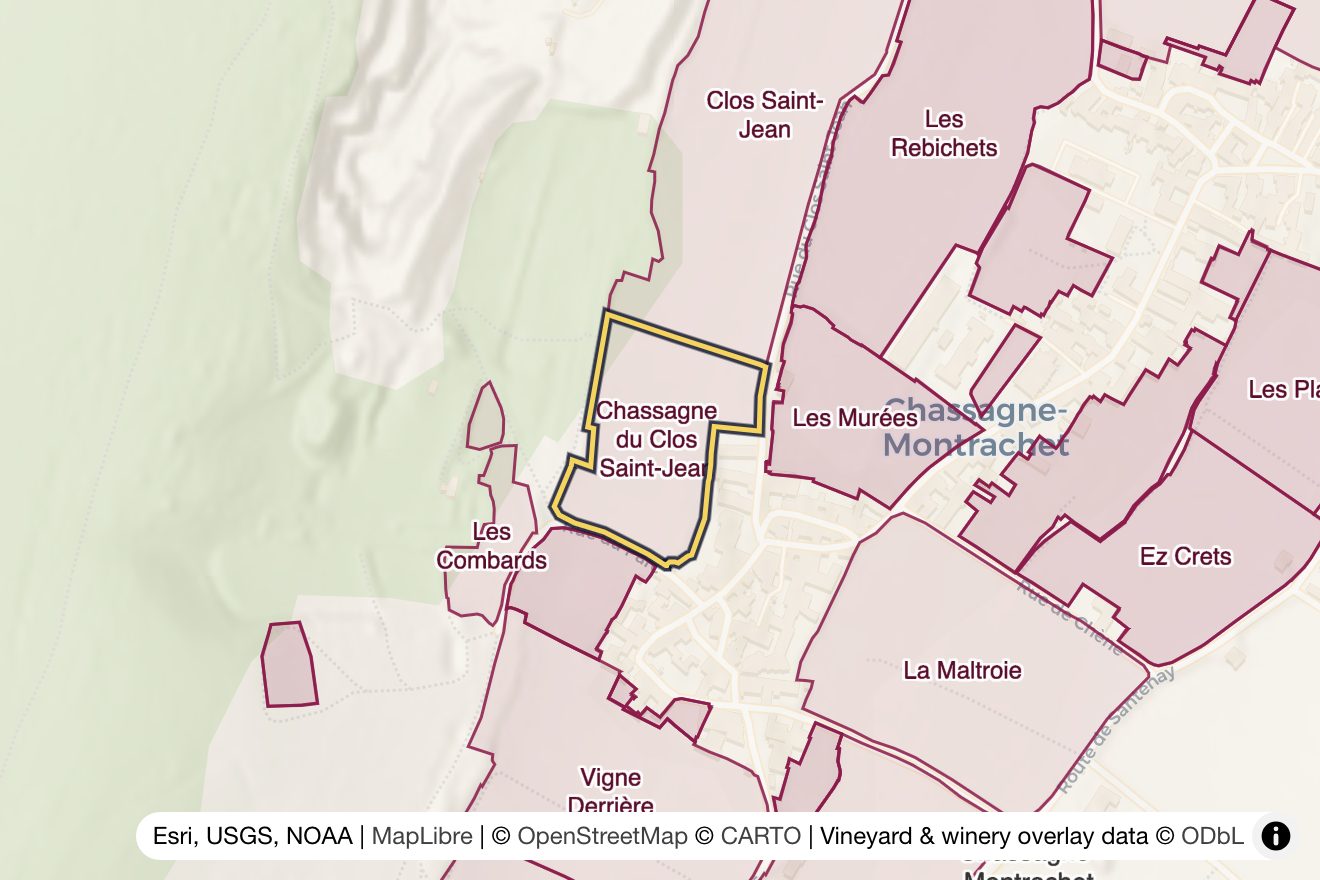
Overview & Location
The vineyard sits approximately 15 kilometers southwest of Beaune, nestled within the golden slope that has produced some of the world's most celebrated white wines for over a millennium. Chassagne du Clos Saint Jean benefits from its position within the broader Chassagne-Montrachet appellation, which itself represents the southern terminus of the Côte de Beaune's most prestigious white wine production zone.
Geographically, the climat is positioned on the mid-slope of the Côte, occupying an elevation band that places it in an optimal position for both sun exposure and drainage. The vineyard lies on the slope above and west of the village center, positioned among other notable Premier Cru sites including Morgeot, Caillerets, and La Romanée. This location places it within the heart of Chassagne-Montrachet's Premier Cru amphitheater, where the interplay of geology, topography, and mesoclimate creates the conditions necessary for producing wines of exceptional character and longevity.
The climat's position within the broader context of the Côte de Beaune places it among the southernmost expressions of Premier Cru Chardonnay, where the slightly warmer temperatures and distinct geological formations contribute to a unique expression that differentiates it from its northern neighbors in Puligny-Montrachet and Meursault.
Size
Chassagne du Clos Saint Jean encompasses approximately approximately 2 hectares (about 5 acres), making it a small Premier Cru within the Chassagne-Montrachet appellation. This size places it in the middle range of Premier Cru climats in the commune, larger than some of the more intimate sites like En Remilly (about 1.56 hectares) but smaller than extensive climats such as Morgeot (about 58 hectares).
The vineyard's compact size contributes to its cohesive character, as the entire climat benefits from relatively uniform geological and climatic conditions. This uniformity, combined with the site's distinct terroir characteristics, allows for a more consistent expression across different producers' parcels, though subtle variations in microterroir and viticultural practices still create nuanced differences in the wines produced.
The limited size also means that production quantities remain relatively modest, with total annual production typically ranging between 1,200 and 1,500 cases, depending on vintage conditions and yields. This scarcity contributes to the wines' desirability among collectors and enthusiasts seeking authentic expressions of this specific terroir.
Terroir & Geology
The geological foundation of Chassagne du Clos Saint Jean reflects the complex sedimentary history of the Côte de Beaune, with soils predominantly composed of Jurassic limestone formations characteristic of this section of the slope. The bedrock consists primarily of Bathonian limestone, overlain with varying depths of clay-limestone mixtures that provide both structure and water retention capacity essential for Chardonnay cultivation.
The soil profile typically features a relatively thin topsoil layer of 30-40 centimeters, composed of red or yellow clay-limestone with significant stone content that aids drainage and heat retention. Below this surface layer, the subsoil transitions into decomposed limestone mixed with marl, creating a profile that balances water availability with adequate drainage during periods of heavy rainfall.
The slope gradient averages 8-12%, providing sufficient drainage while maintaining enough soil depth to support vine root development. This moderate slope prevents excessive water runoff while ensuring that vines are not subjected to waterlogged conditions that could compromise fruit quality. The aspect is predominantly east-southeast, providing optimal morning sun exposure while offering some protection from the intense afternoon heat during the warmest summer days.
The elevation ranges from approximately 260 to 300 meters above sea level, positioning the vineyard in what many consider the optimal elevation band for Chardonnay in Chassagne-Montrachet. This elevation provides sufficient drainage and sun exposure while maintaining enough soil depth and moisture retention to support vine growth through Burgundy's variable climate conditions.
The limestone content contributes significantly to the mineral character that defines wines from this climat, while the clay component provides structure and aging potential. The stone content, including fragments of limestone and occasional fossils, aids in drainage and contributes to the thermal regulation that helps moderate temperature fluctuations in the root zone.
Climate & Microclimate
Chassagne du Clos Saint Jean benefits from a continental climate moderated by maritime influences, with the vineyard's specific topographical position creating distinct microclimate characteristics that influence grape development and wine character. The east-southeast exposure ensures optimal morning sun exposure, allowing grapes to benefit from gentle warming as temperatures rise throughout the day.
The slope's gradient and orientation provide protection from prevailing westerly winds while allowing for adequate air circulation that helps prevent fungal diseases during humid periods. The elevation and position on the mid-slope create a microclimate that experiences less extreme temperature fluctuations than either the valley floor or the upper slopes, contributing to more consistent grape ripening.
Morning mist, common throughout the Côte de Beaune during autumn months, often settles in this area, influencing the ripening of the grapes. The limestone subsoil acts as a thermal regulator, absorbing heat during warm days and releasing it slowly during cooler nights, helping to maintain optimal temperature conditions for flavor development.
Rainfall patterns affect this climat similarly to other sites in Chassagne-Montrachet, with the slope providing adequate drainage during wet periods while the clay content in the soils helps retain moisture during drier summers. The microclimate generally experiences slightly warmer temperatures than sites with northern exposures, contributing to the fuller, more opulent style characteristics of wines from this climat.
Viticulture
Chassagne du Clos Saint Jean is planted mainly to Chardonnay, with some Pinot Noir, following the pattern of most Premier Cru sites in Chassagne-Montrachet that favor white grape varieties. The vineyard's terroir characteristics make it exceptionally well-suited to Chardonnay cultivation, with the limestone-clay soils providing the mineral foundation and structure that define great white Burgundy.
Vine ages across the climat vary by producer, with many parcels containing vines ranging from 25 to 50 years old, though some sections feature younger replanted vines and others boast old vines of 60+ years. The typical planting density follows traditional Burgundian practices at approximately 10,000 vines per hectare, allowing for optimal root competition while maintaining manageable yields.
Viticultural practices emphasize traditional Burgundian methods, with most producers employing sustainable or organic approaches to vineyard management. Pruning follows the Guyot system, with careful attention to canopy management to optimize sun exposure while maintaining sufficient leaf coverage to protect grapes during the warmest periods of summer.
Harvest timing typically occurs in mid to late September, though precise timing varies by producer philosophy and vintage conditions. The east-southeast exposure generally allows for optimal ripeness development, with producers carefully monitoring sugar accumulation, acidity retention, and phenolic maturity to determine optimal picking dates.
Yield management is crucial in this climat, with most quality-focused producers maintaining yields between 45-50 hectoliters per hectare to ensure concentration and complexity in the resulting wines. Green harvesting is commonly practiced when vine vigor or weather conditions suggest that natural yields may exceed optimal levels for quality production.
Site-specific challenges include managing vine vigor on the clay-rich soils, which can promote excessive vegetative growth if not carefully controlled. Drainage management during wet years and water stress monitoring during dry summers require careful attention to maintain vine health and optimize fruit quality.
Wine Character & Style
Wines from Chassagne du Clos Saint Jean exhibit a distinctive character that reflects both the specific terroir of this climat and the broader stylistic characteristics of Chassagne-Montrachet Premier Cru whites. The wines typically display a golden-yellow color with excellent clarity and brilliance, often developing deeper golden hues with age.
The aromatic profile is complex and layered, featuring primary fruit characteristics of ripe pear, apple, and citrus, often accompanied by floral notes of acacia and honeysuckle. As the wines develop, secondary aromas emerge, including subtle spice notes, honey, and mineral undertones that reflect the limestone-rich terroir. With age, tertiary aromatics develop, including hazelnut, brioche, and complex mineral notes that can persist for decades.
On the palate, these wines demonstrate excellent structure and balance, with the limestone terroir contributing a distinctive mineral backbone that supports the fruit flavors without overwhelming them. The texture is typically rich and full-bodied, with enough acidity to provide freshness and aging potential. The clay content in the soils contributes to the wines' substantial mouthfeel and their ability to develop complexity over extended aging periods.
The finish is characteristically long and mineral-driven, with the limestone terroir imparting a chalky, almost saline quality that distinguishes wines from this climat. Oak integration varies by producer, but the best examples show harmonious balance between fruit, terroir expression, and judicious oak influence that enhances rather than masks the vineyard's inherent character.
What distinguishes Chassagne du Clos Saint Jean from other Premier Cru sites is its combination of power and elegance, with wines that show both the richness characteristic of Chassagne-Montrachet and a mineral precision that reflects the specific geological conditions of this climat. The wines typically exhibit excellent concentration without heaviness, maintaining freshness and vitality even in their most powerful expressions.
Comparison to Surrounding Crus
Chassagne du Clos Saint Jean produces wines that occupy a distinctive position within the spectrum of Chassagne-Montrachet Premier Cru expressions, sharing certain characteristics with neighboring sites while maintaining its unique identity. Compared to the nearby Morgeot Premier Cru, wines from Clos Saint Jean typically show more immediate accessibility and rounder textures, while Morgeot tends toward greater austerity and mineral precision in its youth.
The wines differ notably from those of Caillerets, another neighboring Premier Cru, which tends to produce more delicate and perfumed expressions with greater emphasis on finesse over power. Clos Saint Jean consistently delivers more substantial wines with greater richness and body, reflecting differences in soil composition and microclimate between the two sites.
When compared to La Romanée Premier Cru, wines from Chassagne du Clos Saint Jean show similar richness and complexity but with different mineral characteristics, reflecting the subtle geological variations between the sites. La Romanée often exhibits more pronounced chalky minerality, while Clos Saint Jean shows a broader, more integrated mineral profile.
In the context of the commune's Grand Cru sites, Montrachet and Bâtard-Montrachet, wines from Chassagne du Clos Saint Jean naturally show less concentration and complexity, but they often provide earlier drinking pleasure while maintaining significant aging potential. The Premier Cru expressions typically develop more quickly than the Grand Crus while offering authentic terroir expression at a more accessible level.
Compared to Premier Cru sites in neighboring Puligny-Montrachet, such as Folatières or Combettes, Chassagne du Clos Saint Jean produces wines with greater richness and body, reflecting the generally warmer mesoclimate and different geological conditions in Chassagne-Montrachet. The Puligny sites often emphasize elegance and precision, while Clos Saint Jean delivers power and complexity.
Notable Producers
Several distinguished producers maintain parcels within Chassagne du Clos Saint Jean, each bringing their unique viticultural and winemaking philosophies to bear on this exceptional terroir. The diversity of approaches among these producers demonstrates the climat's versatility while showcasing different aspects of its terroir potential.
Domaine Michel Niellon maintains a smaller but highly regarded parcel that consistently produces wines showcasing the climat's ability to combine power with elegance. Niellon's approach emphasizes traditional viticulture with minimal intervention, allowing the terroir to express itself authentically in the finished wines.
Domaine Jean-Noël Gagnard's holdings in Clos Saint Jean produce wines that demonstrate the site's capacity for both immediate appeal and long-term development. Gagnard's parcels benefit from a mix of vine ages, creating complexity in the final blend while maintaining consistent quality across vintages.
Domaine Paul Pillot represents another significant presence in the climat, with their parcel contributing to wines that emphasize the limestone-driven mineral character while maintaining the richness and body characteristic of quality Chassagne-Montrachet. Pillot's sustainable viticultural practices help preserve the site's natural balance while optimizing fruit quality.
Several négociant houses also source fruit from this climat, including Maison Joseph Drouhin and Maison Louis Latour, which bottle wines from the climat. These houses bring their expertise in blending and aging to create wines that represent the climat's character while maintaining their house styles.
Historical Background & Classification
The history of Chassagne du Clos Saint Jean extends back centuries, with documented viticulture in this location dating to at least the medieval period when Burgundian monasteries established many of the region's most prestigious vineyard sites. The climat's name suggests historical connection to ecclesiastical ownership, with "Saint Jean" referencing Saint John, commonly associated with monastic vineyard holdings throughout Burgundy.
Historical records indicate that this site was recognized for producing wines of superior quality well before the modern classification system was established. Local reputation and market prices historically reflected the consistent quality of wines from this specific location, contributing to its eventual recognition as a Premier Cru site.
The climat received official Premier Cru classification as part of the comprehensive appellation system established in the 1930s, when the Institut National des Appellations d'Origine (INAO) conducted detailed studies of Burgundy's vineyard sites. The classification process involved analysis of geological conditions, historical quality records, and consistent performance over extended periods.
During the classification process, Chassagne du Clos Saint Jean demonstrated the terroir characteristics and quality consistency necessary for Premier Cru status, including appropriate geological conditions, suitable topographical features, and a track record of producing wines that commanded premium prices in the marketplace.
The boundaries of the climat were carefully delineated based on geological surveys and historical usage patterns, ensuring that the classification encompassed the specific terroir characteristics that contributed to the site's distinctive wine character. These boundaries have remained essentially unchanged since the original classification, preserving the integrity of the terroir designation.
Aging Potential & Quality Level
Wines from Chassagne du Clos Saint Jean demonstrate exceptional aging potential, typically reaching peak maturity between 8-15 years after vintage, depending on producer style, vintage conditions, and storage conditions. The combination of limestone minerality, natural acidity, and structural complexity provides the foundation for extended cellar development.
Young wines from this climat typically show attractive fruit and floral characteristics but benefit significantly from cellar aging, which allows the integration of oak influences and the development of complex secondary and tertiary aromatics. The limestone terroir contributes to the wines' ability to maintain freshness and vitality even as they develop mature characteristics.
Quality consistency across vintages is generally high, though individual producer approaches and vintage variations create some variability in style and aging trajectory. The best examples can continue developing for 20+ years, showing remarkable evolution while maintaining their essential character and terroir expression.
The climate's east-southeast exposure and well-drained soils contribute to consistent ripening patterns that help ensure quality stability across different vintage conditions. Even in challenging years, careful viticulture and selective harvesting typically result in wines that maintain the site's characteristic quality level.
Investment potential for wines from this climat remains strong, with the combination of limited production, consistent quality, and growing recognition of Chassagne-Montrachet Premier Cru values supporting long-term appreciation. The wines offer an excellent balance of quality and relative value compared to more famous sites, making them attractive to both collectors and enthusiasts seeking authentic Premier Cru Burgundy experiences.
Storage requirements follow standard guidelines for fine white Burgundy, with consistent cool temperatures, adequate humidity, and protection from light essential for optimal development. Properly stored examples can provide decades of drinking pleasure while demonstrating the remarkable terroir characteristics that define this distinguished Premier Cru climat.