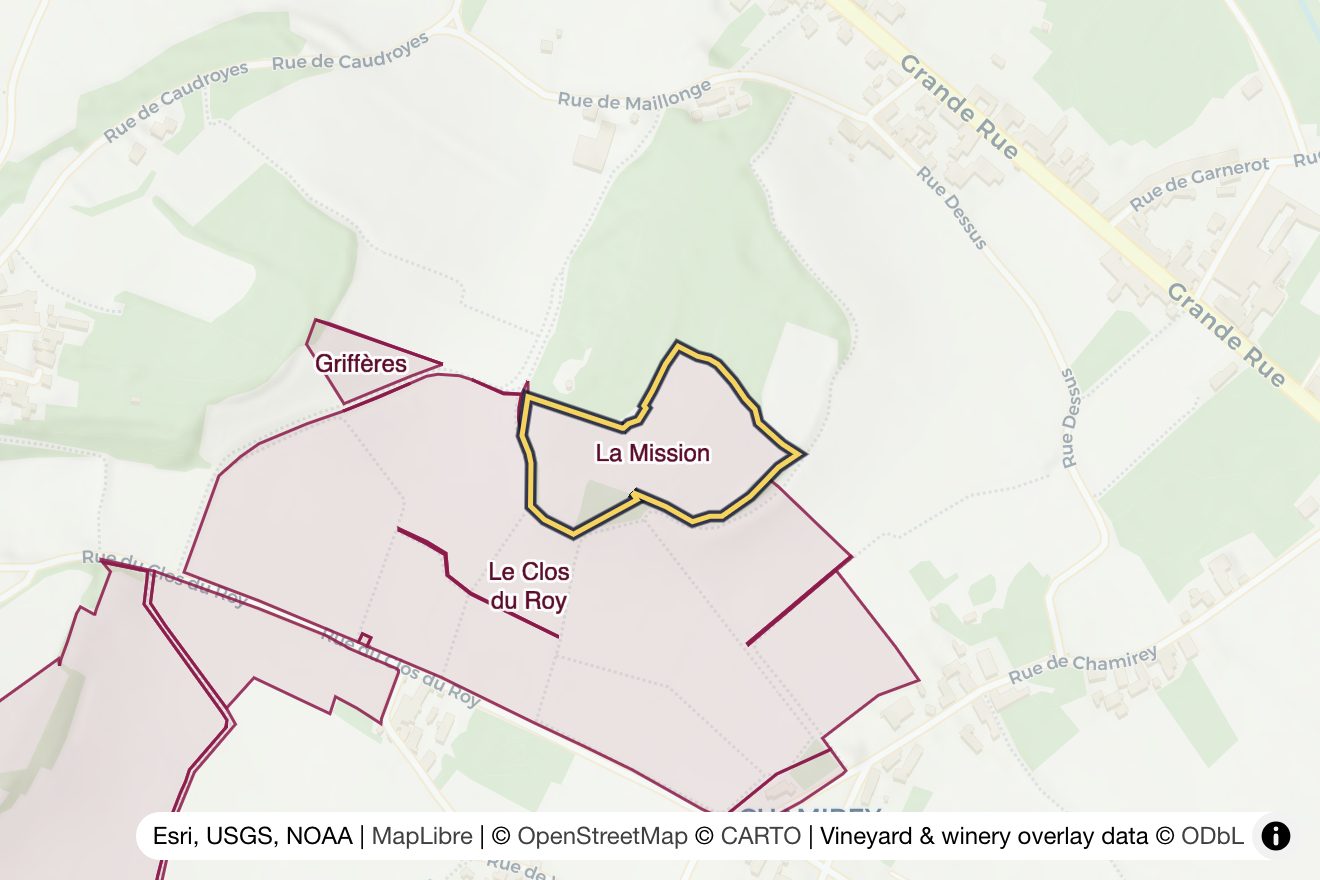
Overview & Location
Within Mercurey's complex mosaic of vineyards, La Mission is strategically positioned on the commune's prime hillside exposition, benefiting from optimal solar exposure and natural drainage. The vineyard sits adjacent to other renowned Premier Crus including Les Velley and Clos du Roy, forming part of Mercurey's prestigious Premier Cru constellation. This grouping of elite sites demonstrates the geological and climatic coherence that defines Mercurey's finest terroir.
The Côte Chalonnaise itself represents a transitional zone between the prestigious Côte d'Or to the north and the more expansive Mâconnais to the south. Within this context, Mercurey emerges as the region's most structured and age-worthy appellation, with La Mission serving as a prime example of the commune's ability to produce wines of exceptional complexity and longevity.
The climat's location benefits from the protective influence of the surrounding hills, which create favorable mesoclimate conditions while maintaining the essential diurnal temperature variations that contribute to the development of complex aromatic compounds and balanced acidity in the grapes.
Size
La Mission encompasses just under 2 hectares (under 5 acres), making it a small Premier Cru within Mercurey's classification system. The whole climat is a monopole of Château de Chamirey.
The vineyard's size allows for meaningful production volumes while maintaining the exclusivity and attention to detail that characterizes Premier Cru viticulture. As a monopole, it is bottled by a single estate, Château de Chamirey.
The climat is made up of a few small plots, all owned by Château de Chamirey.
Terroir & Geology
The geological foundation of La Mission reveals the complex sedimentary history that defines much of the Côte Chalonnaise. The vineyard sits primarily on Middle Jurassic limestone formations, with deep clay, limestone and sand soils that provide excellent drainage while maintaining sufficient water retention for vine nutrition during drier periods.
The topsoil composition varies across the climat but generally consists of brown calcareous clay-limestone soils with varying proportions of clay content. The upper sections of the vineyard typically contain higher percentages of limestone fragments and scree, while the mid-slope areas feature deeper clay-limestone mixtures that provide greater water retention capacity. This variation in soil composition across the site contributes to the complexity and layered character of wines produced from La Mission.
Soil depth ranges from relatively shallow limestone-dominated sections near the crest to deeper, more clay-rich areas lower on the slope. This variation allows different grape varieties and clones to find their optimal expression within the same climat, with Chardonnay performing well on the site's limestone-based soils.
The vineyard's plots face east and south-west, ensuring optimal morning sun exposure while providing some protection from the intense afternoon heat during warmer vintages. The gradient ranges from gentle to moderate, typically between 8-15%, providing natural drainage without excessive erosion concerns. The elevation varies from approximately 250 to 300 meters above sea level, positioning the vines in the ideal altitude band for grape ripening in the Côte Chalonnaise climate.
The underlying geological structure includes fossilized marine deposits characteristic of the Jurassic period, contributing mineral elements that are often detectable in the finished wines. The presence of iron-rich deposits in certain sections adds complexity to the soil composition and influences the terroir expression in subtle but meaningful ways.
Climate & Microclimate
La Mission benefits from a semi-continental climate characterized by cold winters, warm summers, and adequate precipitation distributed throughout the growing season. The climat's specific microclimate is influenced by its hillside position, slope orientation, and relationship to surrounding topographical features.
The east-southeast exposure ensures that the vines receive beneficial morning sunlight, which helps with dew evaporation and disease prevention while promoting steady ripening throughout the day. The moderate elevation provides cooler nighttime temperatures that preserve acidity and encourage the development of complex aromatic compounds.
Protection from excessive wind exposure is provided by the surrounding hillsides, while the slope gradient ensures adequate air circulation to prevent fungal diseases and promote healthy vine development. During the growing season, the vineyard typically experiences diurnal temperature variations of 10-15°C, which is optimal for maintaining freshness while achieving phenolic ripeness.
The microclimate of La Mission tends to be slightly warmer and more protected than some of Mercurey's other Premier Cru sites, resulting in consistent ripening patterns and reduced vintage variation. This climatic stability contributes to the vineyard's reputation for producing wines of reliable quality and character across different weather conditions.
Precipitation patterns generally provide adequate moisture during the spring growing season, with summers that are sufficiently dry to concentrate flavors without causing excessive vine stress. The vineyard's drainage characteristics ensure that excess moisture is efficiently removed during wetter periods, preventing dilution and maintaining grape quality.
Viticulture
La Mission is planted entirely to Chardonnay and produces a white Premier Cru.
The vines in La Mission are all Chardonnay, of varied ages. This diversity of vine ages contributes to the complexity of the wines, as older vines typically produce lower yields of more concentrated fruit while younger vines contribute freshness and vitality.
Planting density varies among producers but generally ranges from 9,000 to 12,000 vines per hectare, following traditional Burgundian spacing that balances vine competition with practical cultivation requirements. The higher planting densities encourage root competition and typically result in better grape quality and more complex wine character.
Viticultural practices in La Mission emphasize sustainable and often organic approaches, with many producers adopting environmentally conscious methods including reduced chemical inputs, natural pest management, and soil health preservation techniques. Cover cropping, green harvesting, and selective hand pruning are standard practices employed to optimize grape quality.
The vineyard's limestone-rich soils require specific viticultural attention, particularly regarding vine nutrition and rootstock selection. Many producers utilize rootstocks that are well-adapted to calcareous soils, such as SO4 and 161-49C, which provide good limestone tolerance while maintaining appropriate vigor control.
Harvest timing in La Mission typically occurs in mid to late September, depending on vintage conditions and individual producer preferences. The vineyard's consistent microclimate allows for relatively uniform ripening, enabling producers to optimize picking decisions based on their stylistic goals rather than managing significant variation within their parcels.
Wine Character & Style
Wines from La Mission Premier Cru are white Mercurey, made entirely from Chardonnay. The climat produces wines characterized by excellent concentration and notable aging potential that distinguishes them from village-level Mercurey.
The limestone-rich terroir imparts a distinctive mineral backbone that provides structure and length to the wines. This minerality is often described as chalky or stony, adding complexity without overwhelming the fruit character. The clay component in the soils contributes to the wines' texture and body, creating a harmonious balance between power and elegance.
The acidity levels are typically well-balanced, contributing to freshness and food compatibility while supporting long-term cellar development. Alcohol levels generally range from 12.5% to 13.5%, reflecting the site's ability to achieve ripeness while maintaining balance.
The texture of La Mission wines is notably silky and refined, with sufficient body to support the complex flavor development that occurs with proper aging.
Vintage variation in La Mission is typically less pronounced than in more marginal sites, reflecting the vineyard's favorable microclimate and terroir stability. However, the wines do express vintage character, with warmer years producing more concentrated and powerful expressions while cooler vintages emphasize elegance and aromatic complexity.
Comparison to Surrounding Crus
Within Mercurey's Premier Cru hierarchy, La Mission occupies a distinguished position that reflects both its terroir characteristics and historical reputation.
This difference reflects variations in soil composition and microclimate, with La Mission's limestone-rich terroir contributing to greater elegance and finesse.
Relative to Les Velley, another nearby Premier Cru, La Mission wines typically show greater depth and complexity in their youth, though both sites produce wines capable of extended aging. The mineral expression in La Mission tends to be more pronounced, reflecting the higher limestone content in its soils.
When compared to Clos des Barraults, La Mission generally produces wines with better structure and aging potential, though both sites can produce exceptional wines in favorable vintages. The consistent quality and terroir expression of La Mission has established it as one of Mercurey's most reliable Premier Cru sites.
In the broader context of Burgundy's classification system, La Mission produces wines that can compete favorably with village-level wines from more prestigious communes in the Côte d'Or. The quality differential between La Mission and some Côte d'Or village appellations is often minimal, making these wines excellent value propositions for quality-conscious consumers.
Notable Producers
Several distinguished producers craft wines from La Mission, each bringing their unique approach to expressing this exceptional terroir. Lorenzon's approach emphasizes traditional Burgundian winemaking techniques while incorporating modern understanding of terroir expression.
Their technical expertise and extensive cellar facilities allow for optimal wine development and consistent quality expression.
Château de Chamirey, under the direction of the Devillard family, is the sole owner of La Mission and produces it as a white monopole wine that emphasize the climat's mineral characteristics and aging potential. Their approach combines traditional methods with modern precision, resulting in wines that faithfully express the terroir while appealing to contemporary palates.
This variety ensures that the climat's reputation continues to grow while providing consumers with multiple expressions of the same fundamental terroir.
Some producers emphasize extraction and concentration, while others focus on elegance and aromatic complexity, all achieving success within their chosen style parameters.
Historical Background & Classification
La Mission's viticultural history extends back several centuries, . The climat's name suggests religious connections, possibly indicating historical ownership by monastic institutions that played crucial roles in developing Burgundy's viticultural traditions.
La Mission is classified Premier Cru within the Mercurey appellation. This recognition formalized the long-standing reputation of La Mission as one of Mercurey's finest vineyard sites.
During the 20th century, La Mission benefited from the general improvement in Burgundian winemaking techniques and the growing international recognition of Côte Chalonnaise wines. The climat's reputation has continued to grow as wine enthusiasts have discovered the quality potential of well-situated Mercurey Premier Crus.
Modern recognition of La Mission reflects both its intrinsic terroir quality and the dedication of its producers to expressing this potential through careful viticulture and winemaking. The climat now enjoys international recognition among serious Burgundy collectors and represents one of the Côte Chalonnaise's most reliable quality benchmarks.
Aging Potential & Quality Level
La Mission produces wines with exceptional aging potential that can develop beautifully over 15-20 years in favorable vintages. The combination of balanced acidity, and complex terroir expression provides the foundation for extended cellar development.
Young wines from La Mission typically benefit from 3-5 years of bottle age to allow initial integration and the development of secondary characteristics. During this period, the primary fruit flavors evolve and integrate with the mineral and earth elements derived from the terroir.
Peak drinking windows for La Mission wines generally occur between 8-15 years after vintage, though exceptional examples can continue developing positively for two decades or more. The wines' evolution follows classic Burgundian patterns, transitioning from fruit-dominated youth through complex middle age to the tertiary characteristics that define mature Burgundy.
Quality consistency in La Mission is notably high compared to many Burgundy appellations, reflecting the site's favorable terroir characteristics and microclimate stability. Even in challenging vintages, competent producers can craft wines that express the climat's essential character while maintaining balance and aging potential.
The wines demonstrate remarkable vintage-to-vintage consistency in their core characteristics while still expressing annual variation in intensity and style. This reliability has contributed significantly to La Mission's growing reputation among collectors and wine enthusiasts seeking dependable quality from the Côte Chalonnaise.
Investment potential for La Mission wines continues to grow as market recognition increases and production remains limited. The wines offer exceptional value compared to comparable quality levels from more prestigious Burgundy appellations, making them attractive to both collectors and consumers seeking authentic Burgundian character at accessible prices.
The future outlook for La Mission remains exceptionally positive, supported by dedicated producers, favorable terroir characteristics, and growing international recognition of Côte Chalonnaise quality potential. As Burgundy prices continue to rise in more famous appellations, La Mission represents an increasingly important source of authentic, terroir-driven wines that honor the region's greatest traditions while remaining accessible to serious wine enthusiasts.