Overview
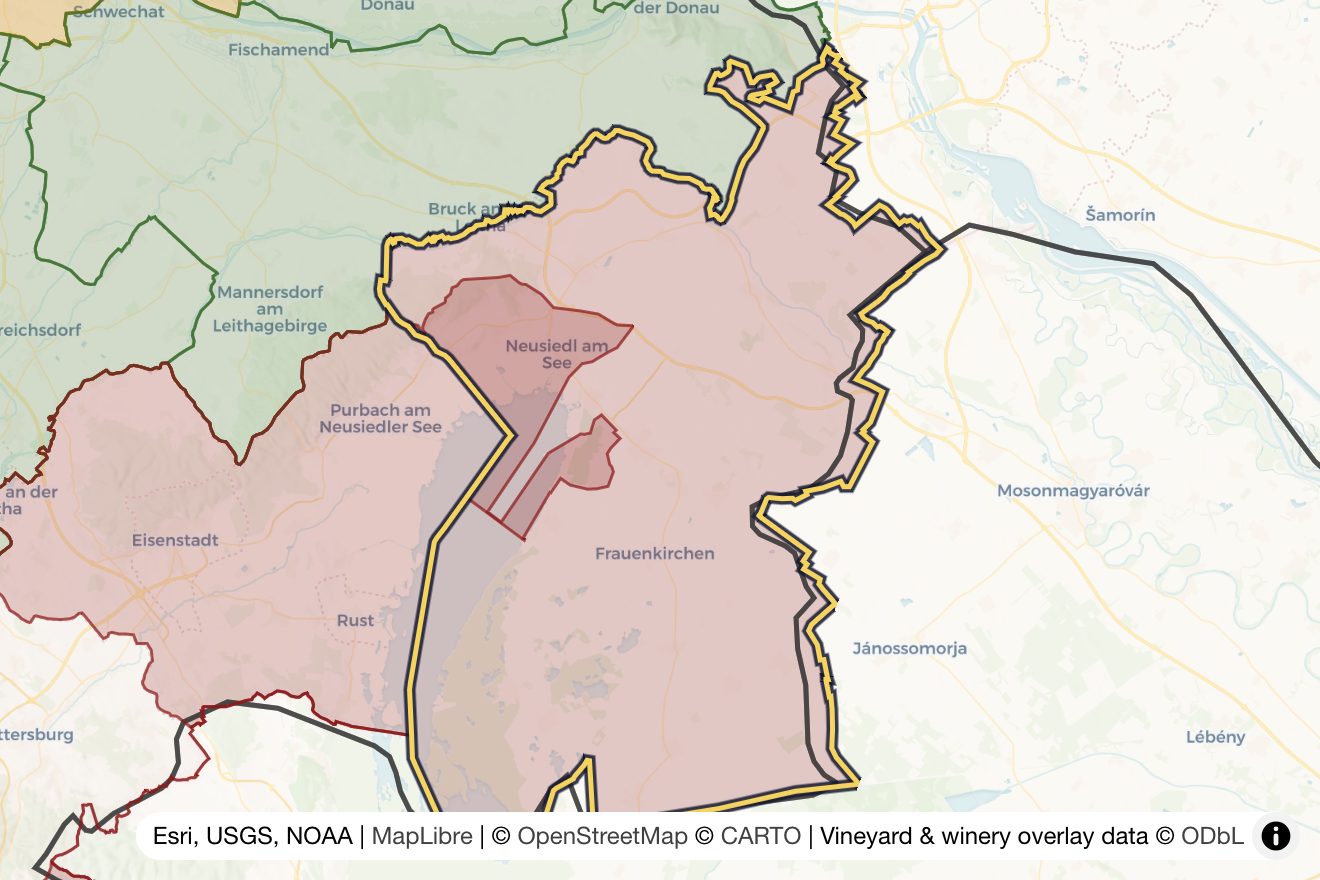
Neusiedlersee is a wine region and DAC in Burgenland, eastern Austria, running along the northern and eastern shores of Lake Neusiedl, the vast, reed-fringed steppe lake on the Hungarian border. The lake gives the region both of its identities: reliable autumn humidity for botrytis, making the Seewinkel villages of Illmitz and Apetlon one of the world's great sweet wine sources, and stored warmth for reds, with Zweigelt the basis of the Neusiedlersee DAC established in 2012.
History
Sweet wine has been made on the lake's shores for centuries, with records of Ausbruch-style harvests long predating modern classification. The region's twentieth-century course was reset twice: by the 1985 wine scandal, which collapsed the bulk sweet-wine trade and forced Austria's strict wine law, and by the generation that rebuilt on quality, in which Alois Kracher of Illmitz made the Seewinkel's Trockenbeerenauslesen internationally famous through numbered collections from the 1990s onward. The red wine rise around Gols on the northern shore followed in parallel, and the DAC of 2012 codified Zweigelt as the regional red.
Terroir & Climate
The lake is enormous in area and barely two metres deep, a heat reservoir that extends ripening and, each autumn, breeds the morning mists that draw botrytis across the Seewinkel's shallow ponds and vineyards. The climate is Pannonian, hot and dry in summer and continental in winter; soils run from gravel and loess on the Parndorf plateau above Gols to sand and black earth toward the lake. Elevations are among Austria's lowest, and wind off the steppe moderates disease pressure outside the deliberate botrytis zones.
Grape Varieties & Wine Styles
Zweigelt leads the reds: under the DAC, from fresh Klassik to Reserve level, it gives sour-cherry fruit, supple tannin and Pannonian ripeness, often joined outside the DAC by St. Laurent, Blaufränkisch and Pinot Noir. The sweet wines span the Prädikat ladder to Trockenbeerenauslese, from Welschriesling above all, with Chardonnay, Scheurebe, Traminer and Muskat; the wines pair high sugar with lifted acidity and age for decades. Dry whites and increasingly serious natural-wine production round out the shore.
Notable Producers
Kracher remains the sweet wine reference, with Angerhof-Tschida and Opitz in Illmitz. Gols concentrates the red wine leaders: Gernot and Heike Heinrich, Judith Beck, Nittnaus and Pittnauer, with Umathum nearby in Frauenkirchen, several of them central to Austria's biodynamic and natural movements. The Pannobile growers' group, founded at Gols, is the northern shore's collective mark.
What to Know
Neusiedlersee's two specialties come from one mechanism, the lake, working in opposite directions: humidity for the Seewinkel's nobly sweet whites, warmth for the DAC's Zweigelt reds. The DAC covers Zweigelt reds and, since 2020, sweet wines too: Spätlese and Auslese as Neusiedlersee DAC, Beerenauslese and Trockenbeerenauslese as Neusiedlersee DAC Reserve. Across the water, the Leithaberg and Rust shores belong to separate regions, treated on their own pages.